
Sauerkraut — fermented cabbage, history, preparation and uses
Sauerkraut is finely shredded cabbage fermented by lactic acid bacteria to produce a sour, long‑lasting condiment used across Europe and beyond. This article covers production, microbes, history, uses and nutrition.
Overview
Sauerkraut (literally "sour herb" in German) is finely shredded cabbage that has been preserved and flavored through natural fermentation. The process converts cabbage sugars into lactic acid, producing the characteristic tangy flavor and extended shelf life. Sauerkraut is distinct from raw cabbage salads such as coleslaw, which are dressed with vinegar rather than produced by microbial fermentation. For a note on the name, see German translation, and for the vegetable used, see cabbage.
Image gallery
10 Images




How it is made
Traditional sauerkraut requires only cabbage and salt and relies on carefully controlled conditions to encourage beneficial microbes and discourage spoilage. Basic steps are:
- Shredding cabbage and mixing with salt.
- Pressing or tamping to release brine and create an anaerobic environment.
- Allowing fermentation to proceed at a cool room temperature until desired acidity is reached.
- Cold storage to slow fermentation and preserve flavor.
More on the general process of fermentation and the role of lactic acid in preservation is available via introductory resources.
Microbiology and characteristics
The souring of sauerkraut is driven by lactic acid bacteria, a group of microorganisms that convert sugars to acids under low‑oxygen conditions. Common genera involved include Leuconostoc, Lactobacillus and Pediococcus. These bacteria act in succession during fermentation, producing acids and other compounds that influence aroma, texture and shelf life.
History and cultural context
Fermenting vegetables is an ancient preservation technique practiced in many regions. Sauerkraut became particularly associated with Central and Eastern European cuisines, where it appears in a range of traditional dishes. It was also adopted for long sea voyages and other situations where fresh produce was scarce, because fermentation preserves nutrients that would otherwise degrade.
Culinary uses and variations
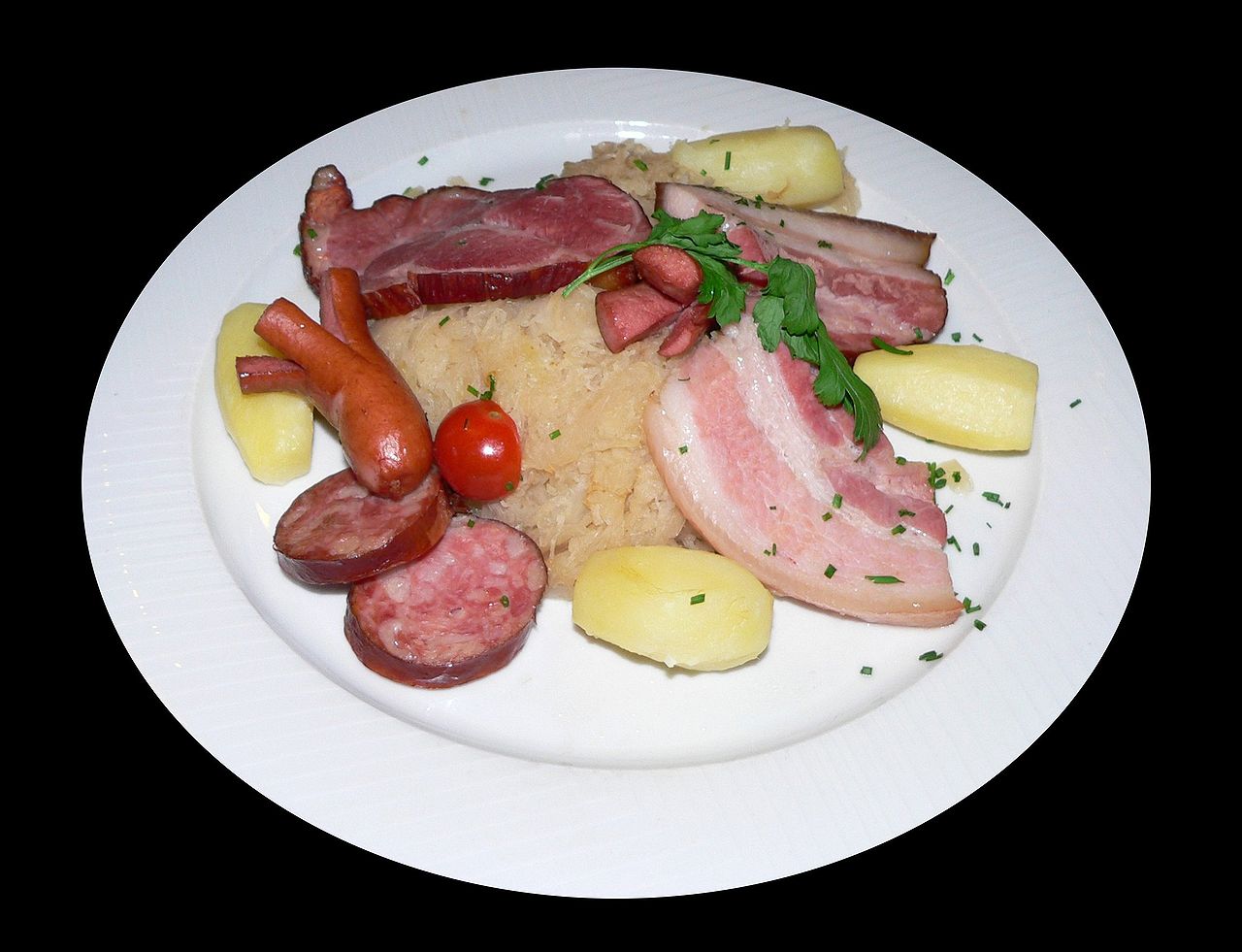
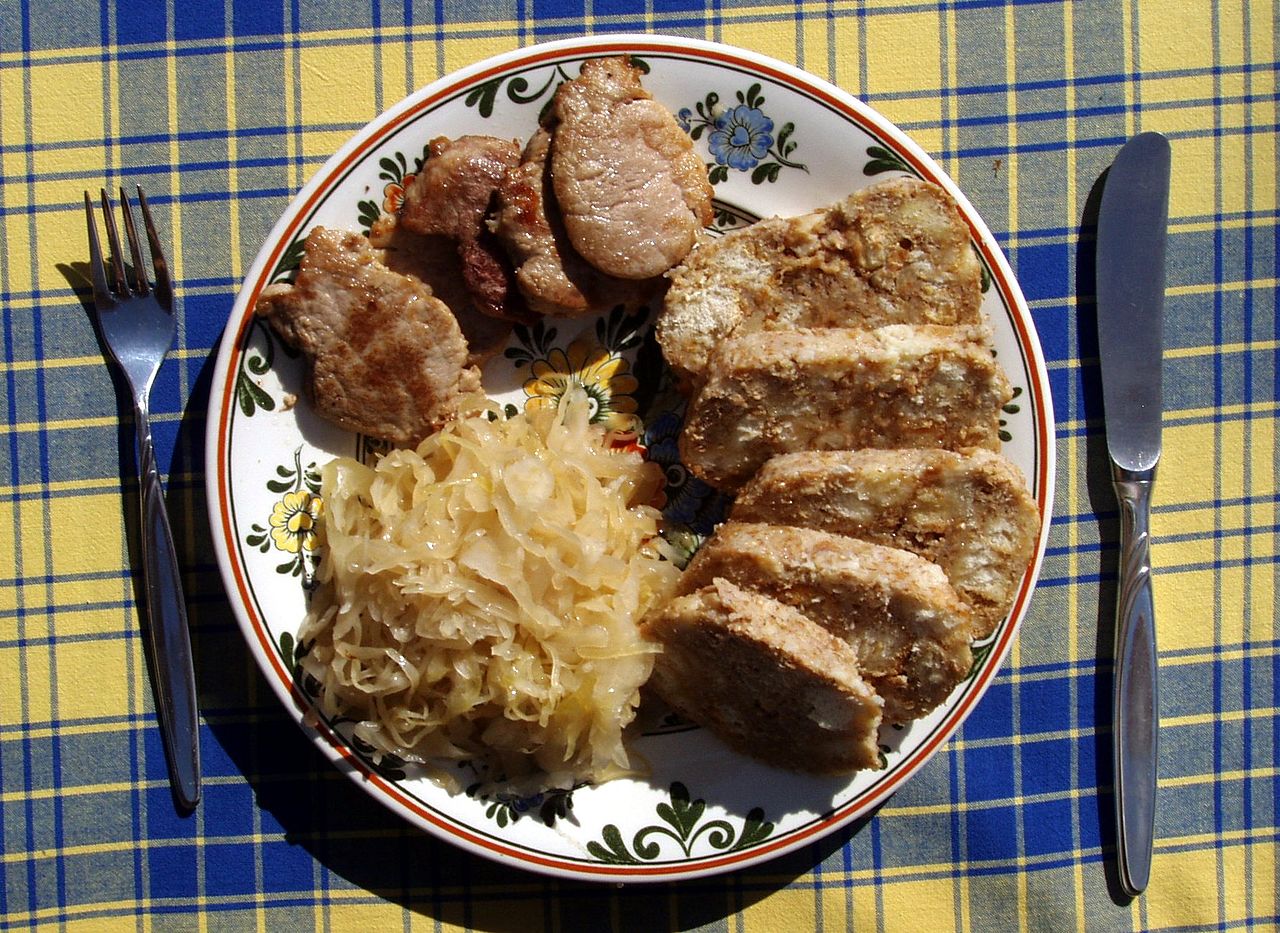
Sauerkraut can be served raw or cooked and appears alongside sausages, pork, stews and in sandwiches (notably in many deli traditions). Regional variations add spices, caraway seeds, apples or use red cabbage. Related fermented cabbage products exist worldwide; for example, Korea’s kimchi is a spiced fermented vegetable that differs in ingredients and flavor profile.
- Traditional pairings: sausages, pork, potatoes.
- Uses: side dish, filling, ingredient in soups and casseroles.
- Variations: flavored sauerkrauts, small‑batch artisan preparations.
Nutrition and safety
Because it is fermented, sauerkraut can supply dietary fiber, some vitamins and live microorganisms often described as probiotics when consumed unheated. It can be a source of vitamin C, especially in home or unpasteurized preparations, but store products can be high in sodium. Heat reduces the viability of live cultures, so cooked sauerkraut retains flavor but not probiotic activity. For additional reading on ingredients and storage, see lactic acid and more on fermentation techniques.
For general background and recipes consult introductory resources using these links: microbial overview, Leuconostoc, Lactobacillus, Pediococcus.
Related articles
Author
AlegsaOnline.com Sauerkraut — fermented cabbage, history, preparation and uses Leandro Alegsa
URL: https://en.alegsaonline.com/art/87534