
Robinson Crusoe: Defoe’s novel of survival, identity and influence
A comprehensive overview of Daniel Defoe’s Robinson Crusoe: plot, form, origins, themes, reception and adaptations, with notes on real-life inspirations and lasting cultural influence.
Overview
Robinson Crusoe is a landmark early-18th-century novel by Daniel Defoe, first published in 1719. Presented as the true autobiography of a castaway, the work recounts how its protagonist survives many years alone after a maritime disaster. The book's lengthy original title spells out the unusual premise and helped set expectations for readers of the period. Many modern editions and studies treat it as a foundational experiment in the novel form rather than a straightforward travelogue or survival manual; for contemporary readers it also functions as a reflection on personal resilience, providence and colonial-era attitudes.
Image gallery
9 Images


Plot and narrative form
The story follows Robinson Crusoe from a comfortable middle-class upbringing and his departure from England to life at sea. Crusoe defies familial advice and undertakes voyages that lead to misadventures on the sea, culminating in a violent shipwreck. Washed ashore on a remote island, he improvises shelter, secures food, domesticates goats and salvages goods from the wreck. Years of solitude shape his routines, religious reflections and practical ingenuity. He later encounters threats and allies: hostile visitors sometimes labelled as cannibals, a rescued captive he names Friday, and occasional encounters with slave-traders, mutineers and pirates. The first-person, journal-like voice presents events as a chronological life account and blurs the line between reportage and fiction; Defoe initially presented the narrative as authentic, editing the manuscript of Crusoe himself to increase verisimilitude.
Origins, models and possible inspirations
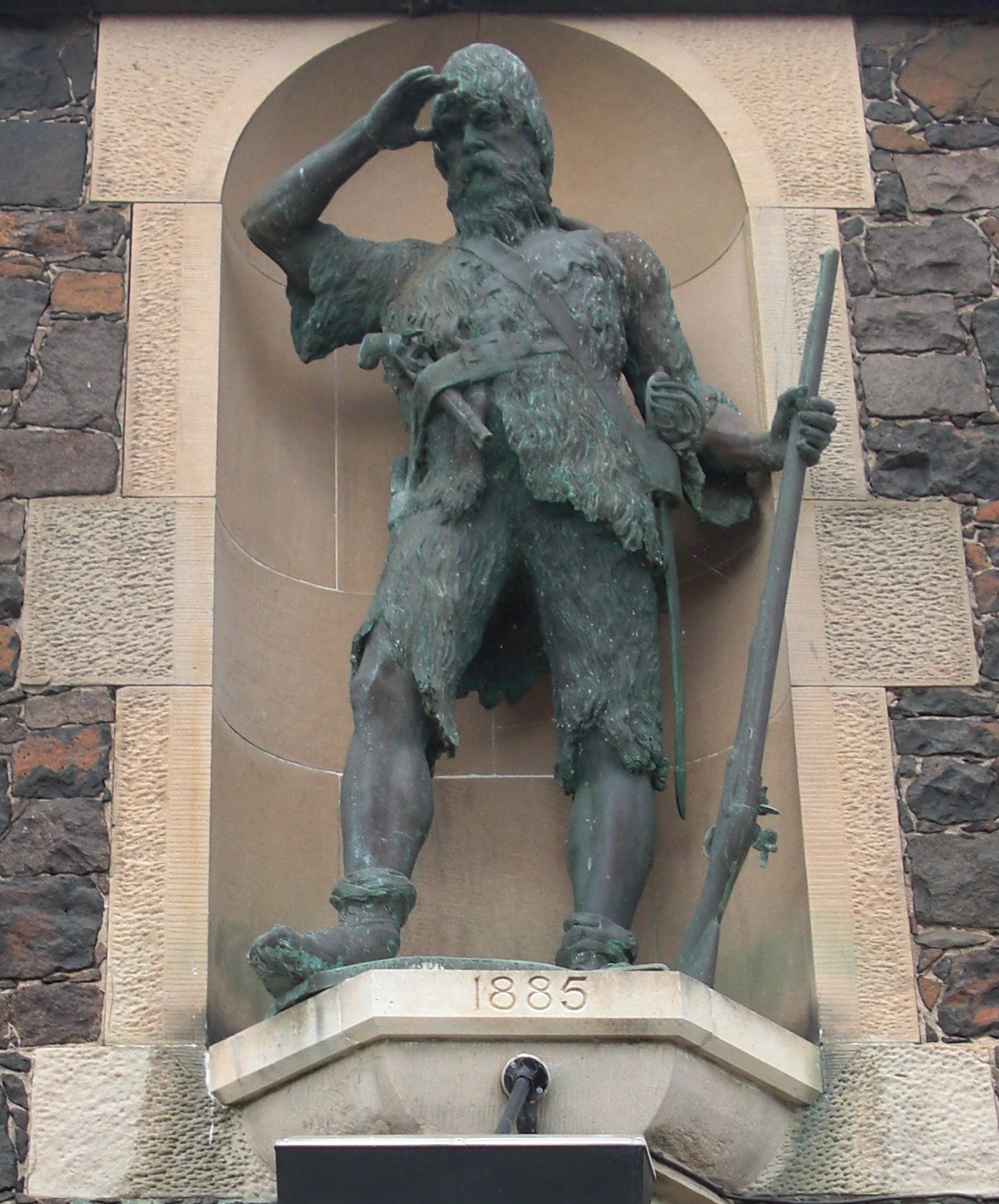
Readers and scholars have debated the sources behind Defoe’s tale. One well-known possible inspiration is the Scottish mariner Alexander Selkirk, who spent years as a castaway on a Pacific island. That island, long associated with the Selkirk story, lies among islands in the Pacific that were once claimed by European powers including Chile; in the 20th century one of those islands was officially renamed Robinson Crusoe Island. Comparative scholars also point to earlier desert-island narratives such as philosophical fictions from the Islamic world and Spain — for example, Hayy ibn Yaqdhan — and to travel literature and prison narratives that circulated in Europe. Defoe synthesized these strands with detailed practical description and moral reflection rather than copying any single source.
Themes, style and critical reception
Robinson Crusoe raises questions about individualism, providence, labour and empire. Its attention to inventory, barter, building and agriculture has invited readings that link the book to emergent commercial capitalism and to Protestant work ethics. The religious passages, in which Crusoe interprets his fortunes as signs of divine favour or correction, have been viewed as central to the character's inner development. Critics have long argued over Defoe’s intent and tone: was the novel conservative or subversive, celebratory of entrepreneurship or a satire of colonial assumptions? Interpretations have ranged widely, and scholarly disagreement about the book’s ultimate meaning continues to be lively.
Legacy, adaptations and cultural impact
From its first year in print the tale proved popular, quickly passing through multiple editions. Its blend of practical survival detail and adventurous narrative encouraged countless imitations and reworkings. The story has been adapted for the stage in many guises, including theatrical entertainments and dramatic retellings (stage). It has also inspired films of varying faithfulness (film) and television series and episodes that borrow its core premise (television). Beyond adaptations, the novel influenced the castaway genre, schoolroom primers, travel writing and later literary modernism. Its images — the shelter on the beach, the domesticated animals, the figure of Friday — became motifs in literature and popular culture.
Notable features and further reading
- Fictional autobiography: Defoe’s editorial pose, claiming to present Crusoe’s own manuscript, was a device to increase realism and reader engagement.
- Practical detail: The novel’s emphasis on tools, agriculture and economic exchange distinguishes it from purely adventure-driven tales.
- Ambiguous politics: The book can be read both as celebration of self-reliance and as a document reflecting early-modern colonial attitudes.
- Enduring presence: Its ability to be retold in many media underlies its continuing popularity and scholarly interest.
For readers seeking primary and critical materials, many annotated editions and studies are available exploring Defoe’s craft, historical context and the novel’s reception; library catalogues and academic introductions provide reliable entry points. The story remains an accessible but richly interpretable work that continues to prompt discussion about narrative authority, survival ethics and cultural influence.
Robinson Crusoe (novel) • Trinidad (geographical context) • Protagonist and character study • Pacific island contexts
Related articles
Author
AlegsaOnline.com Robinson Crusoe: Defoe’s novel of survival, identity and influence Leandro Alegsa
URL: https://en.alegsaonline.com/art/83450
Sources
- camden.rutgers.edu : "The Primitive Crusoe, 1719–1780"
- britannica.com : "Robinson Crusoe (novel by Defoe)"