
Alexander Selkirk: the Scottish castaway linked to Robinson Crusoe
Alexander Selkirk (c.1676–1721) was a Scottish sailing master marooned on an island in the Juan Fernández archipelago for about four years; his survival story became widely known and influenced Defoe's Robinson Crusoe.
Overview
Alexander Selkirk (born c.1676; died 13 December 1721) was a Scottish sailor whose real-life experience as a castaway became one of the best known survival stories of the early 18th century. Trained as a sailing master or navigator, Selkirk acquired practical skills — seamanship, hunting and leatherwork — that proved crucial when he spent several years living alone on an uninhabited island in the South Pacific. News of his ordeal circulated widely in Britain and on the Continent and contributed to contemporary interest in tales of exploration, privateering and human endurance.
Image gallery
7 Images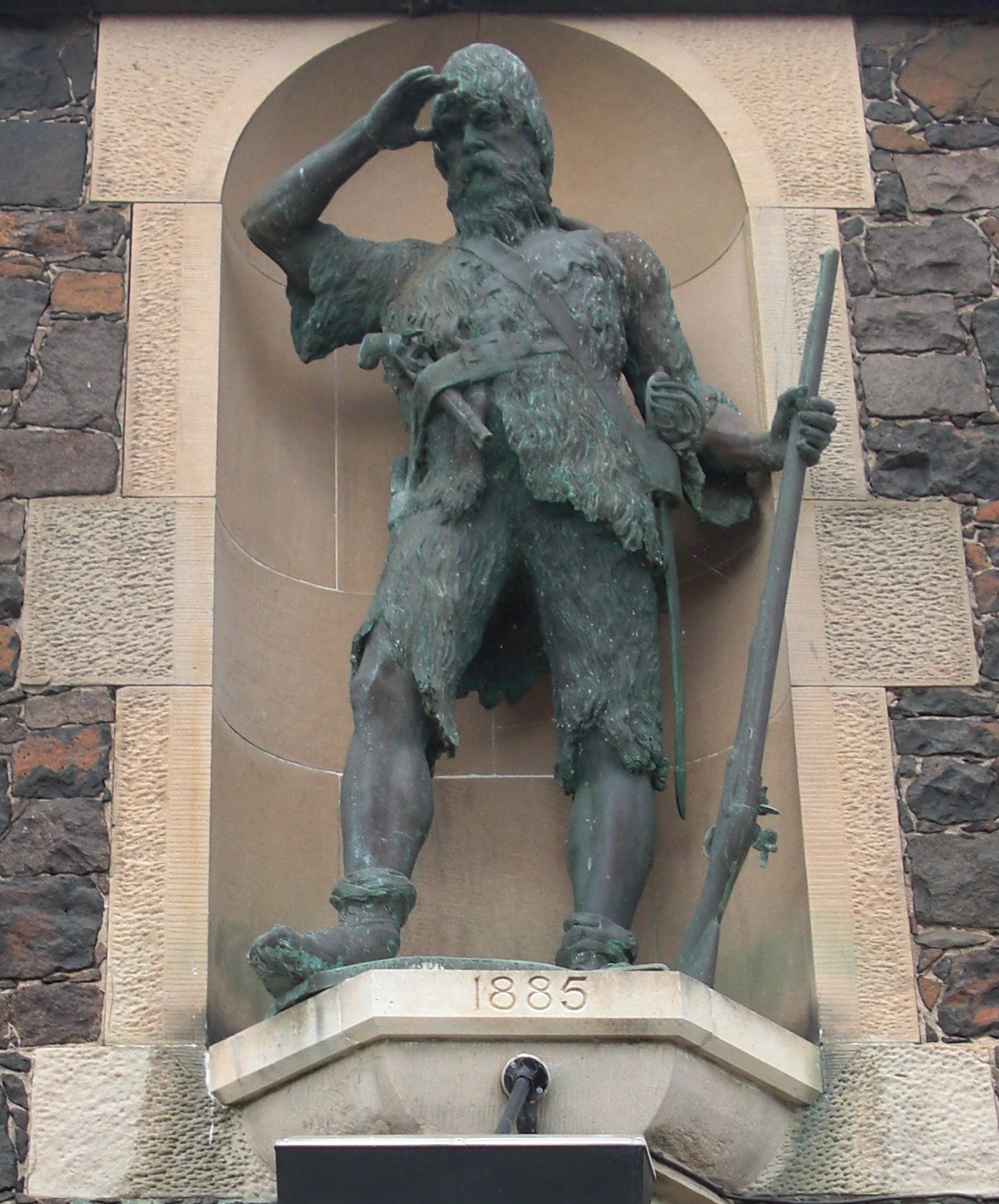


How he came to be marooned
Selkirk served aboard a privateering expedition in the South Pacific. According to surviving contemporary accounts, he and his captain disagreed strongly about the seaworthiness of their vessel. Selkirk judged the ship unsafe and, when the crew made landfall in the Juan Fernández archipelago off the coast of present-day Chile, he chose to remain ashore rather than continue on what he believed to be a rotten hull. The captain refused to take him back, and Selkirk was deliberately left alone on the island. He later explained that he preferred the certainty of a voluntary marooning to the chance of drowning at sea.
Location and environment
The island on which Selkirk was stranded is part of the Juan Fernández group in the South Pacific. The principal island associated with his story was commonly known in later years by the literary name Robinson Crusoe Island; earlier maps and accounts used Spanish names for the islands. The island environment provided goats introduced by earlier visitors, abundant seabirds, fish and a varied coastline with freshwater springs in some places — resources that Selkirk was able to exploit through practical knowledge and improvisation.
Daily life and survival techniques
Selkirk's survival depended on adapting seamen's skills to a solitary life. He constructed a shelter from local materials and used tools and clothing he had salvaged or fashioned himself. Firearms and knives that he possessed enabled him to hunt introduced goats and birds; he stored fresh water where it was available and preserved food when possible. Contemporary reports emphasize his ability to mend and make clothing from hides, to fashion pottery and utensils from what he could find, and to keep himself physically active. Alone but resourceful, he avoided total isolation by keeping watch for passing ships and by making himself visible from headlands.
Rescue and return
After roughly four years on the island, Selkirk sighted sails on the horizon and managed to attract the attention of an English vessel. He was taken aboard and eventually returned to Britain, where his account of the marooning fueled public fascination. Pamphlets and voyage narratives of the period printed accounts of his experience, casting him as a figure of curiosity and admiration. On his return Selkirk enjoyed a degree of celebrity: his story was told and retold in newspapers, pamphlets and personal reminiscences, and his name entered popular discussion of human resilience in extreme circumstances.
Later life and death
Following his rescue Selkirk resumed maritime service for a time. Contemporary accounts agree that he did not settle into a quiet retirement and that he returned to seafaring work. He died in 1721. Over time his life became part of local and literary memory: his birthplace and family town commemorated him, and the island where he lived came to be identified in popular culture with the solitary castaway tale made famous by fiction.
Connection to Daniel Defoe and Robinson Crusoe
Daniel Defoe's novel Robinson Crusoe, published in 1719, shares important thematic and narrative elements with Selkirk's real experience: solitude, self-sufficiency, improvised shelter, the use of saved tools and the moral and religious reflections of a castaway. Because Defoe's novel draws on a wide range of sources, scholars treat Selkirk as a plausible and influential model rather than a single direct template. Major differences exist: Defoe's fictional Crusoe endures a longer period of isolation, undergoes a variety of invented trials and experiences plot developments that are absent from the historical record. Nevertheless, Selkirk's story offered a vivid, contemporary example of solitary survival that readers and writers of the time could readily recognize.
Legacy and commemorations
- The island associated with Selkirk's marooning later became popularly known as Robinson Crusoe Island in recognition of the literary association; the Juan Fernández islands remain linked with the story in travel writing and regional history.
- Accounts of Selkirk's ordeal appeared in early-18th-century voyage literature and in popular pamphlets, helping to shape public perceptions of privateering, exploration and human temperament under extreme conditions.
- Local remembrance: Selkirk's place of origin commemorated him in civic memory and local histories; monuments and plaques in his Scottish homeland recall his castaway tale.
Historical assessment
Historians consider Selkirk's case valuable for understanding maritime life, privateering voyages and popular culture in the early 1700s. His experience illustrates how ordinary seamen with practical skills could survive extended isolation, and how personal narratives circulated in print culture to influence fiction and national imagination. At the same time, responsible accounts stress differences between the often condensed or embellished popular versions and what documentary evidence directly attests. Selkirk remains an accessible historical figure precisely because his story sits at the intersection of lived experience, print publication and imaginative retelling.
Further reading and resources
Readers who wish to explore primary accounts, voyage narratives and critical studies can consult curated biographical sketches and historical introductions that present surviving evidence, contemporary publications and later commentary. For accessible overviews and bibliographic entry points see: a concise biographical overview, context on seafaring and privateering, studies of Defoe's sources and literary context and background on Robinson Crusoe and the Juan Fernández Islands.
This entry summarizes broadly accepted facts about Alexander Selkirk's life and survival while avoiding speculative details that lack strong documentary support. Readers interested in documentary editions and scholarly treatments should consult specialist bibliographies and editions of early-18th-century voyage narratives for fuller primary-source material.
Tags
Related articles
Author
AlegsaOnline.com Alexander Selkirk: the Scottish castaway linked to Robinson Crusoe Leandro Alegsa
URL: https://en.alegsaonline.com/art/2389