
Reduction (chemistry)
Reduction is the chemical process in which an atom, ion or molecule gains electrons and decreases its oxidation state; central to redox chemistry, metallurgy, corrosion and batteries.
Overview
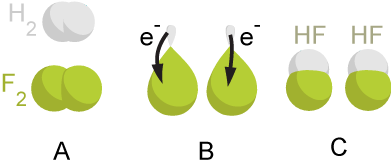
In chemistry, reduction describes the gain of electrons by a chemical species during a chemical reaction. When a substance receives electrons its net charge or formal oxidation state becomes lower. Reduction always occurs together with oxidation — one species is reduced while another is oxidized — and the pair of processes is commonly called redox chemistry.
Image gallery
6 Images




Definition and basic mechanism
Reduction can refer to the atom, ion or molecule that accepts electrons, or more generally to any change that decreases oxidation number. Electrons transferred in the course of the reaction flow from the oxidized partner to the reduced partner. In some descriptions, reduction also involves the gain of hydrogen or the loss of oxygen, but electron gain is the unambiguous, broadly applicable definition used in modern chemistry.
Common reducing agents and how to recognize reduction
Substances that donate electrons are called reducing agents. They themselves become oxidized as they reduce another species. Typical laboratory and industrial reducing agents include metals, hydrides and certain gases. Examples include:
- metals such as zinc or aluminum
- hydride donors like sodium borohydride or lithium aluminum hydride
- gaseous reductants such as carbon monoxide or hydrogen
Examples and industrial importance
Everyday instances illustrate reduction: atmospheric oxygen accepts electrons when it reacts with metals such as iron, producing oxides commonly called rust. Conversely, metallurgy often uses reduction deliberately: a blast furnace employs gases to reduce iron oxides back to metallic iron. Reduction reactions are also central to electrochemistry, batteries, fuel cells and many organic synthesis steps.
History and notable distinctions
The terms reduction and oxidation originated in studies of metal processing and combustion in the 18th and 19th centuries; definitions evolved from ideas about oxygen gain and loss to the modern electron-transfer view. Important distinctions include the context-dependent descriptions (electron gain vs hydrogen gain vs oxygen loss) and the distinction between chemical reduction and electrochemical reduction, where electrons flow through an external circuit.
Practical considerations
Recognizing reduction in real systems requires tracking oxidation numbers or electron flow. Many processes combine redox steps with acid–base chemistry, coordination changes, or phase changes. Understanding reducing agents, reaction conditions, and the coupled oxidation step is essential for controlling industrial processes, preventing unwanted corrosion, and designing energy conversion devices.
Related articles
Author
AlegsaOnline.com Reduction (chemistry) Leandro Alegsa
URL: https://en.alegsaonline.com/art/81759
Sources
- khanacademy.org : Oxidation and Reduction