
Rieke metals — highly activated, finely divided reactive metal powders
Rieke metals are highly reactive, high-surface-area metal powders prepared by chemical reduction. They enable formation of organometallic reagents and challenging bond-forming reactions but require inert handling.
Overview
Rieke metals are a class of finely divided, highly reactive metal powders produced by chemical activation. Named after chemist Reuben D. Rieke, the term covers several metals—zinc, magnesium, manganese, copper and others—prepared to have exceptionally large surface area and heightened reactivity compared with ordinary commercial metal filings or turnings. These materials are used primarily in synthetic chemistry to generate organometallic reagents and to promote transformations that are difficult with conventional metals.
Image gallery
1 Image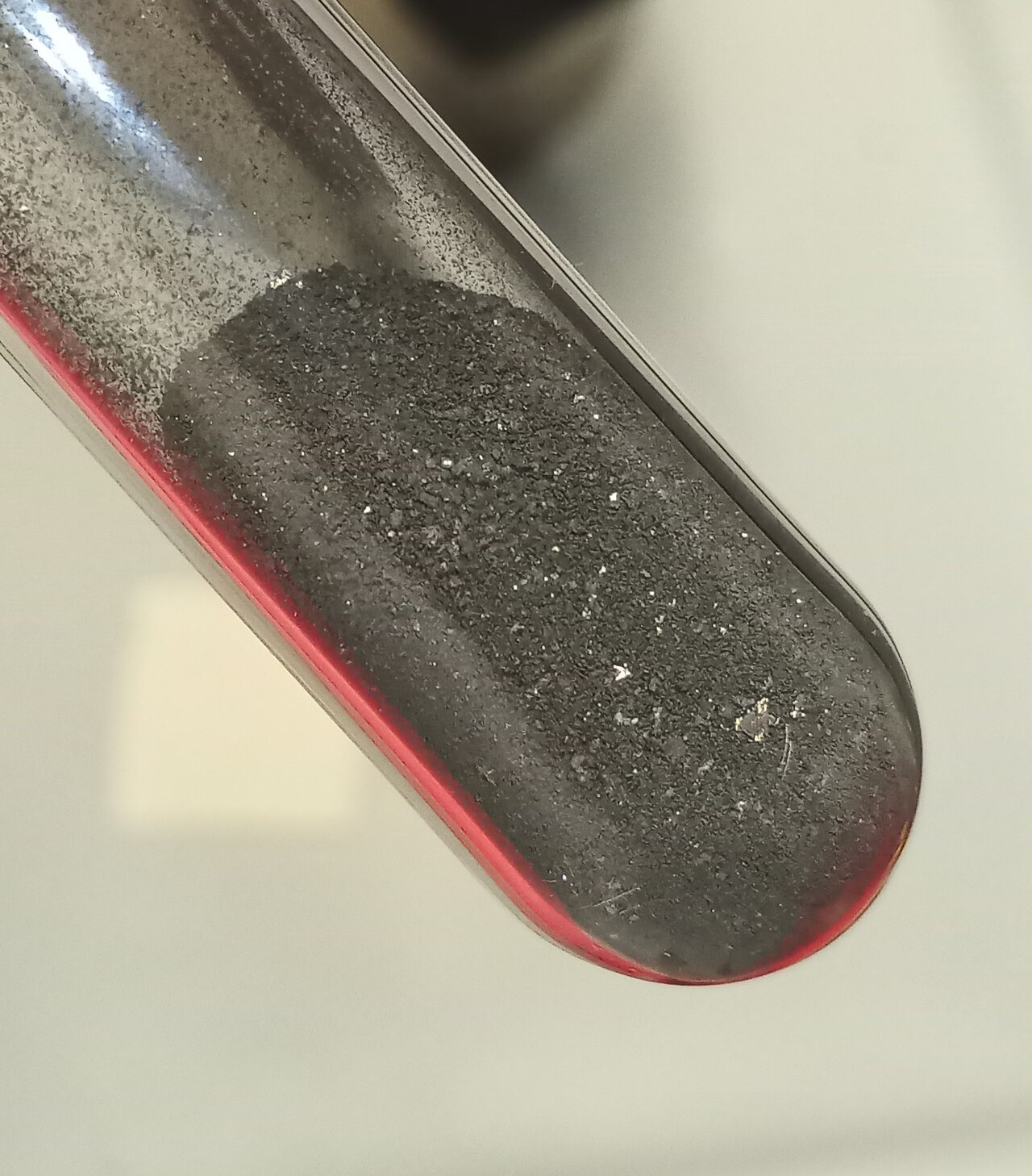
Preparation and characteristics
Rieke metals are formed by reducing a metal salt or halide with a strong reductant under conditions that favor formation of very small metal particles. The resulting powders are characterized by a high density of surface atoms, minimal passivating oxide layers, and a propensity to react rapidly with organic electrophiles. Because of their finely divided form and active surfaces, they more readily insert into carbon–halogen bonds or form organometallic species at milder temperatures than bulk metals.
Common uses and examples
In laboratory synthesis Rieke metals are valued for enabling the formation of organometallic reagents from otherwise unreactive halides and for initiating couplings or reductions without harsh conditions. Typical applications include:
- Preparation of organozinc or organomagnesium reagents from aryl and alkyl halides.
- Activation of reluctant substrates for cross-coupling or carbon–carbon bond formation.
- Reductions and single-electron transfer processes where a highly reactive metal surface accelerates reactivity.
History and development
The Rieke approach was developed to overcome limitations of conventional metal sources, which are often passivated by oxides and require harsh activation. By producing metal in a finely divided, chemically reduced state, Rieke’s methods expanded the accessibility of organometallic chemistry for sensitive or deactivated substrates. For concise overviews and method summaries see Rieke metals overview and more technical discussions at preparation methods.
Handling, safety, and distinctions
Because Rieke metals are more reactive than typical metal powders they require careful handling. They are sensitive to air and moisture and are best manipulated under inert atmosphere (nitrogen or argon). Appropriate precautions include exclusion of oxygen, use of dry solvents, and attention to potential pyrophoric behavior. Rieke metals differ from other activated forms—such as mechanically milled or alloy-derived catalysts—by being produced via chemical reduction and by their characteristic ultrafine particle size and surface reactivity. For safety guidance consult specialized resources: handling and safety information.
Notable facts
Rieke metals are not a single reagent but a practical category used to describe laboratory preparations of many elemental metals in an unusually active form. Their introduction broadened the toolbox of synthetic chemists, enabling transformations that would otherwise require more forcing conditions or different catalytic systems. Continued interest in activated metal forms reflects their utility in method development and complex molecule construction.
Related articles
Author
AlegsaOnline.com Rieke metals — highly activated, finely divided reactive metal powders Leandro Alegsa
URL: https://en.alegsaonline.com/art/82854