
Redox (Reduction–Oxidation) Reactions: Principles, Examples, and Applications
Overview of redox reactions: definitions, oxidation states, electron transfer, half‑reactions, examples (rusting, combustion, respiration), electrochemistry, biological roles, and common distinctions.
Overview
Redox, short for reduction–oxidation, is the family of chemical processes in which atoms change their oxidation number as a result of gaining or losing electrons. In general use a redox transformation involves one species being oxidized (losing electrons) while another is reduced (gaining electrons). For an introduction to the kinds of chemical reactions that are commonly classified as redox, see general guides and textbooks.
Image gallery
8 Images




Key concepts and terminology
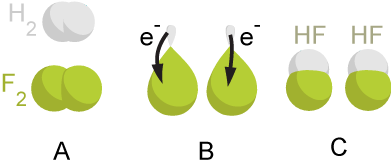
An oxidation state (or oxidation number) is a bookkeeping concept that assigns electrons in a compound to atoms according to a set of rules; it helps identify which atoms are oxidized or reduced. The basic electron‑transfer idea is simple: oxidation is loss of electrons, and reduction is gain of electrons. Mnemonics such as OIL RIG ("Oxidation Is Loss, Reduction Is Gain") are commonly used to remember this relationship.
Redox may involve discrete charge transfer between ions or stepwise electron flow in covalent systems. In molecules and solids the assignment of an oxidation state to an element can be formal rather than literal; atoms in a molecule or a solid lattice may share electron density rather than transferring whole electrons.
How redox reactions are represented
Chemists often separate a redox process into two half‑reactions: an oxidation half‑reaction showing electrons produced, and a reduction half‑reaction showing electrons consumed. Balancing redox equations frequently uses the half‑reaction method, which ensures conservation of mass and charge. In ionic contexts cations and anions play complementary roles: one species donates electrons while another accepts them, but in covalent chemistry the changes can be subtler.
Examples and applications
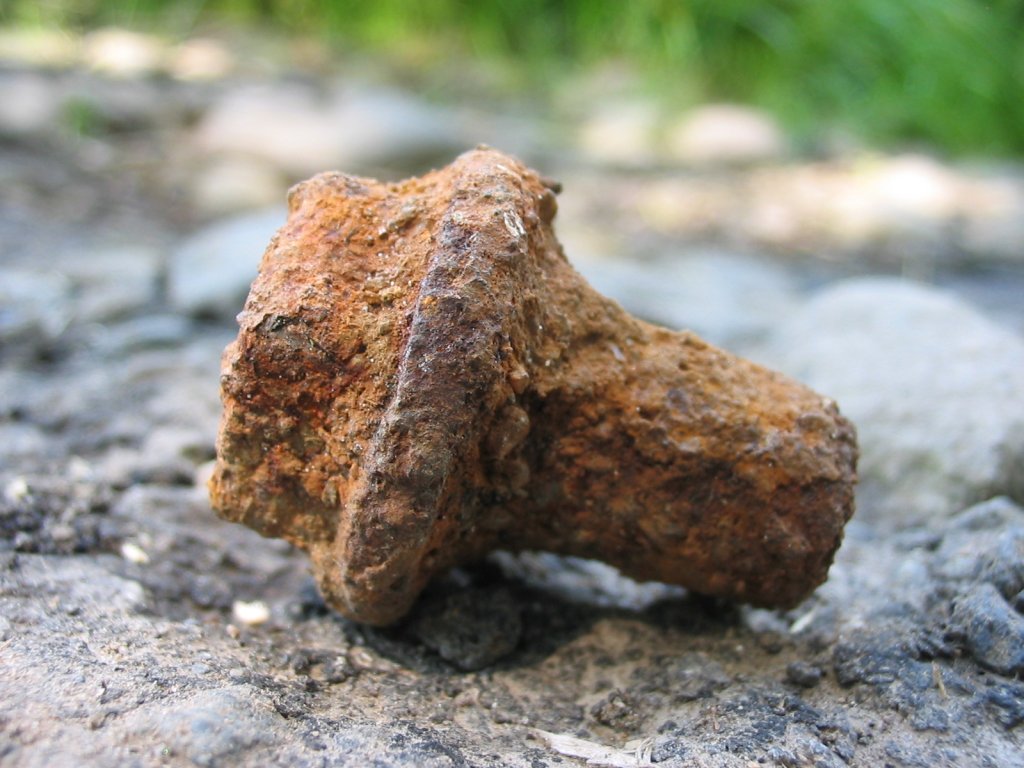
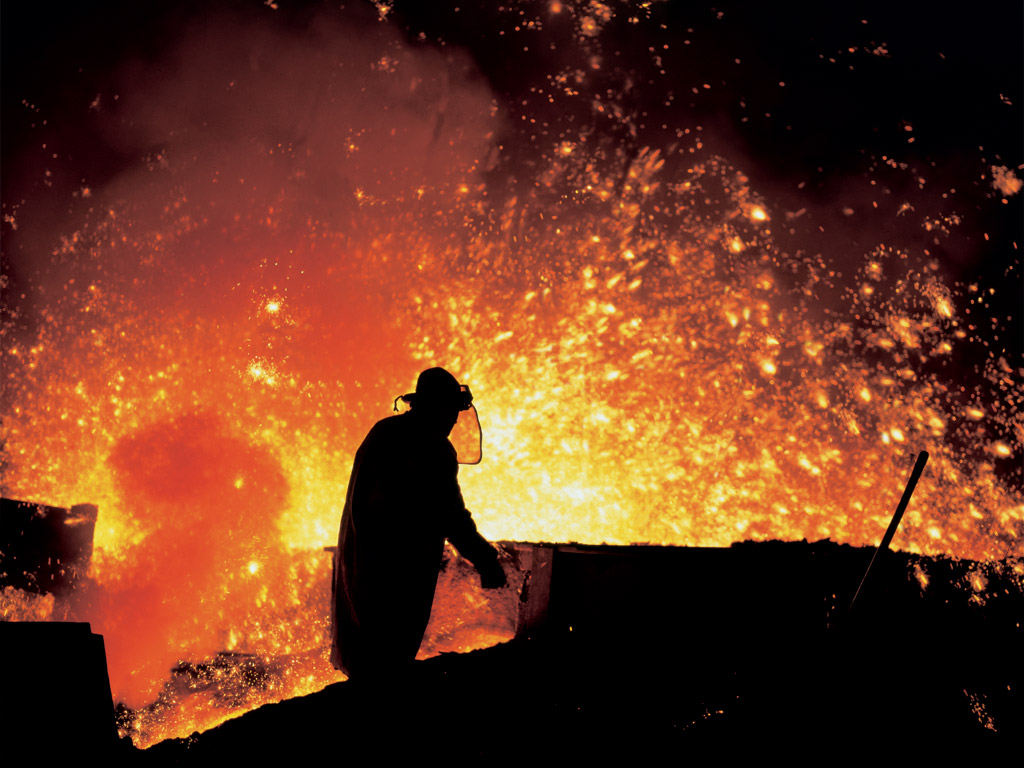
- Common examples: rusting (iron oxidation), combustion (organic fuels oxidized by oxygen), and metal corrosion.
- Biological processes: cellular respiration and photosynthesis are chains of redox steps that move electrons through enzyme complexes to store or release energy.
- Electrochemistry: batteries and electrolysis convert chemical energy to electrical energy or vice versa using redox couples and electrodes; electrode potentials quantify a couple's tendency to gain or lose electrons relative to a reference.
- Industrial chemistry: many syntheses and refining operations rely on controlled oxidation or reduction to produce desired products.
Agents, potentials and notable distinctions
The species that accepts electrons is the oxidizing agent; the species that donates electrons is the reducing agent. Texts often discuss standard electrode potentials and the role of the standard hydrogen electrode as a reference for measuring redox tendency. Not all changes in oxidation number correspond to simple electron transfer—formal oxidation states are an accounting tool and can differ from actual charge distribution. Some reactions are disproportionation reactions, in which a single element is both oxidized and reduced.
Practical considerations and related topics
Balancing redox reactions in acidic or basic solution uses additional steps to add H+, OH− and H2O as needed. Organic redox chemistry includes reagent classes such as oxidizing agents (e.g., chromates, permanganate) and reducing agents (e.g., hydride donors), each useful for selective transformations. Understanding redox is fundamental for electrochemical engineering, environmental chemistry (redox controls solubility and mobility of contaminants), and biochemistry.
For further technical detail see entries on atom and oxidation, on ion behavior in solution, discussions of covalent bonding where electron sharing complicates oxidation state assignment, and notes on how an oxidizing reagent functions in laboratory practice.
Related articles
Author
AlegsaOnline.com Redox (Reduction–Oxidation) Reactions: Principles, Examples, and Applications Leandro Alegsa
URL: https://en.alegsaonline.com/art/81753