
Bactria–Margiana Archaeological Complex (Oxus civilization)
Bronze Age archaeological complex (c.2300–1700 BCE) in Central Asia, noted for fortified towns, craft production and long-distance connections; first widely reported by Viktor Sarianidi.
The Bactria–Margiana Archaeological Complex (commonly abbreviated BMAC and also called the Oxus civilization) is the archaeological label for a network of Bronze Age settlements in parts of Central Asia dated broadly to about 2300–1700 BCE. This cultural phenomenon is identified by a linked set of urban sites, distinctive material culture and ritual assemblages that mark an advanced level of craft specialization and interregional exchange for the period. The term Oxus refers to the River Oxus (modern Amu Darya) around which many of these sites are distributed.
Image gallery
10 Images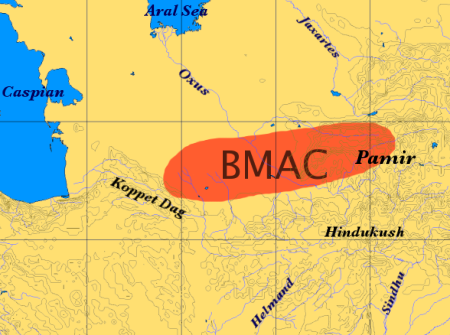





Geography and chronology
BMAC sites are concentrated in what is now Turkmenistan, northern Afghanistan, northeastern Iran, southern Uzbekistan and western Tajikistan. Scholars date the complex to the Middle-to-Late Bronze Age, and often situate it within broader discussions of the Bronze Age societies of the region. Its distribution shows both fortified urban centers and rural settlements linked by routes that facilitated trade in raw materials and finished goods across a vast area of Central Asia.
Discovery and research history
Major excavations were conducted from the 1970s by Soviet archaeologist Viktor Sarianidi, who named and popularized the culture after the ancient regions of Bactria and Margiana (the former centered on historic Bactra, today near Balkh). For decades the principal publications remained in Soviet journals and Russian-language reports, and results became more accessible to international scholarship only after translations and later fieldwork in the 1990s and 2000s.
Material culture and economy
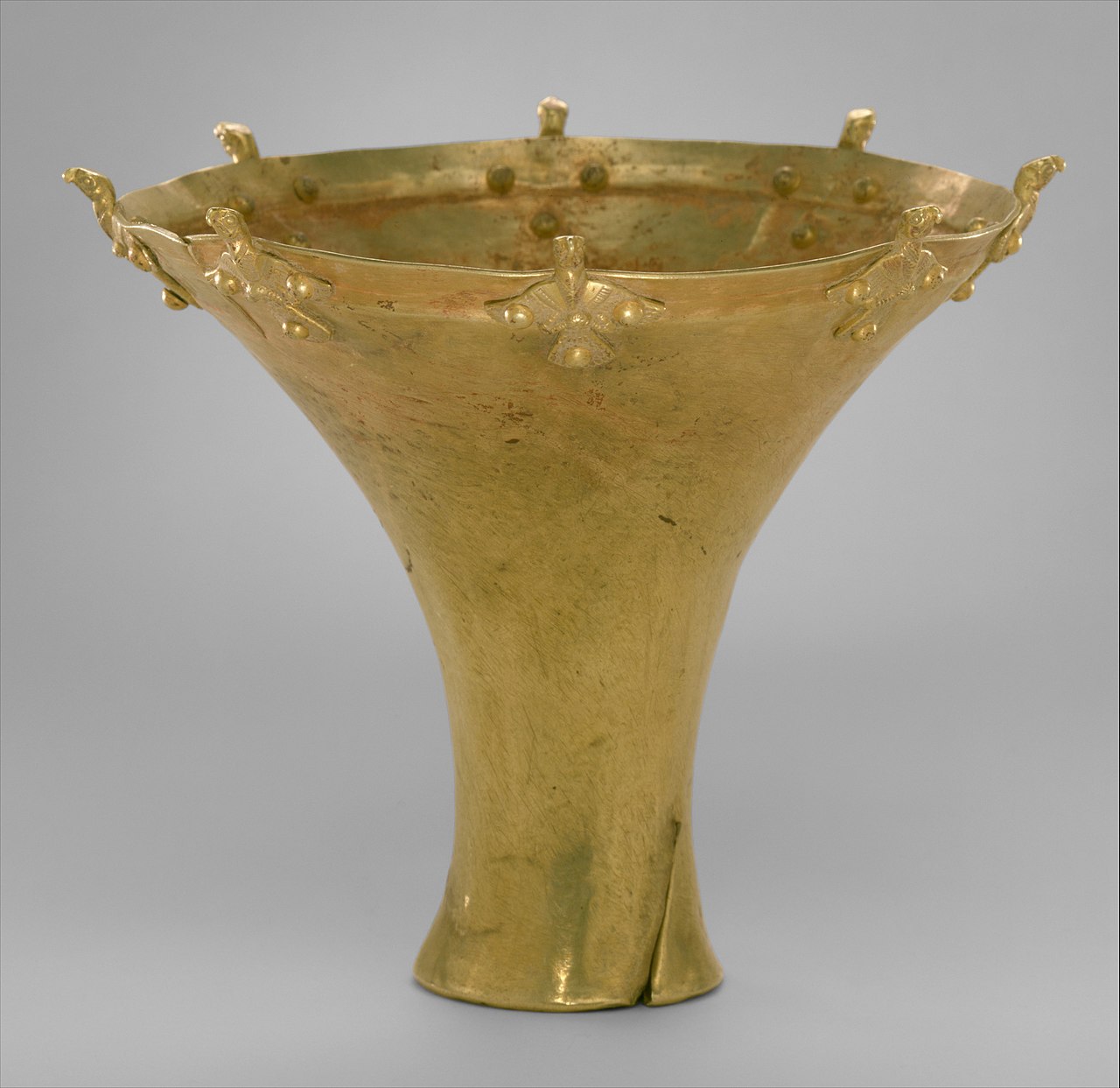
BMAC assemblages include mudbrick architecture, planned citadels and residential quarters, elaborate tombs, and ritual buildings. Artifacts frequently cited are painted and plain pottery, chlorite stone vessels, carved seals, bronze and gold ornaments, and evidence for specialized metallurgy and lapidary work. The economy appears to have combined irrigated agriculture, animal husbandry and craft production, supported by organized irrigation systems and exchange networks that connected to the Iranian plateau, the Indus Valley and steppe regions.
Significance, interactions and debates
The BMAC is important for demonstrating a developed urban tradition in temperate Central Asia during the Bronze Age and for its role in long-distance networks of goods and ideas. Interpretations vary: some scholars emphasize its role as an indigenous urban network, others highlight interactions with neighboring civilizations. Debates continue about the social organization of BMAC communities, the causes of their decline around 1700 BCE (environmental, social or migratory processes), and any links to later linguistic or population movements; these connections remain subject to careful, evidence-based discussion.
Notable sites and key finds
- Gonur Tepe – one of the largest and best-studied citadels with monumental compounds and ritual deposits.
- Altyn-Depe and Togolok – examples of fortified settlements with distinct architectural phases.
- Rich tombs and extraordinary metalwork – including ornaments and seals that attest to craft specialization and ritual practice.
Researchers continue to refine the chronology and cultural links of the BMAC through new fieldwork, comparative analysis, and scientific techniques. The complex remains a central subject for understanding Bronze Age urbanism beyond the more intensively studied river valleys, illuminating patterns of craft, trade and belief across ancient Central Asia.
Further reading and resources are available through archaeological summaries and specialized reports: see general overviews on BMAC culture, regional synthesis pages on Bronze Age studies, and national museum or heritage entries for sites in Turkmenistan, Afghanistan and neighboring countries.
Related articles
Author
AlegsaOnline.com Bactria–Margiana Archaeological Complex (Oxus civilization) Leandro Alegsa
URL: https://en.alegsaonline.com/art/8150