
Bronze Age Collapse: End of Late Bronze Age Civilizations
Widespread breakdown of Late Bronze Age palace societies (c.1200–1150 BC) that disrupted trade and writing, toppled kingdoms from the Aegean to the Levant, and opened the way to the Iron Age.
The Bronze Age collapse refers to a period of rapid, widespread disintegration of several interconnected Late Bronze Age societies around 1200–1150 BC. In a few generations the long-standing network of palace economies, international trade and diplomatic relations fractured across the eastern Mediterranean and Near East. Scholars use the term to describe both the archaeological signs — burned and abandoned towns, interrupted craft and commerce — and the historical consequence: the end of the era usually called the Bronze Age.
Image gallery
6 Images


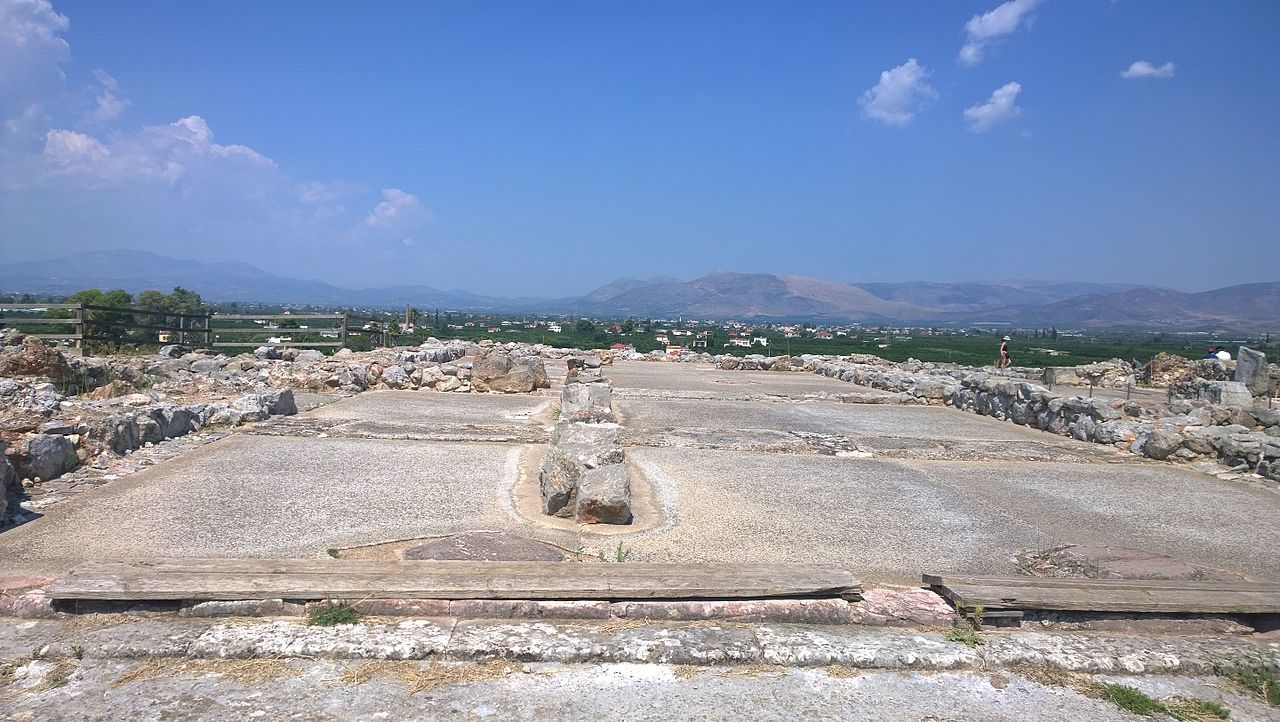

Geographic scope and affected polities
The disruption affected a broad arc from the Aegean to Egypt. The palace-centered cultures of the Aegean and Anatolia collapsed; the great central power of Anatolia, the Hittite Empire, ceased to function and its core cities were abandoned. In the Levant and eastern Mediterranean states in Syria and coastal lands associated with the Egyptian Empire and city-states in Canaan show sudden decline or destruction. The pattern is not uniform, but the scale and roughly contemporaneous timing mark it as a regional phenomenon.
Signs, mechanisms and contested causes
Archaeological layers from the late 13th and early 12th centuries BC include burned palaces, mass abandonment, and reduced craft complexity. Long-distance trade routes appear to have contracted or rerouted, and many administrative systems that recorded economic activity ceased, a process that also led to loss of literacy in some areas. Historians propose multiple interacting causes: waves of migration or invasion, internal social upheaval, economic stress, systemic failure of palace economies, climate change and drought, and seismic activity. No single explanation is universally accepted; most researchers favor a combination of stresses that cascaded into collapse.
Major destructions and archaeological examples
Multiple urban centers show evidence of violent end or abrupt decline. Cities between Troy and Gaza were affected in different ways. Notable examples often cited include the abandonment of the Hittite capital Hattusa, the fall of palatial complexes at Mycenae, and the destruction layers at coastal Ugarit. The immediate archaeological record includes both destruction debris and long phases where sites remained nearly empty.
- Examples of consequences: collapse of palace administration, decline of craft specialization, and loss of long-distance exchange.
- Short-term outcomes: population movements, ruralization, and changes in settlement patterns.
- Longer-term effects: transition toward Iron Age polities, new languages and political forms.
Aftermath and historical significance
In the centuries after the collapse, older imperial structures gave way to smaller, often ethnically mixed states. In Anatolia and northern Syria new Neo-Hittite and Aramaean polities emerged, while in the east a rising Assyrian state would expand into the vacuum; historians sometimes note the eventual rise of the Neo-Assyrian Empire among the later results. In the Aegean the breakdown of Mycenaean palace society preceded the so-called Greek Dark Ages, a period of reduced population and simpler material culture that set the stage for later cultural renewal.
The Bronze Age collapse remains a key case study in how complex, interconnected systems can fail under multiple pressures. It illustrates how economic interdependence, political centralization and environmental factors can combine to produce rapid regional transformation — a subject of continuing research and debate among archaeologists, climatologists and historians.
Questions and answers
Q: What is the Bronze Age collapse?
A: The Bronze Age collapse is the term used by historians to describe the end of the Bronze Age.
Q: What were the palace economies of the Aegean and Anatolia like during the late Bronze Age?
A: The palace economies of the Aegean and Anatolia during the late Bronze Age were dominant.
Q: What replaced the palace economies of the Aegean and Anatolia during the late Bronze Age?
A: Eventually, the village cultures of the Greek Dark Ages replaced the palace economies of the Aegean and Anatolia.
Q: What happened between 1200 and 1150 BC during the Bronze Age collapse?
A: Cultural collapse of the Mycenaean kingdoms, the Hittite Empire, and the Egyptian Empire interrupted trade routes and extinguished literacy.
Q: Which cities were violently destroyed during the first phase of the Bronze Age collapse?
A: Almost every city between Troy and Gaza was violently destroyed during the first phase of the Bronze Age collapse, including Hattusa, Mycenae, and Ugarit.
Q: What happened during the gradual end of the Dark Age?
A: The rise of settled Neo-Hittite Aramaean kingdoms of the mid-10th century BC and the rise of the Neo-Assyrian Empire occurred during the gradual end of the Dark Age.
Q: What was the effect of the Bronze Age collapse on trade routes?
A: The Bronze Age collapse interrupted trade routes.
Related articles
Author
AlegsaOnline.com Bronze Age Collapse: End of Late Bronze Age Civilizations Leandro Alegsa
URL: https://en.alegsaonline.com/art/14686
Sources
- worldcat.org : The end of the Bronze Age : changes in warfare and the catastrophe ca. 1200 B.C.
- worldcat.org : The last Mycenaeans and their successors; an archaeological survey, c. 1200-c. 1000 B.C.
- worldcat.org : The Mediterranean context of early Greek history
- worldcat.org : 1177 B.C. : the year civilization collapsed
- link.springer.com : "Nothing Lasts Forever: Environmental Discourses on the Collapse of Past Societies"
- doi.org : 10.1007/s10814-011-9054-1
- worldcat.org : 1059-0161