
Bhimbetka Rock Shelters — Prehistoric Caves of Central India
Bhimbetka is a complex of prehistoric rock shelters in Madhya Pradesh, India, known for hundreds of painted caves and archaeological evidence spanning the Stone Age to historic times.
Overview
The Bhimbetka rock shelters are a group of natural caves and overhangs in the Vindhya hills of central India that preserve a long sequence of human occupation and art. Located in the Raisen district of Madhya Pradesh near Bhopal, the site is famous for its painted panels, which record elements of prehistoric life. It is recognised as a World Heritage site and detailed information is available through formal sources such as official listings.
Image gallery
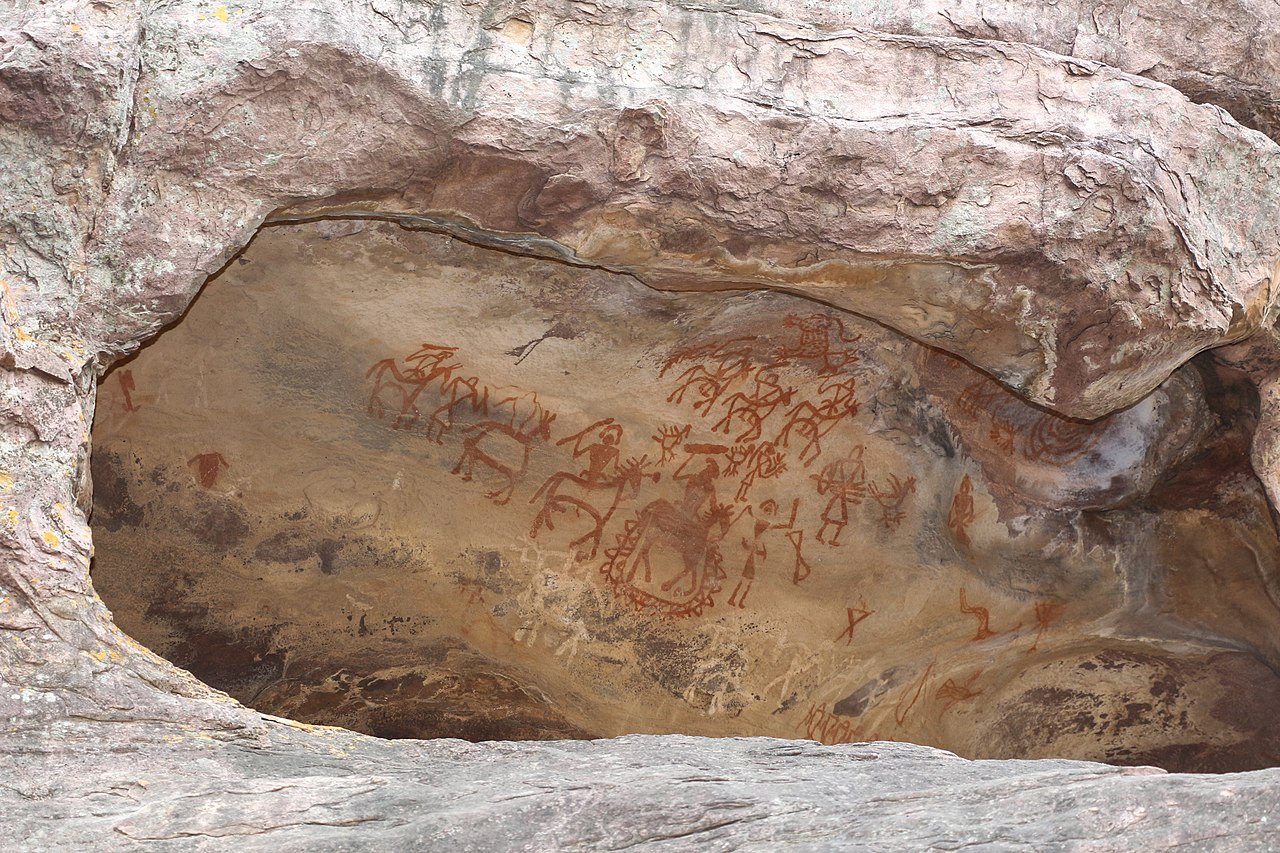
10 Images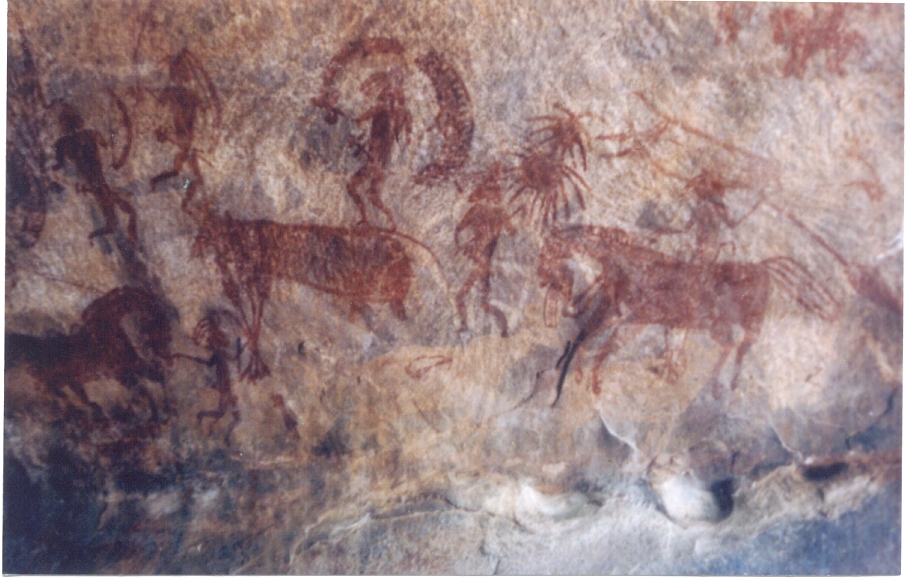


Characteristics and art
The shelters are carved in sandstone and were formed by weathering and erosion of the escarpments. Many contain paintings executed in natural pigments — red and white ochres, charcoal and other mineral and organic substances — applied onto rock surfaces. The imagery ranges from stylised animal figures to lively human scenes showing hunting, dancing, musical performance and daily tasks.
- Common motifs: hunting parties, wild and domesticated animals, dancers and musicians.
- Techniques: pigments mixed with plant sap or animal fat; layering and reworking over time.
- Setting: shelters, rock overhangs and shallow caves used as temporary camps or habitation.
History and dating
Archaeological study at Bhimbetka has revealed deposits and art that span a long time span from the Paleolithic and Mesolithic into the historic era. The site was brought to wider attention in the mid-20th century by archaeologists who recorded its paintings and stratified cultural remains. Some artworks are attributed to hunter-gatherer communities, while later panels reflect changes in technology, economy and social life.
Importance and research
Bhimbetka is important because it provides direct visual and material evidence of prehistoric human behaviour on the Indian subcontinent. The shelters offer insights into subsistence activities, symbolic expression and the continuity of occupation in this part of South Asia. Researchers study the paintings alongside stone tools, hearths and other archaeological finds to reconstruct past lifeways.
Conservation and public access
The painted surfaces are vulnerable to weathering, biological growth and human impact. Conservation efforts and visitor management aim to protect the fragile art while allowing education and controlled access. As with many prehistoric sites, careful monitoring and scientific recording are essential to preserve Bhimbetka for future study.
Questions and answers
Q: What are the Bhimbetka rock shelters?
A: The Bhimbetka rock shelters are an archaeological site of the Paleolithic period.
Q: What do these shelters represent?
A: They are the earliest traces of human life on the Indian Subcontinent and the beginning of the Indian Stone Age.
Q: What can be seen in these rock shelters?
A: Many beautiful drawings by the Stone Age people can be seen there.
Q: What type of drawings can be found in these shelters?
A: Drawings of people who are hunting can be found in the Bhimbetka rock shelters.
Q: What is the significance of these drawings?
A: These drawings provide a glimpse into the life and culture of the Stone Age people who created them.
Q: When were these drawings made?
A: These drawings were made during the Paleolithic period, which was approximately 2.6 million years ago to around 10,000 BCE.
Q: How can one visit these rock shelters?
A: The Bhimbetka rock shelters are open to visitors and can be visited by taking a guided tour or by purchasing a ticket from a designated ticket counter.
Related articles
Author
AlegsaOnline.com Bhimbetka Rock Shelters — Prehistoric Caves of Central India Leandro Alegsa
URL: https://en.alegsaonline.com/art/11190