
Canopic jar: Ancient Egyptian vessels for preserving a body's organs
Canopic jars are funerary containers used in Ancient Egypt to hold and protect organs removed during mummification. They are identified by lids shaped as the Four Sons of Horus and appear widely in tomb contexts.
Overview
Canopic jars are specialized funerary containers used in Ancient Egypt to hold selected internal organs removed during the mummification process. Intended to protect parts of the body that were separated from the corpse, these jars appear frequently in tombs of the elite and later in broader burial practice. Their use reflects Egyptian beliefs about bodily integrity and survival in the afterlife.
Image gallery
8 Images


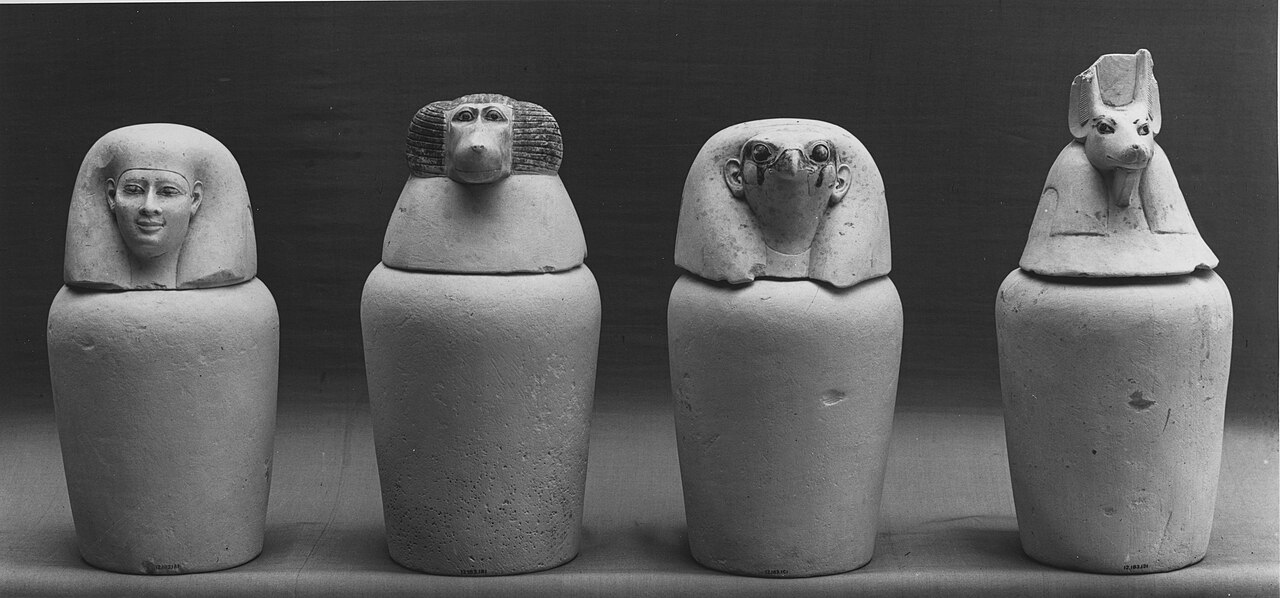

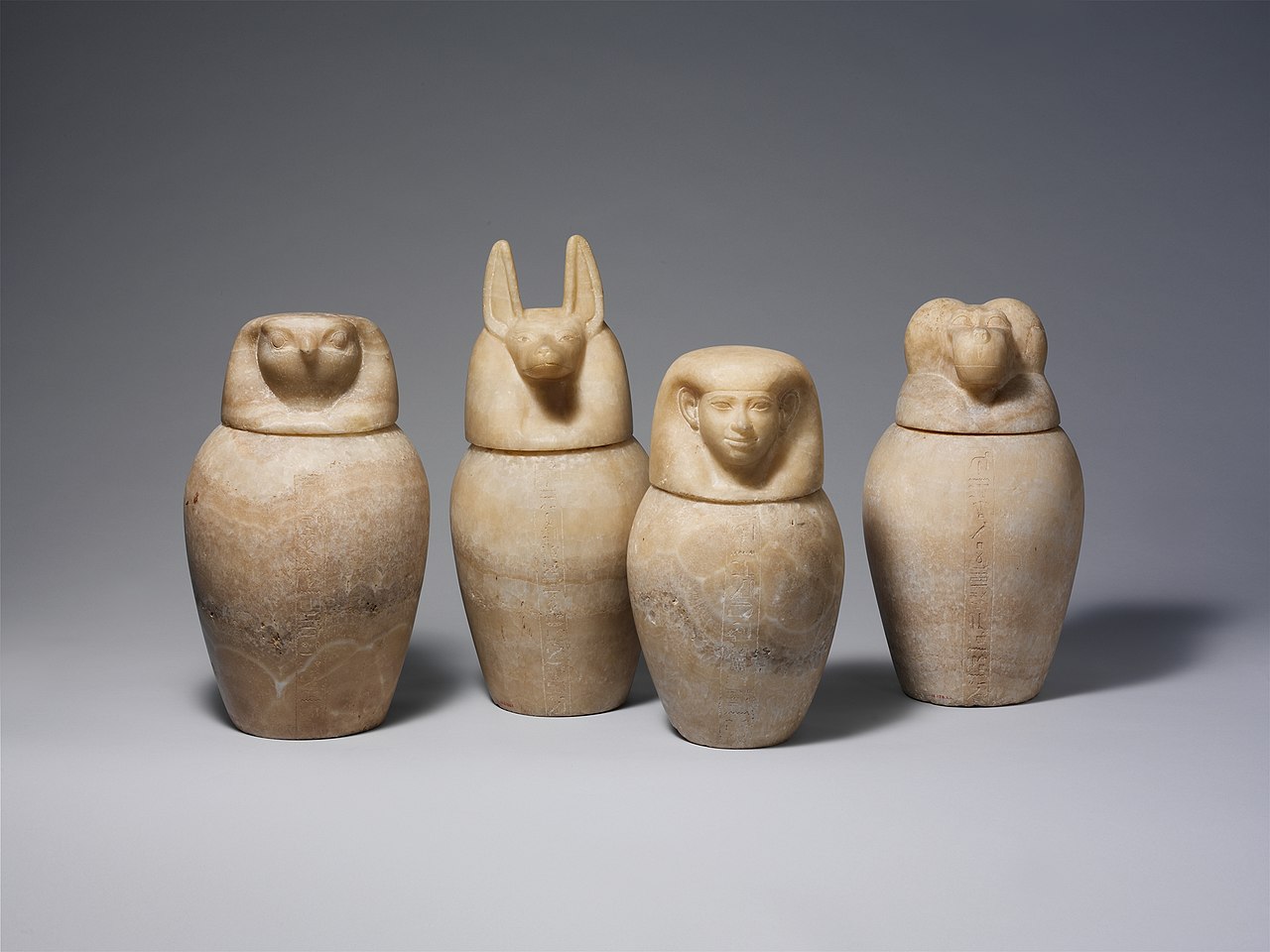

Design and the Four Sons of Horus
Most well-known canopic jars have lids carved in the form of heads that represent the Four Sons of Horus, protective deities charged with guarding the organs. Typical lid types include baboon-headed, human-headed, falcon-headed and jackal-headed forms. These correspond to the names Imsety (human), Duamutef (jackal), Hapi (baboon) and Qebehsenuf (falcon); the group is commonly referred to as the sons of Horus. Often the jars were inscribed or painted with short protective spells.
Function and contents
The four organs most often associated with canopic jars are the lungs, liver, stomach and intestines. During embalming these organs were removed because they were thought to be vulnerable or unnecessary for the dead person’s new, spiritual existence, yet still required protection. In some periods the viscera were placed directly in jars, while in others they were treated separately and sometimes returned to the body or wrapped and placed in a canopic chest.
History and development
Canopic practice evolved over centuries. Early burials sometimes used simple boxes or no separate containers at all; later, especially in the Middle and New Kingdoms, the four distinct jars with deity-headed lids became widespread for elite burials. In subsequent eras variations appear—small figures, sealed internal wrappings or symbolic containers—reflecting changing religious emphasis and funerary technique.
Materials and archaeological importance
Jars survive in a range of materials, including alabaster, calcite, limestone, pottery and wood. The style, inscriptions and find context make canopic jars useful for dating tombs and understanding mummification practice and belief. Museum displays often show finely carved examples alongside less elaborate folk versions, illustrating social differences in burial provision.
Notable facts and distinctions
Although stereotypically associated with royal mummies, canopic jars were adopted beyond royalty over time. Their iconography links funerary ritual to protective theology: the Four Sons were paired with goddesses and ritual texts to preserve identity after death. For further reading on particular examples and museum collections see resources linked here: Hapi and friends, additional references at organ rituals, general summaries at human-headed types and illustrative catalogs at falcon forms, jackal forms, and broader studies at baboon representations.
Related articles
Author
AlegsaOnline.com Canopic jar: Ancient Egyptian vessels for preserving a body's organs Leandro Alegsa
URL: https://en.alegsaonline.com/art/16603