
Positron (antielectron): properties, behavior, and applications
A positron is the antimatter counterpart of the electron. This article explains its physical properties, creation and annihilation, the bound state positronium, historical discovery, and practical uses.
Overview
A positron, often called an antielectron, is the elementary particle that is the antimatter counterpart of the electron. It shares many intrinsic properties with the electron but carries opposite electric charge. The existence of positrons illuminates the symmetry between matter and antimatter in modern physics and plays a role in both fundamental research and applied technologies.
Image gallery
2 Images
Physical properties
In basic respects a positron mirrors an electron: it has the same mass and the same intrinsic spin magnitude as an electron, but its electric charge is positive rather than negative (positive charge). As a member of the leptons, it does not participate in the strong nuclear force. Because it is the antimatter partner of an electron, the positron is commonly discussed in the context of antimatter and comparisons with the electron.
Production and annihilation
Positrons are produced naturally and artificially. Natural sources include certain forms of radioactive decay (beta-plus decay) and interactions of cosmic rays in the atmosphere. In laboratories and medical devices they are produced by particle accelerators or radioactive isotopes. When a positron encounters an electron their opposite charges and quantum numbers allow them to annihilate, converting their mass and kinetic energy into electromagnetic radiation. This annihilation produces high-energy photons, typically gamma rays with a characteristic energy, conserving total energy and momentum. The process illustrates how particle mass can be converted into energy in accord with relativity and quantum electrodynamics.
Positronium: a short-lived bound state
A positron can bind with an electron to form a hydrogen-like exotic atom called positronium. This system resembles an atom in that it has discrete energy levels and quantum states, but it is inherently unstable because the particle and antiparticle eventually annihilate. Two common configurations exist: a singlet state that decays into two photons and a triplet state that decays into three photons. Study of positronium provides precise tests of quantum electrodynamics and insights into matter–antimatter interactions.
Applications and significance
Positrons have practical and scientific uses. In medicine, positron-emitting isotopes are central to positron emission tomography (PET), a diagnostic imaging technique. In materials science, positron beams probe defects and voids in solids because positrons are sensitive to electron density variations. In astrophysics, annihilation signatures help identify processes in the interstellar medium and near compact objects. In fundamental physics, precision measurements involving positrons and antihydrogen explore charge–parity symmetries and the behavior of antimatter under gravity.
Historical notes and notable facts
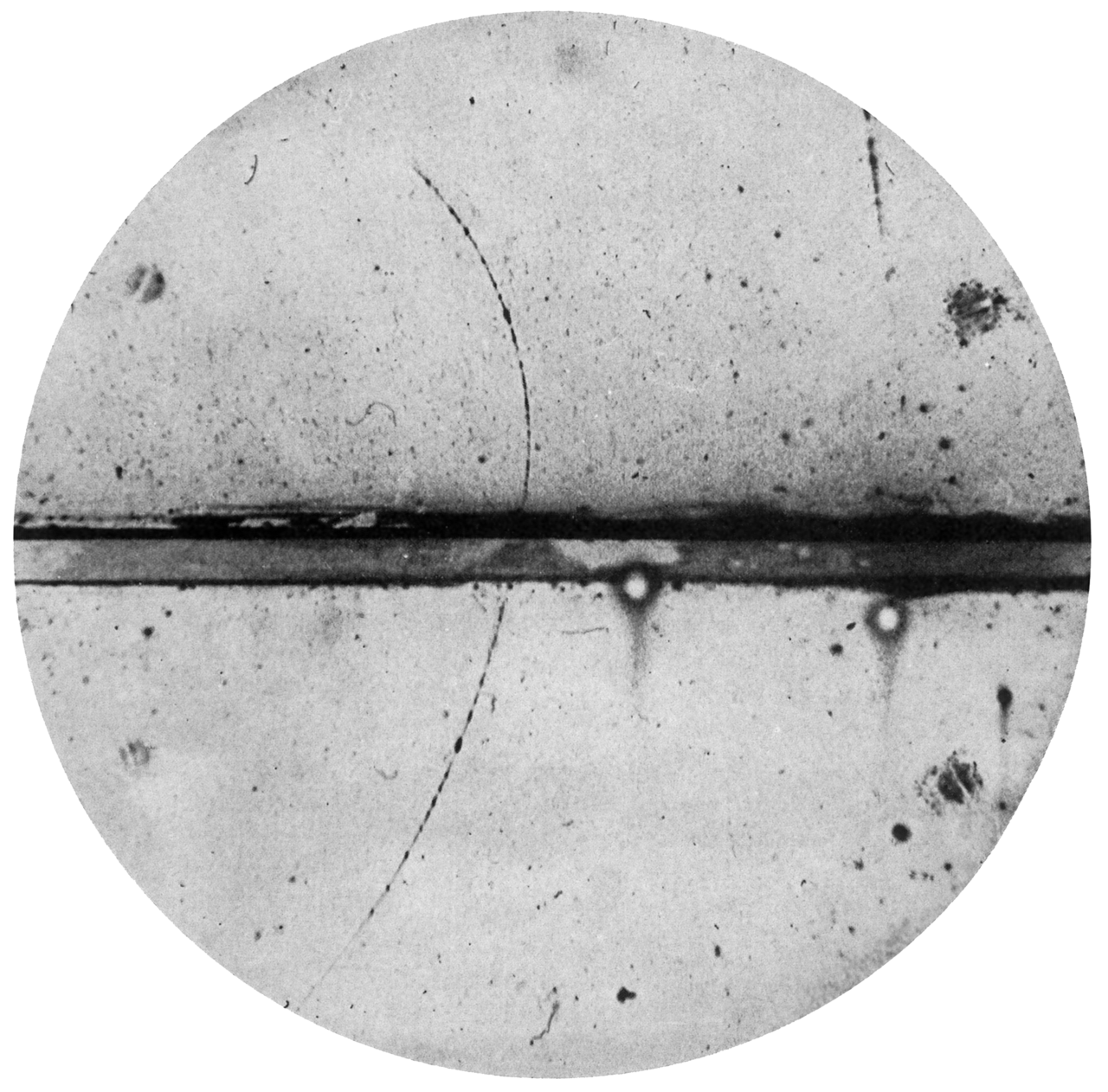
The positron was predicted on theoretical grounds in the early 20th century and later identified experimentally, providing the first clear evidence of antimatter. Its discovery confirmed a major prediction of relativistic quantum theory and opened an active field of research into particle–antiparticle symmetry. Although annihilation converts particles into radiation, conservation laws govern the outcome: charge, energy, momentum, and other quantum numbers must balance in the reaction.
- Key distinctions: same mass and spin but opposite charge compared with electrons.
- Bound state: positronium behaves like an atom but is transient and ultimately annihilates.
- Practical role: medical imaging, materials analysis, and fundamental tests of physics.
For further reading on related topics see antimatter resources, introductions to the electron, technical discussions of mass and spin, explanations of electric charge, energy concepts (energy), photon behavior (photons), specialized pages about positronium, comparisons to ordinary atoms, and notes on why such systems are intrinsically unstable.
Related articles
Author
AlegsaOnline.com Positron (antielectron): properties, behavior, and applications Leandro Alegsa
URL: https://en.alegsaonline.com/art/78348