
Photon (elementary quantum of light)
A photon is the quantum of the electromagnetic field: a massless, spin-1 boson that carries light, energy E=hf, and momentum, and underlies optics, lasers and quantum communications.
Overview
A photon is the elementary quantum associated with electromagnetic radiation. In common language it is the fundamental carrier of light, but in physics it appears as an excitation of the electromagnetic field rather than a tiny ball of matter. The word has roots in the Greek term φως. Photons are central to modern physics and to the way we model light in many atomic models and models of matter–radiation interaction.
Image gallery
3 Images

Basic characteristics
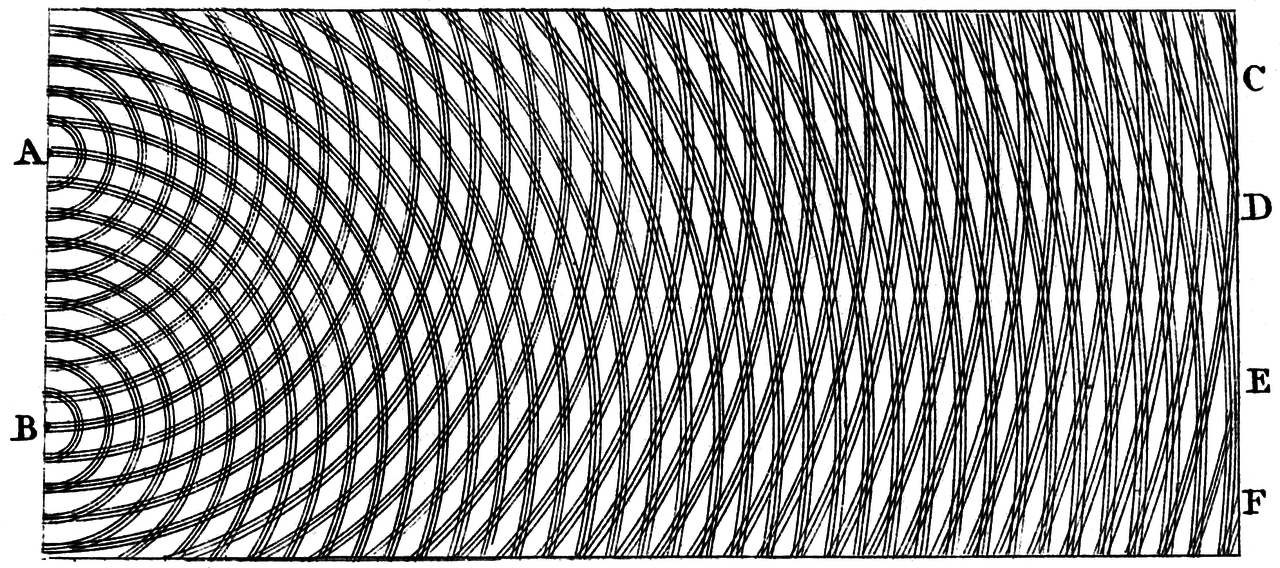
Each photon carries a fixed quantum of energy proportional to its frequency, expressed by the relation E = h·f, where h is Planck's constant. This relation emerges from quantum mechanics. Photons are commonly described as particles in the sense that they can be counted, emitted, absorbed, and can produce particle-like detection events. At the same time they exhibit wave-like properties such as interference and diffraction, a duality that is a hallmark of quantum theory.
Unlike material particles, photons have no rest mass. According to special relativity, they always travel at the invariant speed c in vacuum and carry momentum related to their energy. This momentum allows photons to exert radiation pressure and to transfer mechanical impulse to matter despite having zero rest mass.
Internal degrees and identity
Photons are bosons with intrinsic spin equal to 1, but only two transverse polarization states are physically observable for a freely propagating photon. They are their own antiparticles: the particle that carries electromagnetic interactions is identical to its antiparticle, a fact sometimes summarized as its own antiparticle. In notation used for high-energy processes the photon is often represented by the symbol γ or referred to as gamma in particle-physics contexts.
Historical context
The idea that light could be quantized dates to work by Planck and was sharpened by Einstein's explanation of the photoelectric effect in 1905, which argued that light can act as discrete energy packets. This proposal helped bridge classical electromagnetic theory and the emerging quantum description of atoms. Over the following decades the photon became a standard concept in quantum electrodynamics and in practical models of how atoms emit and absorb radiation across space.
Uses and significance
Photons are fundamental to a wide range of technologies and natural processes. They are responsible for vision, drive photosynthesis in plants, and are the working quanta in lasers and optical fibers. In applied physics and engineering, control of single photons enables quantum cryptography and quantum information experiments. Practical uses include:
- Communications: fibre optics and free-space optical links that rely on photon transmission.
- Imaging and sensing: from cameras to LIDAR and medical diagnostics.
- Quantum technologies: single-photon sources and detectors used for secure communication and metrology.
- Everyday energy transfer: sunlight composed of photons is the primary natural energy source for Earth.
For further reading on foundational aspects and advanced topics, consult introductory treatments in quantum mechanics and textbooks on electromagnetic theory and quantum electrodynamics. Additional resources address historical development and experimental techniques for generating and detecting individual photons (see etymology, conceptual background and applied reviews at specialist sites particle summaries and optics introductions).
Notes and cross-references: early atomic and molecular atomic models used discrete emission to explain spectra; modern formulations treat the photon as an excitation of a field, consistent with relativistic quantum field theory and experimental observations across laboratory and astronomical scales. For concise symbol usage in particle notation see sources marked by γ and related listings under the label gamma.
If you wish to explore experimental demonstrations—such as interference with attenuated light beams or single-photon detection—seek accessible laboratory guides and educational resources that document methods for producing, manipulating, and measuring photons across the optical and radio frequency bands.
Questions and answers
Q: What is a photon?
A: A photon is an elementary particle that transmits light and is its own antiparticle.
Q: How does the energy of a photon depend on frequency?
A: The energy of a photon is related to its frequency, with higher frequency photons having more energy and being associated with shorter wavelengths.
Q: Who proposed that light consists of separate pieces of energy (particles)?
A: Albert Einstein proposed that light consists of separate pieces of energy (particles).
Q: What symbol is usually used to represent a photon?
A: The symbol γ (gamma) is usually used to represent a photon.
Q: Does a photon have mass?
A: No, photons have no rest mass. However, according to Einstein's theory of relativity they do have momentum.
Related articles
Author
AlegsaOnline.com Photon (elementary quantum of light) Leandro Alegsa
URL: https://en.alegsaonline.com/art/76607