
Mass (physical quantity)
Mass is the measure of how much matter an object contains and how it resists acceleration. This article covers definitions, inertial and gravitational mass, measurement methods, history, and key distinctions.
Overview
Mass is a fundamental property of physical objects that quantifies the amount of matter contained in a body and its resistance to changes in motion. It is distinct from weight, which is the force exerted on a mass by gravity. In everyday contexts the two are often conflated, but in physics the distinction is important: mass remains the same regardless of location, while weight depends on the local gravitational field.
Image gallery
9 Images




Characteristics and types
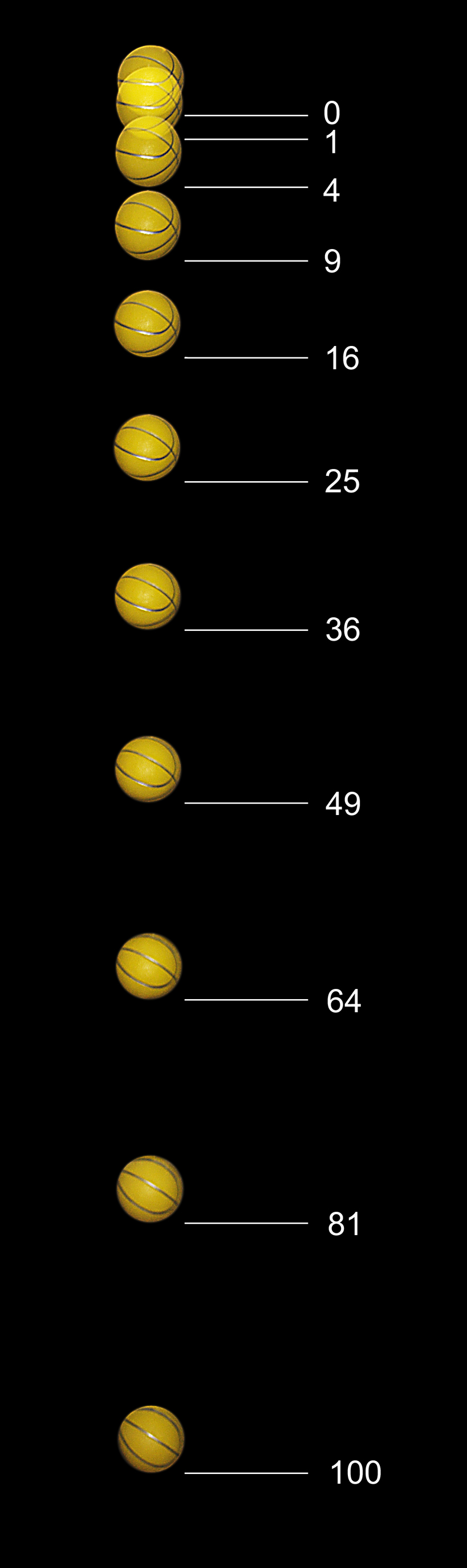
Two concepts of mass are commonly used in physics. Inertial mass characterizes how much an object resists acceleration when subjected to a force; according to Newton's second law the same applied force produces less acceleration for a larger inertial mass. Gravitational mass describes how strongly an object interacts with gravitational fields and how much gravitational force it both experiences and produces. Modern physics treats the mass of a particle as an intrinsic property, often called invariant or rest mass, while some relativistic contexts also use the concept of relativistic mass to describe energy-dependent motion.
History and development
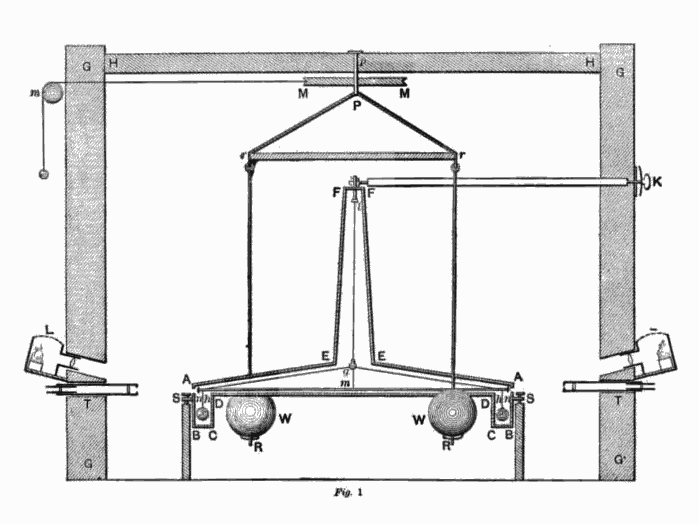
Ideas about mass developed through classical mechanics and later through relativity. Early thinkers distinguished heaviness and resistance to motion. With the formulation of Newtonian mechanics, mass became a central quantitative quantity in laws of motion and universal gravitation. Later experiments and theoretical advances, including precision tests of the equivalence of inertial and gravitational mass and Einstein's theory of relativity, refined the concept and connected mass with energy.
How mass is measured
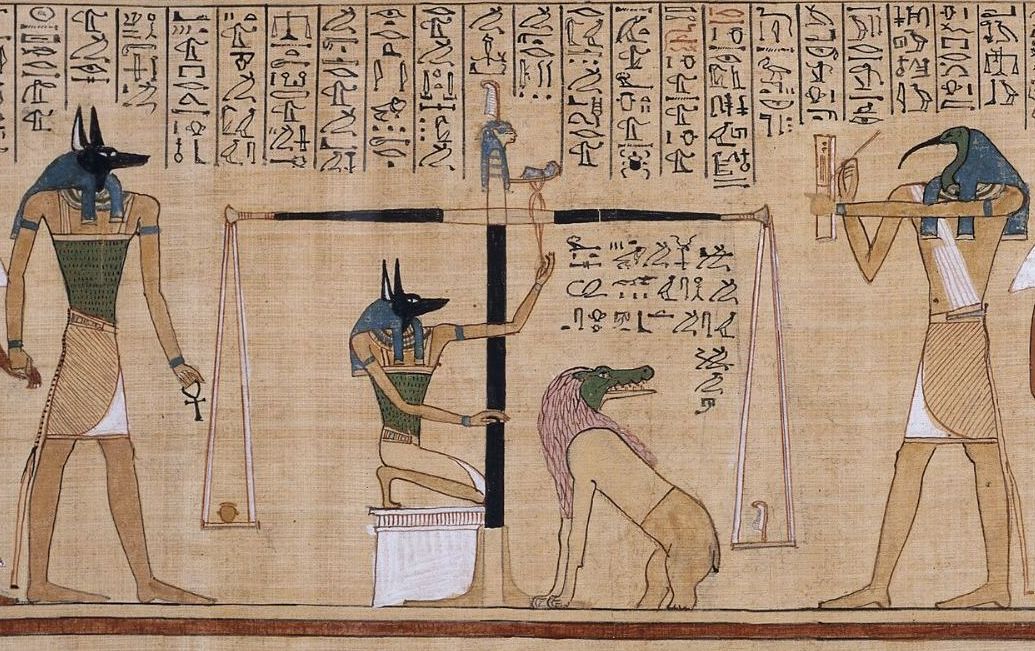
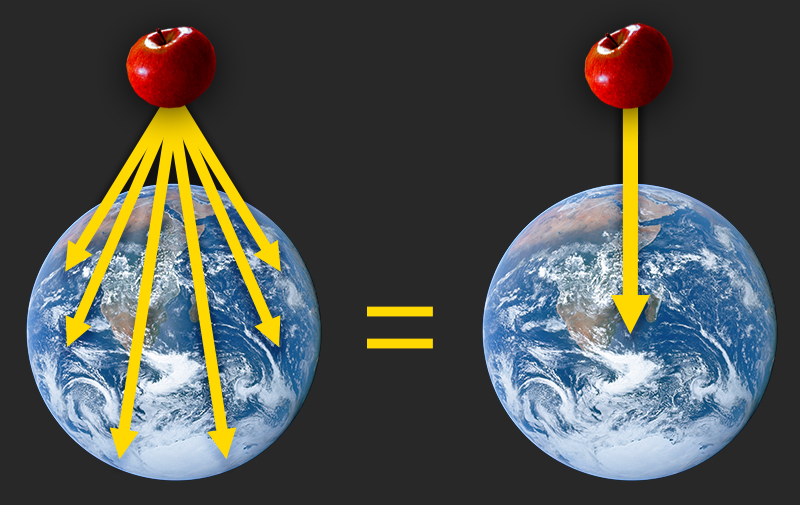
There are several practical methods to determine mass. A balance compares an unknown object with known masses and effectively measures gravitational mass by balancing gravitational forces. Measuring how an object accelerates under a known applied force provides its inertial mass through the relation F = ma; see force and acceleration for background. At astronomical scales, the mass of planets or stars can be inferred from their gravitational effects on nearby bodies or light, methods that depend on gravity and orbital dynamics.
Uses, examples, and importance
Mass is central across science and engineering. In mechanics it determines momentum and kinetic energy; in astrophysics it governs orbits, stellar evolution, and the structure of the universe. In technology, knowing mass is critical for design, navigation, and safety. Mass also appears in the mass–energy relation of relativity, which links mass to energy and has practical implications in nuclear and particle physics.
Distinctions and notable facts
- Mass versus weight: weight is a force; mass is an intrinsic property. A mass has the same value on Earth and on the Moon, while weight changes with gravity.
- Equivalence principle: experiments show inertial and gravitational mass are proportional to very high precision, a cornerstone of modern gravitational theory.
- Massless particles: some particles, such as photons, have no rest mass but carry energy and momentum and interact with gravity in relativistic frameworks.
Further reading and resources
For foundational concepts see material on inertia and historical experiments testing gravity and mass. For gravitational theory and its implications consult resources on gravity. Additional introductory and technical sources provide experimental, theoretical, and applied perspectives across classical mechanics, relativity, and modern physics.
Questions and answers
Q: What is mass?
A: Mass is a measure of the amount of matter present in a body.
Q: What is the difference between mass and weight?
A: Mass is a measure of the amount of matter in a body, while weight is a measure of the gravitational force exerted on an object due to its mass.
Q: How can we measure the mass of an object?
A: We can measure the mass of an object if a force acts upon it.
Q: What is inertial mass?
A: Inertial mass is a measure of the resistance of an object to a change in its motion.
Q: What is mass attraction?
A: Mass attraction is another term for gravity, a force that exists between all matter.
Q: How can we find the gravitational mass of an object?
A: We can find the gravitational mass of an object by measuring the force of gravity acting on it.
Q: Are inertial and gravitational mass the same?
A: Tests show that inertial and gravitational mass are either the same or almost the same.
Related articles
Author
AlegsaOnline.com Mass (physical quantity) Leandro Alegsa
URL: https://en.alegsaonline.com/art/62683