
Pakistan Navy
The naval branch of Pakistan's armed forces, responsible for maritime defence, coastal security, fleet operations and humanitarian missions along Pakistan's Arabian Sea coastline.
Overview
The Pakistan Navy is the maritime arm of Pakistan's armed forces, charged with protecting the nation's sea lines of communication, ports and exclusive economic zone. Its area of responsibility includes roughly 1,046 kilometres (650.0 mi) of coastline and the approaches across the Arabian Sea. The service combines surface warships, submarines, naval aviation and marine infantry elements to meet both defence and peacetime maritime tasks.
Image gallery
10 Images




Structure and principal components
The Pakistan Navy is organized into operational commands and support branches with a central staff that sets strategy, procurement and training policy. Key components include:
- Surface fleet of frigates, corvettes and patrol craft, responsible for maritime patrol, escort and interdiction.
- Submarine force, tasked with stealthy deterrence and anti-surface warfare.
- Naval aviation, which provides reconnaissance, maritime patrol and logistics support.
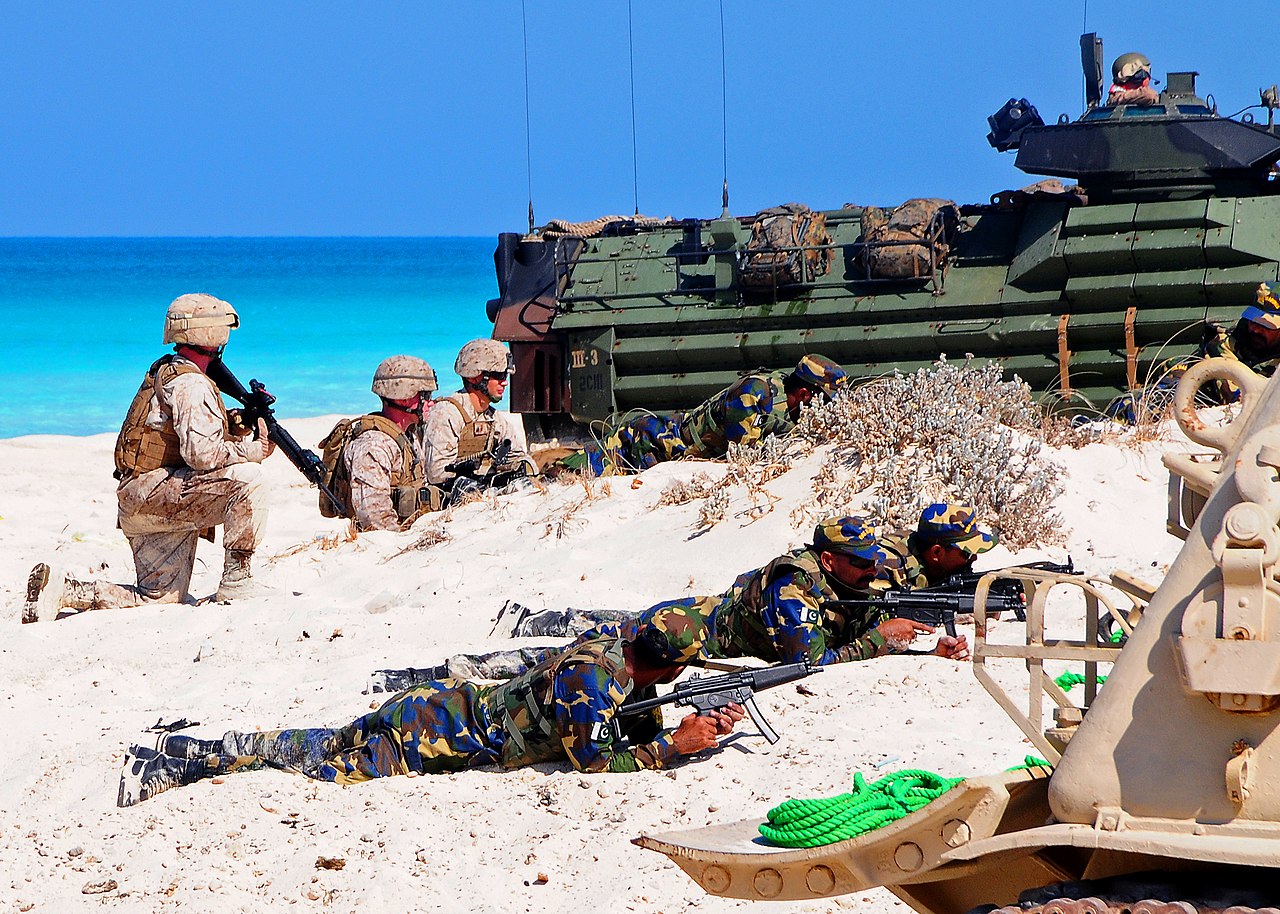
- Marines and naval special forces, trained for littoral combat and amphibious operations.
History and development
Formed after Pakistan's independence in 1947, the navy grew from modest origins into a regional maritime force over the following decades. It saw combat and strategic operations in major conflicts between Pakistan and India, and over time modernized through domestic shipbuilding and acquisitions from foreign partners. The service has adapted its doctrine to address conventional threats as well as asymmetric challenges at sea.
Roles, missions and operations
Beyond conventional naval combat, the Pakistan Navy undertakes peacetime missions such as maritime law enforcement, protection of fisheries and offshore resources, search and rescue, and humanitarian assistance following natural disasters. It has contributed to multinational anti-piracy patrols and regional exercises, demonstrating interoperability with other navies.
Fleet highlights and bases
The fleet features a mix of modern and legacy platforms, including multi-role surface warships (ships), guided-missile frigates and smaller fast-attack craft. It maintains an undersea arm with diesel-electric submarines and operates destroyer-class and other larger combatants classified among its surface units (destroyers). Major ports and bases supporting fleet operations are concentrated on the southern coast, with key logistical and shipbuilding facilities keeping platforms operational.
Training, doctrine and notable facts
Officer and enlisted training takes place at naval academies and specialist schools, where seamanship, engineering, naval aviation and submarine skills are taught. The service has invested in local ship construction and repair to enhance self-reliance. A notable date in the navy's public calendar is Navy Day, observed on September 8 to commemorate actions taken during the Indo-Pakistani War of 1965. The navy remains a central element of Pakistan's overall defence and a key instrument for safeguarding its maritime interests.
See also
- Maritime security and regional cooperation
- Naval modernization and shipbuilding programs
- Humanitarian and disaster-relief operations
Related articles
Author
AlegsaOnline.com Pakistan Navy Leandro Alegsa
URL: https://en.alegsaonline.com/art/74072