
Panzer I (Panzerkampfwagen I) — German light tank of the 1930s
A compact guide to the Panzer I: its origins as a training light tank, design and variants, combat use in 1930s conflicts and World War II, and its legacy in armoured warfare.
Overview
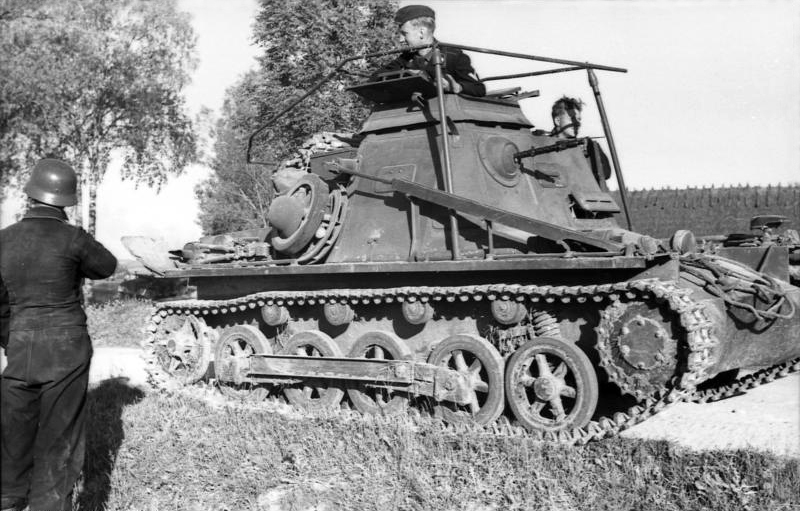
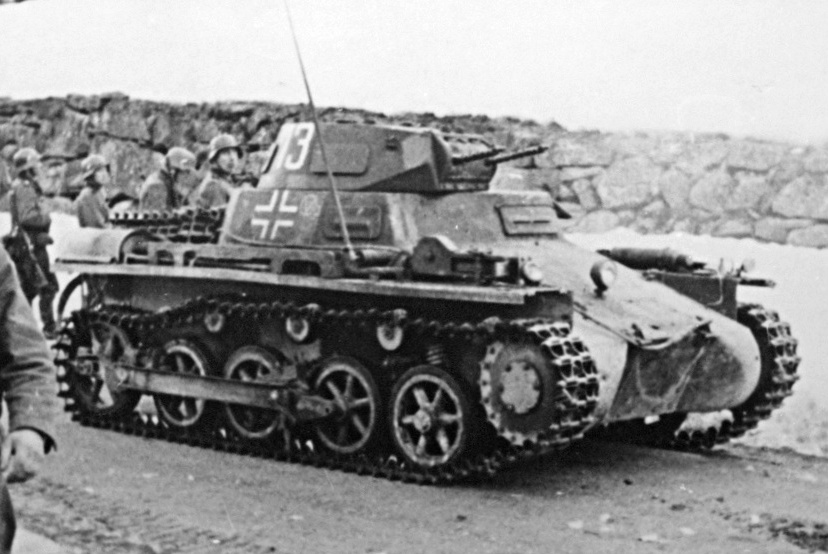
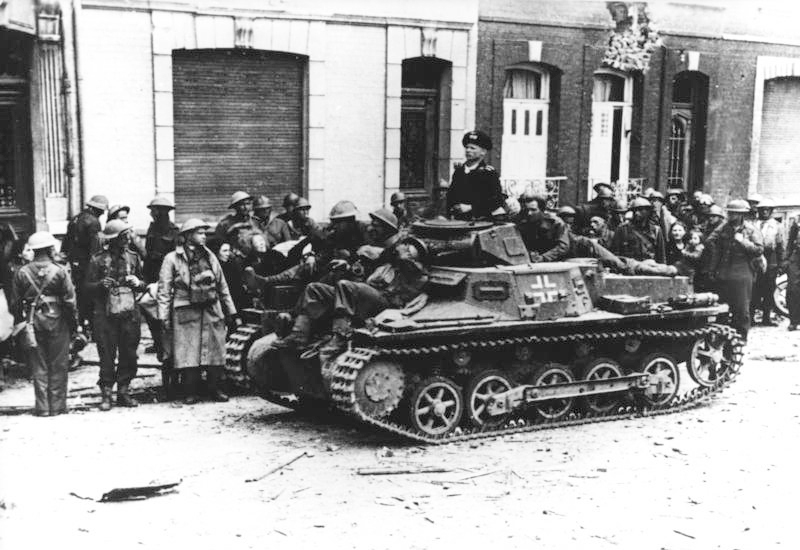
The Panzer I, formally Panzerkampfwagen I, was a small, lightly armoured German tank introduced in the early 1930s to give the Wehrmacht its first purpose-built tracked armoured vehicle for training and doctrinal development. Built as a two-man vehicle with machine-gun armament, it served both to teach crews the basics of armoured warfare and to provide limited reconnaissance and infantry support in combat. The tank became closely linked to the mechanization of Nazi Germany's armed forces and was an important element of the armoured units that fought in the opening campaigns of World War II.
Image gallery
10 Images




Design and characteristics
Conceived as a light, economical vehicle, the Panzer I featured thin steel plate armour and was armed typically with two machine guns. Its compact layout placed commander and driver in a cramped turret and hull, which limited situational awareness and combat endurance. Mobility was a design priority: the tank was relatively small and easily transported, but its light protection and armament meant it was unsuited for engagements with enemy tanks or fortified positions. Crew protection against shrapnel and small arms was modest, making the vehicle vulnerable once modern anti-tank weapons and larger-calibre armoured vehicles appeared.
Variants and conversions
Although originally produced as a basic training and light reconnaissance tank, several variants and field conversions extended the Panzer I's usefulness. These included command-vehicle adaptations, flame-thrower versions, and specialized chassis used for artillery or anti-tank conversions. One of the better known field modifications mounted a heavier anti-tank gun on an adapted Panzer I chassis to create an early tank destroyer. These variants reflected both German ingenuity and the pressing need to maximize available platforms in the 1930s and early war years.
Combat history
Despite being intended primarily for training, the Panzer I saw combat in multiple theatres of the 1930s and early 1940s. It was deployed in the Spanish Civil War, where its limitations were exposed but it also provided valuable combat experience to German crews and staff. During the Second World War the vehicle participated in the invasions of Poland and France, and later fought on the Eastern Front against the Soviet Union. Panzer I chassis and crews also served in the deserts of North Africa. Outside Europe, related variants and Chinese examples were involved during conflicts linked to the Second Sino-Japanese War and operations in China. In every theatre the tank's thin armour and light armament limited its survivability against increasingly powerful weapons.
Assessment and legacy
The Panzer I played a formative role in German armoured doctrine. Its primary value lay less in battlefield performance and more in allowing the Wehrmacht to develop tactics, training systems, and logistics for armoured warfare. As the war progressed, the Panzer I was progressively withdrawn from front-line service and replaced by more capable designs such as the Panzer IV and later the Panther and Tiger series. Nevertheless, its widespread use in the 1930s and early war years makes it a key subject for understanding the rapid evolution of tank design and mechanized tactics between the world wars.
Notable points
- Role: started as a training/light reconnaissance tank but was pressed into combat when needed.
- Armament: machine-guns only—unsuitable against armoured opponents.
- Crew: small two-man crew with limited internal space.
- Conversions: numerous field adaptations extended its service life in secondary roles.
- Historic importance: influential in developing early German armoured tactics despite limited battlefield effectiveness.
For more detailed technical data, production histories and unit service records, consult specialist works and archival sources: history overview, campaign references, and contemporary monographs listed at research collections and military museums (Spanish records, Polish campaign studies, French archives, Soviet front analyses, North African unit diaries, Chinese sources, Sino-Japanese conflict materials).
Related articles
Author
AlegsaOnline.com Panzer I (Panzerkampfwagen I) — German light tank of the 1930s Leandro Alegsa
URL: https://en.alegsaonline.com/art/74406
Sources
- commons.wikimedia.org : Panzerkampfwagen I