
Panavia Tornado
A tri-national, twin‑engine, variable‑sweep multirole combat aircraft introduced in 1979, used for strike, reconnaissance, SEAD and air defence by several European and allied air forces.
Overview
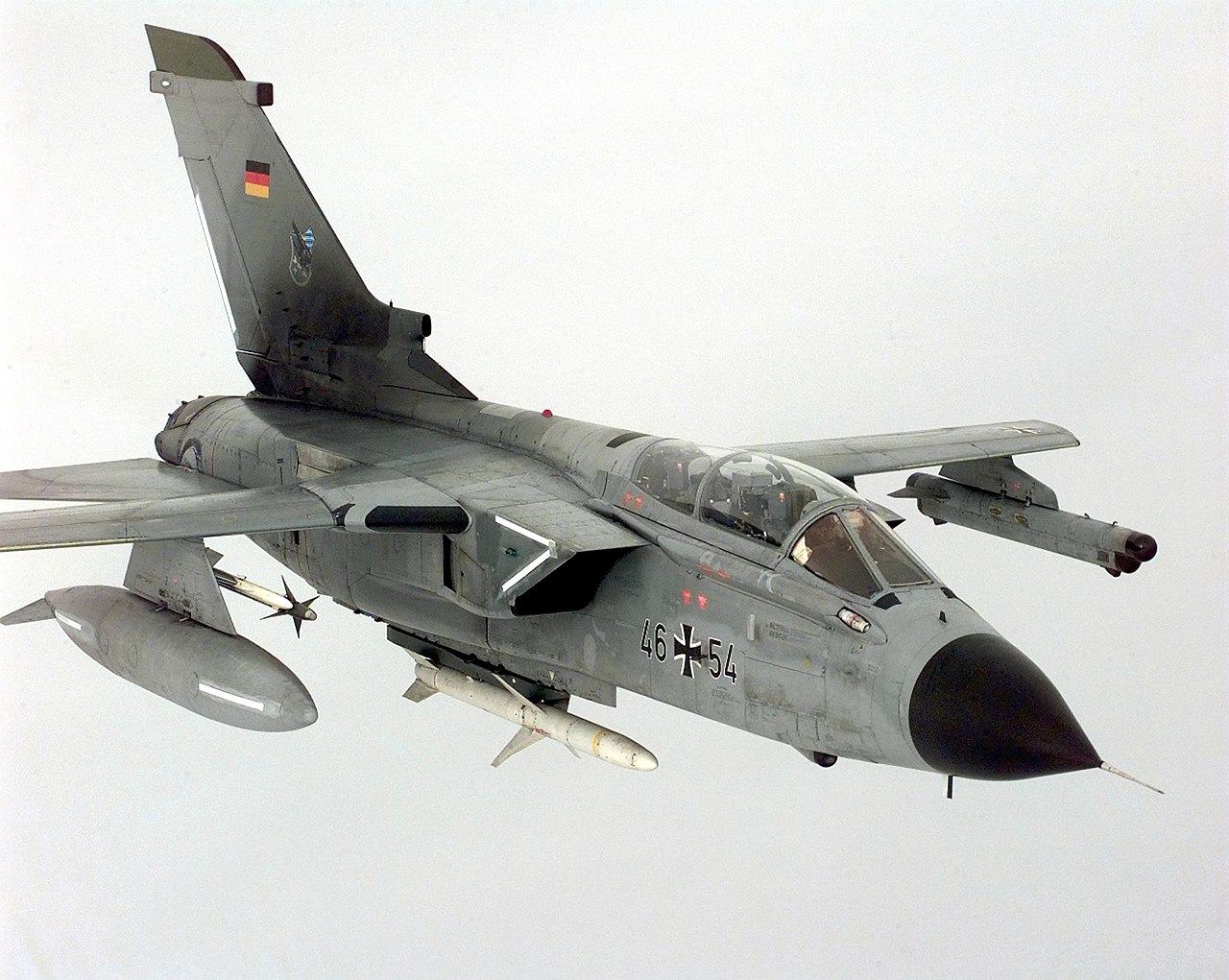
The Panavia Tornado is a twin‑engine, variable‑sweep wing combat aircraft developed and manufactured by the Panavia consortium in the 1970s. Originally conceived to perform low‑level penetration strike missions and electronic warfare roles, the type evolved into a family of variants tailored to interdiction, reconnaissance, suppression of enemy air defenses (SEAD) and air‑defence tasks. Its development involved sustained cooperation between the United Kingdom, West Germany and Italy and it entered service in 1979 after a first flight in 1974. For a concise technical introduction see design overview.
Image gallery
10 Images




Design and main characteristics
Key design features include a variable‑geometry wing to optimize performance across speed regimes, twin turbofan engines for high thrust and economy at low altitude, and a two‑crew cockpit in many variants to share piloting and weapons/navigation duties. Strike models were equipped with terrain‑following radar and advanced navigation and attack systems to allow high‑speed, low‑level operations. Information on avionics and propulsion can be found at technical systems and engines and performance.
Variants
- IDS / Interdictor/Strike: The primary ground‑attack and interdiction version, optimized for weapons carriage and low‑level penetration — see IDS details.
- ECR / Electronic Combat/Reconnaissance: A specialised SEAD and reconnaissance model fitted with sensors and anti‑radar weapons — overview at ECR role.
- ADV / Air Defence Variant: An interceptor version intended for long‑range air‑defence duties, sometimes described simply as the Tornado ADV — background at ADV history.
Operational history
The Tornado has seen extensive operational use from the 1980s into the 21st century. It took part in coalition operations during the 1991 Gulf War and later deployments over the Balkans, Afghanistan and Libya, performing strike, reconnaissance and electronic warfare missions. Various national air arms operated the type; notable users and export histories are summarized at operators and deployment record. Saudi Arabia, Italy, Germany and the United Kingdom have all flown Tornados in combat or coalition operations — country profiles are available via Saudi use, Italian service, German service and RAF history.
Legacy, upgrades and retirement
Over decades of service the Tornado received avionics upgrades, improved weapons integration and life‑extension programmes to keep it operationally relevant. The type influenced later European joint development projects and demonstrated the benefits — and complexities — of multinational procurement. The United Kingdom retired its Tornado fleet from frontline combat roles in the late 2010s; information on fleet drawdowns and modernization programs is covered at upgrades, retirement and modernisation efforts.
Notable facts and distinctions
The Tornado family is often highlighted for its flexible mission set, the characteristic swinging wing, and for being one of the most prominent examples of Cold War‑era European industrial cooperation. Its electronic warfare and SEAD variants remain important case studies in combined arms air operations; further reading on tactics and capabilities is available at tactics and doctrine and systems integration.
Related articles
Author
AlegsaOnline.com Panavia Tornado Leandro Alegsa
URL: https://en.alegsaonline.com/art/74322