
Panzerfaust — German single‑use anti‑tank weapon of World War II
Disposable German shoulder‑fired anti‑tank launcher used late in World War II. Simple, cheap and effective at short range, it used a shaped‑charge warhead and influenced later infantry anti‑armor weapons.
Overview
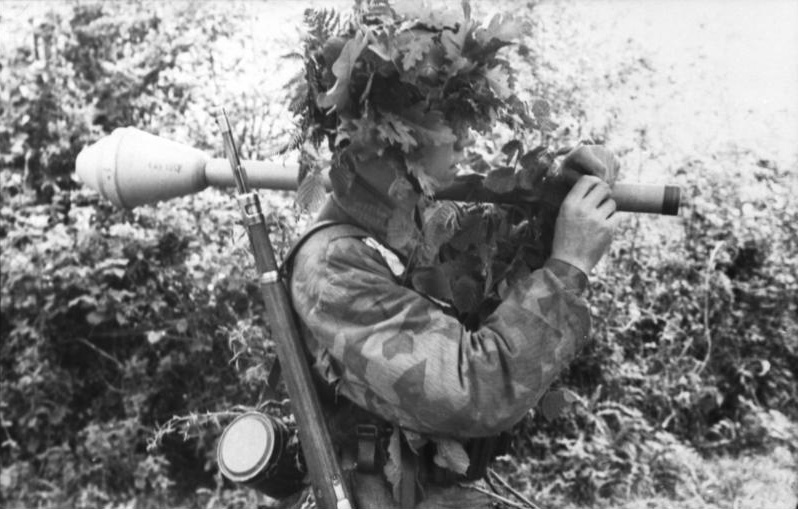
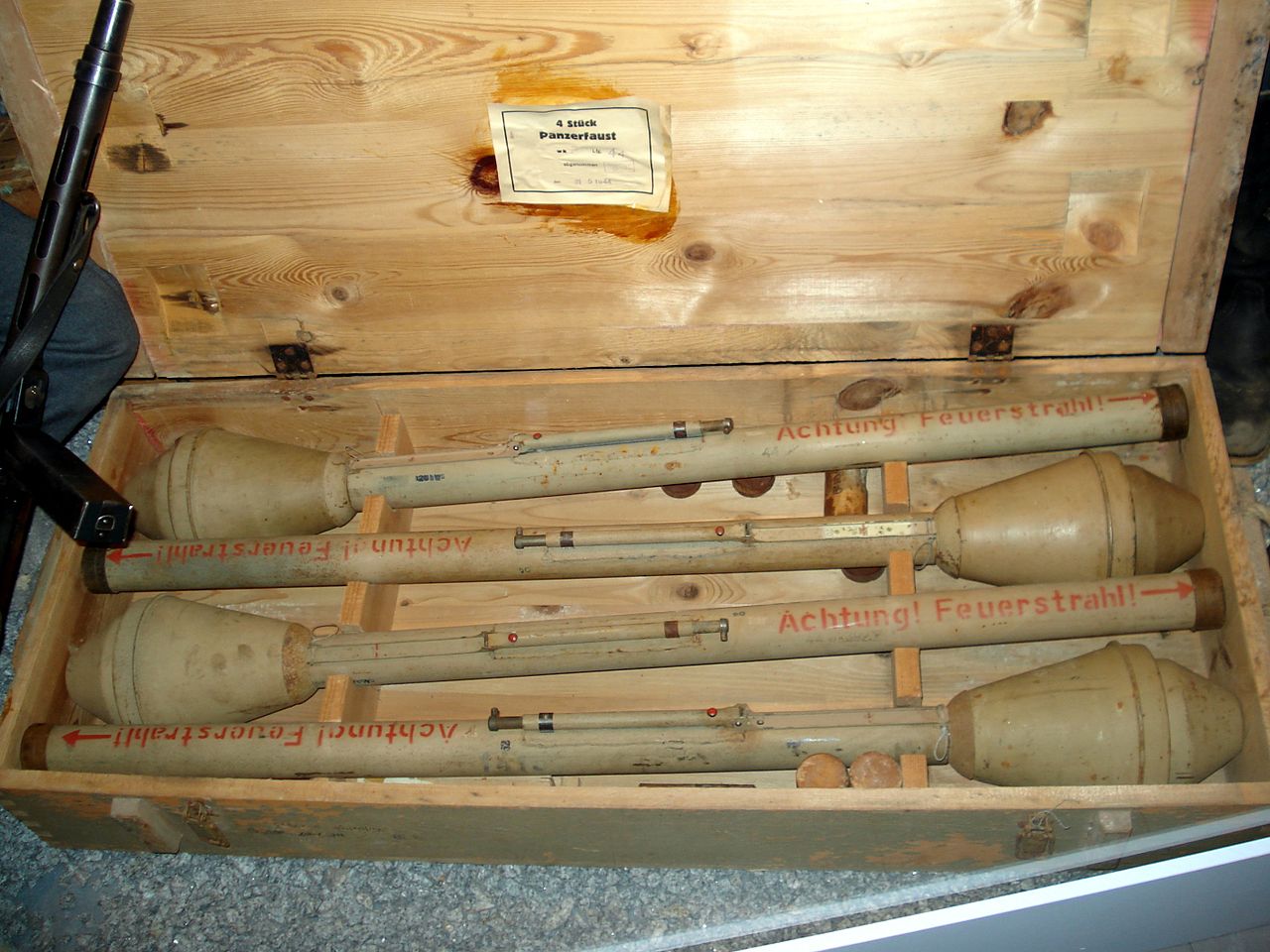
The Panzerfaust was a family of compact, single‑shot anti‑tank launchers developed and mass‑produced in Germany during the later stages of World War II. Designed for ease of manufacture and simple operation, the weapons combined a lightweight launch tube with a hollow‑charge warhead (a shaped charge) capable of defeating contemporary tank armor at close range. Unlike reloadable rocket launchers, the Panzerfaust was intended to be carried by an individual infantryman, fired once and discarded.
Image gallery
10 Images



Design and development
The Panzerfaust used a contact‑fuzed high‑explosive anti‑tank (HEAT) warhead that concentrated explosive energy to penetrate armor. Development emphasized cheap materials and straightforward production techniques so that large numbers could be issued to front‑line troops. An arming mechanism prevented detonation until the projectile had traveled a short distance; gunners therefore had to close to relatively short ranges before firing, making it particularly suited to ambushes and close urban combat.
Variants
Several production variants carried different warhead sizes and sighting arrangements and were identified by model names reflecting incremental improvements. Early models prioritized extreme simplicity and minimal range, while later marks increased warhead charge and effective reach to give infantry more flexibility when engaging armored vehicles. The Panzerfaust family contrasted with contemporary reusable rocket launchers: the Panzerschreck and the American Bazooka both employed rocket motors and were reloadable, whereas the Panzerfaust remained a true one‑shot, disposable device.
Tactics and operational use
Issued widely in the closing months of the war, Panzerfausts were encountered in defensive actions and intense street fighting, most notably during the Battle of Berlin. Their short effective engagement profile led infantry to use concealment, anti‑tank teams and close‑in assault techniques to reach vulnerable parts of enemy armor. The weapon's pronounced backblast and arming delay required gunners to observe safety measures and avoid firing from enclosed spaces when possible.
Production, impact and legacy
- Because it was inexpensive and simple to operate, the Panzerfaust could be distributed widely to infantry units and militia formations during desperate late‑war conditions.
- Although less versatile than later rocket‑propelled systems, it proved effective in the confined battlefields of urban fighting and ambushes, where tanks could be approached to close range.
- Postwar, the Panzerfaust's core concept — a shoulder‑fired disposable launcher delivering a shaped‑charge warhead — influenced the design of many subsequent infantry anti‑tank weapons, including early postwar rocket‑propelled grenades and simple disposable launchers used by several armies.
For technical summaries and further historical accounts, consult specialized publications and museum collections that document infantry anti‑tank weapons of the period. The Panzerfaust remains a widely cited example of pragmatic weapons design that traded sophistication for mass production and battlefield practicality. Additional context on recoilless and shoulder‑fired systems is available in resources that treat the broader evolution of infantry anti‑armor arms: see entries on recoilless weapons, the Panzerschreck, the Bazooka and later rocket‑propelled grenades for comparative study. Readers can also explore specialized histories covering the Eastern Front and the Battle of Berlin for accounts of the Panzerfaust in action.
Related articles
Author
AlegsaOnline.com Panzerfaust — German single‑use anti‑tank weapon of World War II Leandro Alegsa
URL: https://en.alegsaonline.com/art/74409