
Pacific tree frog (Pseudacris regilla): description, habits and distribution
Concise account of the Pacific tree frog (Pseudacris regilla): identification, behavior, habitat, diet, reproduction, range on the North American Pacific Coast, vocalizations, and conservation notes.
Overview
The Pacific tree frog (Pseudacris regilla) is a small chorus frog native to the western coast of North America. Often called a tree frog because of its toe pads and climbing ability, it spends much time on the ground and in low vegetation. For taxonomic context and species summaries see taxonomic resources and broader family-level introductions at family references. Regional range and occurrence data are summarized in many regional accounts and surveys such as range summaries.
Image gallery
7 Images




Identification and physical characteristics
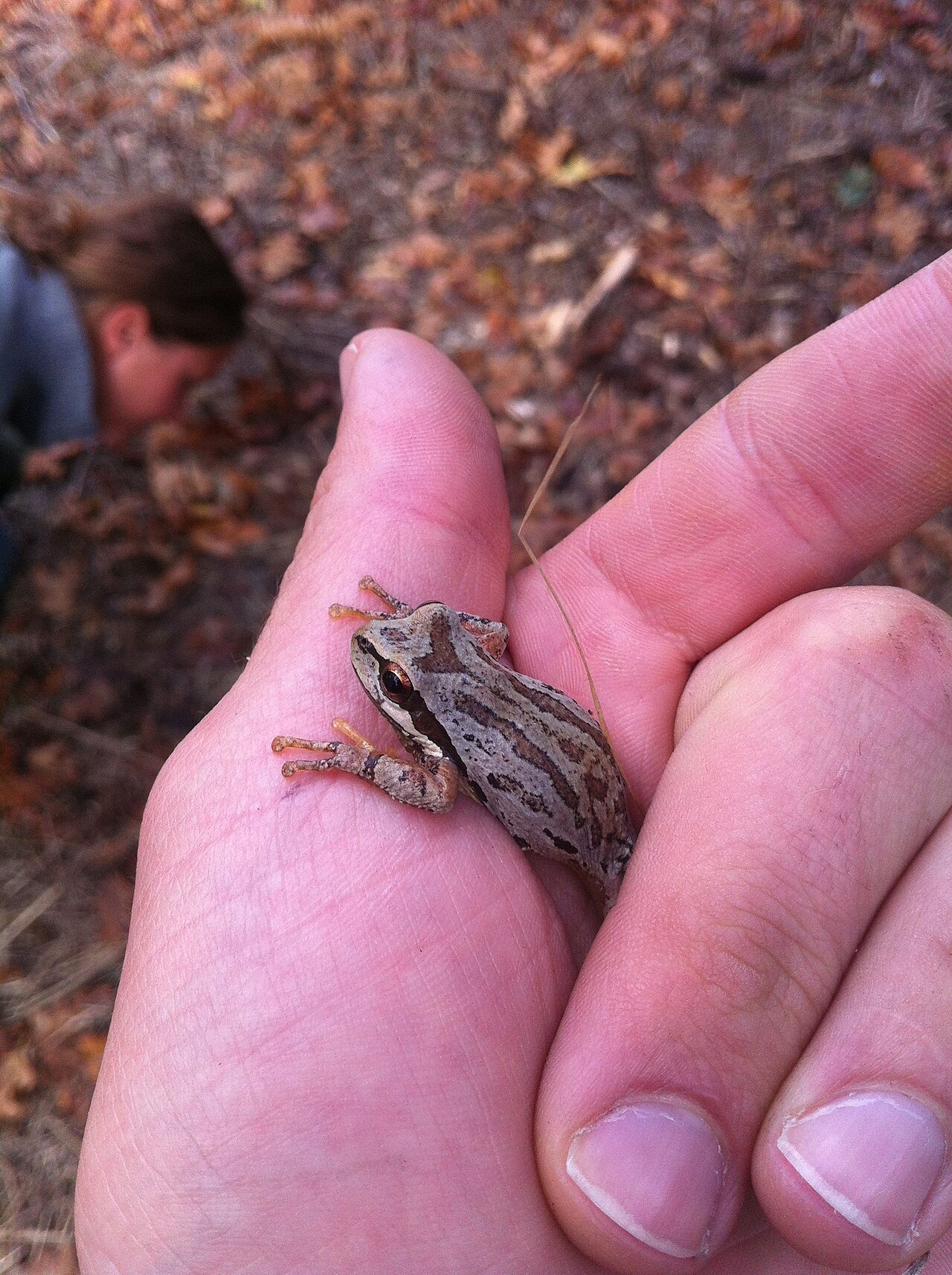
Adults are small, typically about three-quarters of an inch to two inches in snout–vent length. Coloration is highly variable: individuals may be green, gray, brown, or nearly black and often display a dark stripe running through the eye to the shoulder. A triangular or V-shaped mark between the eyes is common. The species has well-developed adhesive toe discs that aid in climbing and partial webbing on the hind feet for swimming. Like many amphibians, it can change shade over minutes to better match its surroundings or regulate temperature; this is achieved through changes in pigment-bearing cells beneath the skin.
Vocalizations
Male Pacific tree frogs produce distinctive calls during the breeding season. The call is one of the most familiar frog sounds in parts of western North America and has been used in media. For technical descriptions, bioacoustic studies and sound archives provide comparative recordings and analyses; see bioacoustic studies.
Behavior and diet
Primarily nocturnal, these frogs are most active at night, although they may be seen moving by day during wet weather or breeding activity. They are versatile foragers and feed on a variety of small invertebrates. Typical prey items include flies, leaf-hoppers, ants, beetles and caterpillars; they also take spiders, springtails, small snails and other soft-bodied invertebrates. Predators include birds, snakes, mammals, larger amphibians and some fish in aquatic habitats. When threatened they rely on camouflage, sudden leaps and retreat to cover.
Reproduction and life cycle
Breeding usually takes place in still or slow-moving freshwater: ponds, marshes, ditches and ephemeral pools. Females lay small clutches of eggs—often in groups attached to submerged vegetation or debris—rather than a single gelatinous mass; clutch sizes reported in field accounts can range from just a few eggs to several dozen. Tadpoles are aquatic and typically dark or brownish with paler bellies; they grow in the water and metamorphose into froglets over a period that depends on temperature, food supply and water permanence. For local breeding-season timing and development details consult regional guides such as California accounts, Oregon records and Washington resources.
Range, habitat and elevation
Native populations occur along the Pacific Coast from California through Oregon and Washington into southern British Columbia. They occupy a wide variety of habitats including coastal scrub, open forest, meadows, agricultural land and urban gardens, and they can be found from sea level to high elevation sites in mountainous areas. For provincial and regional summaries see British Columbia sources and other regional references at regional references.
Introductions and human interactions
These frogs tolerate human-altered environments well and are commonly found in suburban and rural gardens. Humans have sometimes translocated them outside their native range; a documented introduced population was reported in Ketchikan, Alaska after human-assisted transport. Local introduction reports and case notes are available at introduction notes and specific incident accounts at Ketchikan report.
Conservation and research
Across much of its native range the Pacific tree frog is common, but local declines can occur. Threats include loss and alteration of breeding habitat, pollution and runoff, invasive species and emerging diseases such as chytridiomycosis that affect many amphibian species. Climate change and reduced availability of seasonal wetlands also pose challenges. The species has been the subject of taxonomic and genetic research; some studies have examined population structure and proposed revisions to the limits of the taxon, so consult genetic summaries and taxonomic treatments at genetic summaries and identification aids at identification resources when comparing local populations.
Practical notes for observers
Observing Pacific tree frogs is often easiest during spring and early summer evenings near ponds and wetlands when males are calling. They can be identified by size, eye stripe, variable dorsal color and toe pads, but careful comparison with similar chorus frogs is advised; local field guides and online keys are useful for confident identification. When studying or handling any amphibian, follow local guidelines to minimize stress and avoid transferring pathogens between sites.
Related articles
Author
AlegsaOnline.com Pacific tree frog (Pseudacris regilla): description, habits and distribution Leandro Alegsa
URL: https://en.alegsaonline.com/art/73932
Sources
- beachwatchers.wsu.edu : "The RRRRRRRRiveting Life of Tree Frogs"