
Palaeodictyoptera: extinct order of large Paleozoic winged insects
Palaeodictyoptera were an early order of winged insects common in Carboniferous coal forests, notable for beak-like mouthparts, prothoracic winglets and some very large wingspans; they died out by the end-Permian extinction.
Overview
Palaeodictyoptera are an extinct order of primitive winged insects (Pterygota) that were especially abundant in the Late Carboniferous (Pennsylvanian) and persisted into the Permian before vanishing at the end-Permian mass extinction. Known only from fossil impressions and compressions, they were among the earliest diverse groups of fully winged insects and included species that were unusually large by insect standards.
Image gallery
4 Images


Anatomy and distinguishing features
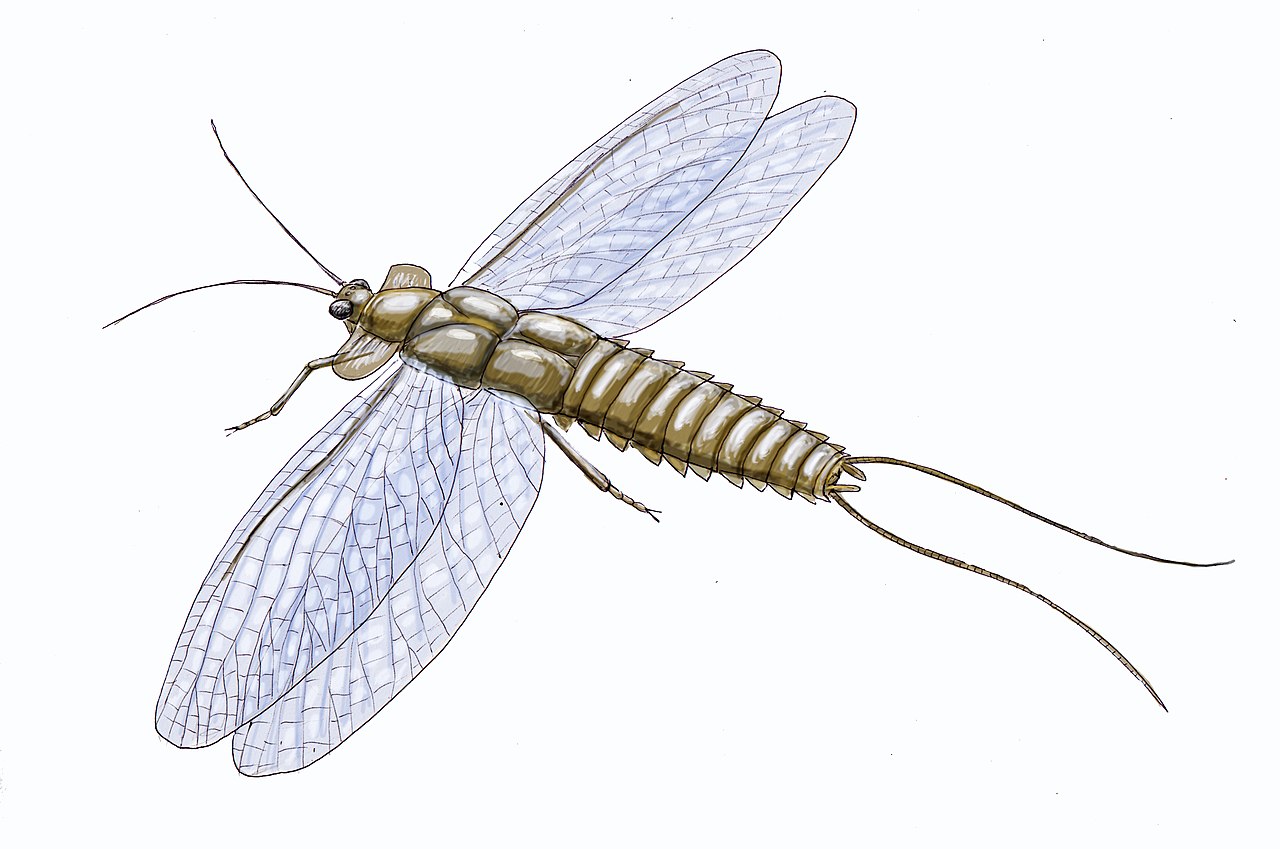
Fossils show that palaeodictyopterans typically had two pairs of fully developed wings with dense and often complex venation patterns. A striking feature in many species is the presence of small lobes or winglets on the prothorax, anterior to the forewings; these structures have been interpreted as additional aerodynamic surfaces. Adults possessed elongate, beak-like mouthparts that are generally interpreted as adapted for piercing and sucking plant fluids. Many specimens also preserve portions of a terminal ovipositor, indicating adaptations for egg deposition in plant tissues or soil.
Taxonomy and relationships
The order contains several fossil families and genera described from Carboniferous and Permian deposits. The precise relationships of Palaeodictyoptera to other early insect groups remain debated because they are known only from external morphology. Most authors treat them as part of the basal radiation of pterygote insects, providing important data on early experiments in flight and feeding.
Fossil record and geographic distribution
Palaeodictyoptera are especially common in fine-grained, coal-bearing strata of the Upper Carboniferous, where detailed wing and body impressions are preserved. Fossils have been reported from North America, Europe and parts of Asia and Russia, reflecting a wide geographic distribution across the tropical and subtropical regions of the Paleozoic. Permian records show the group persisted for tens of millions of years before its final decline.
Ecology and inferred lifestyle
The morphology of the mouthparts suggests many palaeodictyopterans fed by piercing plant tissues and extracting fluids, a feeding mode well suited to the lush, vascular-plant dominated landscapes of the Carboniferous. Their wing structure indicates they were capable of powered flight, and the additional prothoracic lobes may have aided maneuverability or stability. Larval stages (nymphs) are less commonly preserved, but are thought to have been terrestrial or litter-dwelling and to have fed on plant material.
Size and notable examples
- Mazothairos is a notable genus from North American Carboniferous deposits; reconstructions estimate a wingspan around 50–60 centimetres, making it among the largest known of the group.
- Most other palaeodictyopterans were smaller but still often larger than many modern insects, illustrating the exceptional size range seen in some Paleozoic insect faunas.
Extinction and significance
Palaeodictyoptera disappeared by the end of the Permian, during the largest mass extinction in Earth's history. Their loss removed a lineage that had shown distinctive combinations of locomotory and feeding adaptations. Today they are known only from fossils, and they remain important for understanding the early evolution of insect flight, mouthpart specialization and the diversification of terrestrial ecosystems in the Paleozoic.
Questions and answers
Q: What were the Palaeodictyoptera?
A: The Palaeodictyoptera were large flying insects that are now extinct.
Q: When were the Palaeodictyoptera common?
A: The Palaeodictyoptera were common in the Upper Carboniferous.
Q: When did the Palaeodictyoptera become extinct?
A: The Palaeodictyoptera became extinct at the end-Permian extinction.
Q: What was the size range of the Palaeodictyoptera?
A: The size of the Palaeodictyoptera varied from large to huge.
Q: Can you provide an example of a Palaeodictyoptera's wingspan?
A: Yes, one example is Mazothairos, which had a wingspan of about 55 centimetres (22 inches).
Q: Are the Palaeodictyoptera still alive today?
A: No, the Palaeodictyoptera are now extinct.
Q: How were the Palaeodictyoptera notable?
A: The Palaeodictyoptera were notable for their large size and their status as an extinct species.
Related articles
Author
AlegsaOnline.com Palaeodictyoptera: extinct order of large Paleozoic winged insects Leandro Alegsa
URL: https://en.alegsaonline.com/art/74117