
Paedophryne — tiny leaf‑litter frogs of Papua New Guinea
Paedophryne is a genus of microhylid frogs from Papua New Guinea noted for extreme miniature size, leaf‑litter habits, and interest to studies of vertebrate miniaturization and tropical biodiversity.
Overview
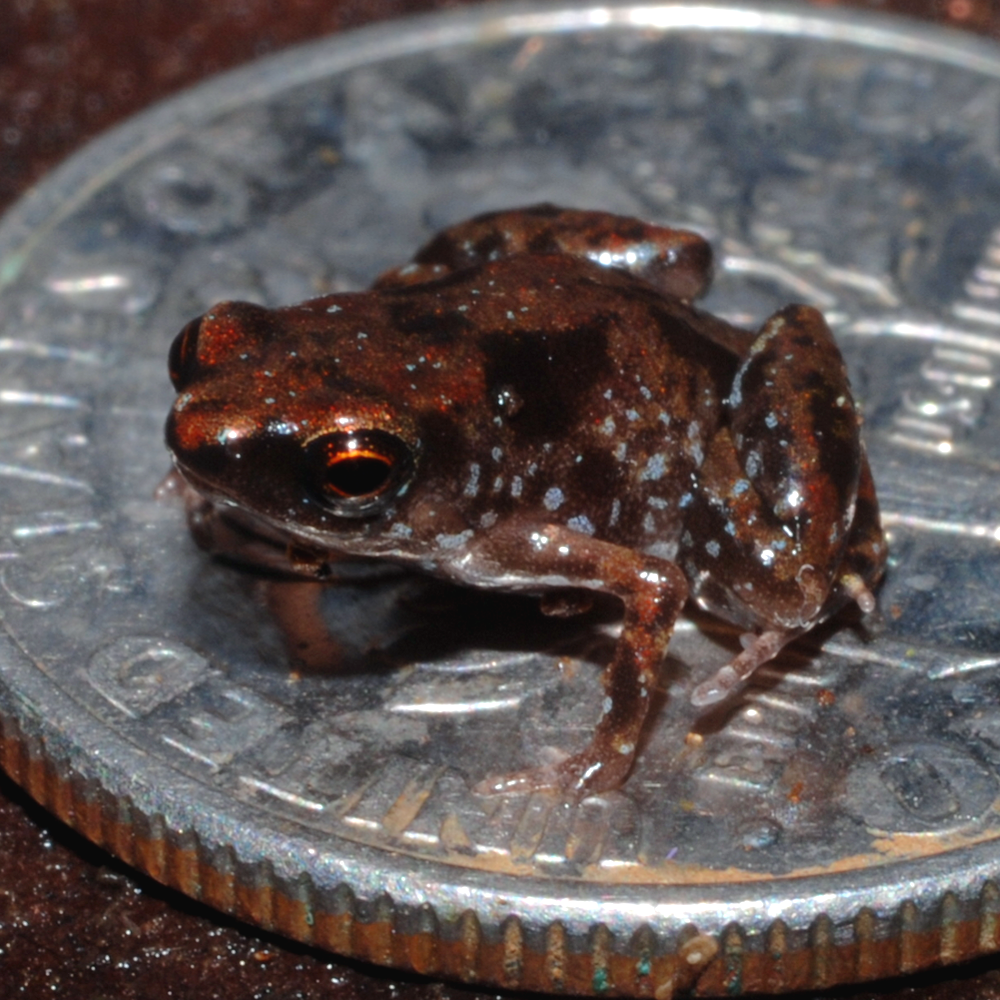
Paedophryne is a small genus of frogs in the family Microhylidae native to the island of New Guinea. Species in this group are among the smallest known vertebrates and are restricted to leaf‑litter habitats in rainforest and nearby wet forest margins. Their tiny stature and secretive lifestyle make them hard to find, yet they have attracted wide scientific interest as examples of extreme body‑size reduction in amphibians.
Image gallery
9 Images


Characteristics
Members of Paedophryne are characterized by very small, compact bodies, short limbs, and heads that merge smoothly into the body profile. They are typically brown or mottled, which provides camouflage among fallen leaves. These frogs produce high‑pitched calls and are largely terrestrial. Available evidence suggests they hatch as miniature versions of adults rather than passing through a free‑swimming tadpole stage, a reproductive pattern known as direct development, which is common among many small leaf‑litter frogs.
Discovery and taxonomy
The genus was established when researchers described several unusually small frogs from Papua New Guinea. One species received particular attention when it was identified as one of the smallest known vertebrates. As of current accounts there are six described species in the genus, each restricted to limited areas of New Guinea. The genus name combines Greek roots meaning "child" and "frog," reflecting their minute size.
Ecology and behavior
Paedophryne species inhabit the moist leaf litter of lowland and hill forests, where they hunt tiny invertebrates such as mites and springtails. Their cryptic coloration and small size help them avoid predators. Researchers typically detect them by their distinct calls or by carefully searching litter and rotting logs. Because they occupy a specialized microhabitat, they can be vulnerable to habitat alteration.
Scientific and conservation importance
- Model for miniaturization: These frogs help scientists study the anatomical and physiological consequences of extreme size reduction in vertebrates.
- Indicators of biodiversity: their presence reflects intact leaf‑litter communities and healthy forest ecosystems.
- Conservation concerns: limited ranges and dependence on forest floor habitat make them sensitive to deforestation and land‑use change.
Notable facts and distinctions
Paedophryne belongs to the broader group of microhylid frogs (Microhylidae) and is part of the rich amphibian fauna of Papua New Guinea. They are distinct from larger rainforest frogs in life history and anatomy. For general information on frogs and their diversity see resources about frogs and amphibian conservation; taxonomic databases and specialist literature provide updates on species descriptions and status (genus overview).
Note: Ongoing fieldwork may reveal additional species or refine knowledge of their distributions and natural history. Conservation assessments depend on continued study of these elusive, tiny frogs.
Related articles
Author
AlegsaOnline.com Paedophryne — tiny leaf‑litter frogs of Papua New Guinea Leandro Alegsa
URL: https://en.alegsaonline.com/art/73987
Sources
- doi.org : 10.3897/zookeys.48.446
- plosone.org : "Ecological guild evolution and the discovery of the world's smallest vertebrate"
- doi.org : 10.1371/journal.pone.0029797
- bbc.co.uk : "BBC News - World's smallest frog discovered"
- theaustralian.com.au : theaustralian.com.au/news/breaking-news/worlds-tiniest-frogs-found-in-papua-new-guinea/st…
- telegraph.co.uk : "World's smallest creature with a vertebrate named"
- fettss.arc.nasa.gov : "Hallan en Papúa Nueva Guinea a las ranas más pequeñas del mundo"