
Nothosaur: Triassic marine sauropterygians
Nothosaurs were semi-aquatic sauropterygian reptiles of the Triassic, known for long necks and slender jaws adapted for catching fish. They were ancestors or close relatives of plesiosaurs and lived in coastal seas.
Overview
Nothosaurs were a group of primarily marine, or at least coastal, sauropterygians that lived during the Triassic period. They are not dinosaurs; instead they are classified as marine reptiles with a body plan adapted for an aquatic lifestyle. Sizes ranged from small species only a few tens of centimetres long to larger forms approaching about 6 metres (roughly 20 feet). Most species spent much of their time in the water but still breathed air at the surface.
Image gallery
10 Images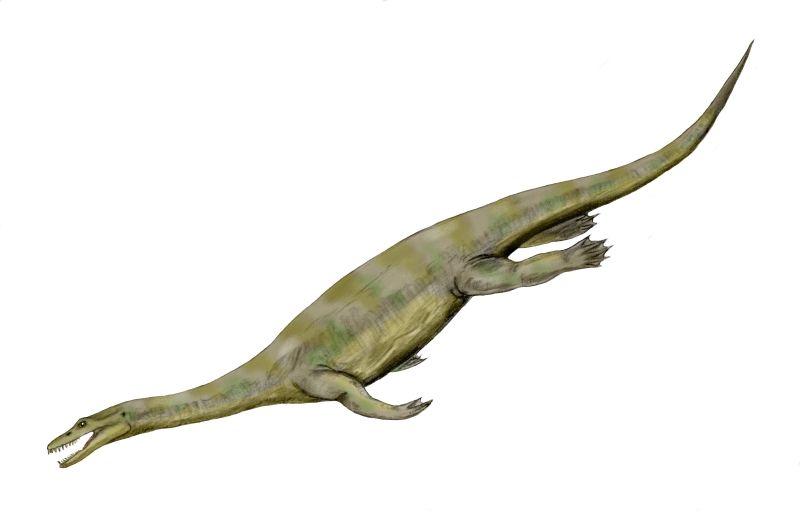




Distinctive anatomy
Nothosaurs typically had long, flexible necks and relatively long tails, along with a low-slung body. The skull was elongated and narrow, bearing many sharp, conical teeth; the front teeth were often longer and more fang-like than those further back, forming an effective trap for slippery prey. The nostrils were positioned toward the top of the snout, allowing them to breathe while the head was partly submerged. Limbs show adaptations for swimming — they were paddle-like in many species — but retained enough structure for some degree of movement on land.
Diet and ecology
The feeding ecology of nothosaurs was primarily piscivorous: they fed on fish and other small marine animals such as cephalopods. Their tooth arrangement and jaw shape suggest a combination of rapid snapping at incoming prey and holding or skewering captured animals. Many reconstructions portray them as shallow-water predators that hunted by swimming near the surface or ambushing prey among reefs and coastal shallows.
Evolutionary relationships
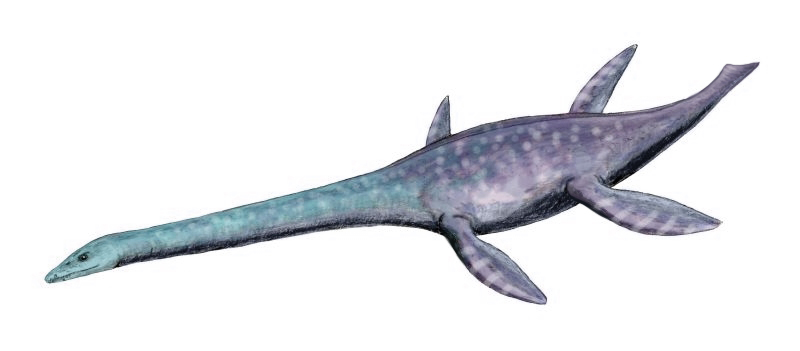
Nothosaurs belong to the larger sauropterygian lineage (sauropterygian) that also produced later marine forms. Some paleontologists view certain nothosaur-like animals as ancestral or closely related to the lineage that led to the more familiar long-necked plesiosaurs. Transitional genera such as Pistosaurus show a mix of nothosaur and plesiosaur characteristics and are often cited in discussions about this evolutionary transition.
Fossil record and notable genera
Fossils of nothosaurs have been found mainly in Triassic marine deposits of Europe and Asia. Well-known genera include Nothosaurus and Lariosaurus; other relatives are known from a variety of coastal basin deposits. The preservation of relatively complete skeletons in some localities has allowed scientists to study growth, variation among species, and details of limb and skull anatomy.
Importance and distinctions
Nothosaurs illustrate one of the early successful experiments in reptilian adaptation to life in water after the end-Permian extinction. They are distinct from true plesiosaurs in several skeletal details and in their generally more amphibious habits, yet they help explain how fully marine, long-necked reptiles evolved during the Mesozoic. For further reading on their ecology and classification, paleontological resources and museum accounts provide accessible summaries and technical studies alike (not dinosaurs).
- Typical prey: small fish and invertebrates.
- Habitat: shallow coastal seas, lagoons and reef-associated waters.
- Related taxa: includes transitional forms such as Pistosaurus and distant relatives that led to plesiosaurs.
Related articles
Author
AlegsaOnline.com Nothosaur: Triassic marine sauropterygians Leandro Alegsa
URL: https://en.alegsaonline.com/art/71167