
Nuthatch (Sitta): small tree-dwelling birds of the Northern Hemisphere
Nuthatches (genus Sitta) are compact, acrobatic songbirds that live in temperate and boreal woodlands. They nest in tree cavities, cache seeds, and are known for climbing down trunks headfirst.
Overview
Nuthatches are small, active songbirds of the genus Sitta in the family Sittidae. They are true passerine birds found across much of the Northern Hemisphere. Several dozen species occur in North America, Europe and Asia, with a handful in parts of North Africa. They are woodland birds closely tied to trees and are familiar to birdwatchers for their bold, tameness and distinctive behaviors.
Image gallery
10 Images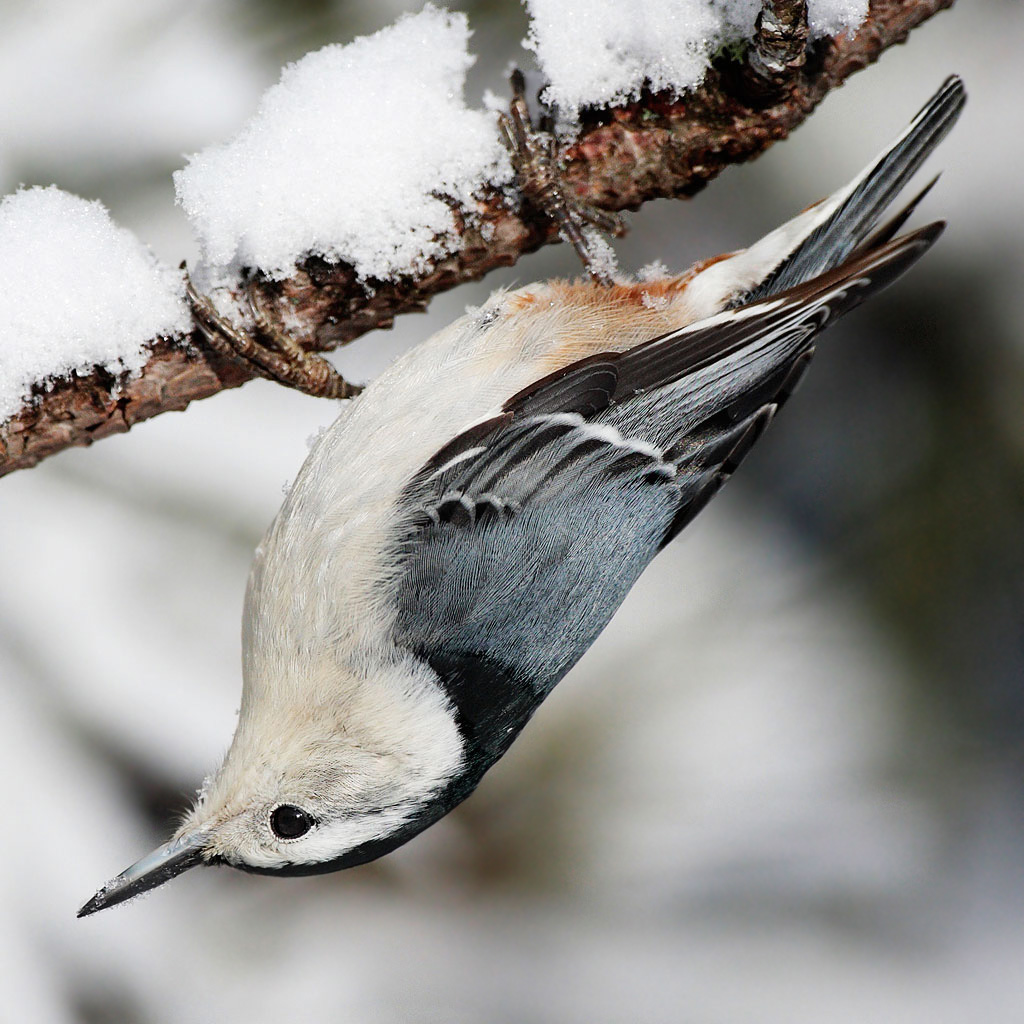


Appearance and identification
Nuthatches are compact, with relatively large heads, short tails and stout, pointed bills and strong feet adapted for climbing and clinging. Many species show blue-grey or grey upperparts and paler underparts, often accented by a dark eye stripe. Their bills and toes are powerful, enabling them to wedge and pry under bark and seed scales; these structures are frequently described together as bills and feet adapted for bark foraging.
Behavior and ecology
These birds are predominantly forest-dwellers, favoring mature woodland and often pine-rich coniferous stands or mixed broadleaf forests. Nuthatches are unusually agile; unlike many other woodpecker-like birds they can descend trunks headfirst, a behavior that helps them locate insects hidden under bark. They advertise territories with loud, simple songs and a repertoire of calls. Nuthatches are opportunistic feeders, taking insects, spiders, seeds and nuts depending on season.
Nesting, caching and interactions
Nuthatches nest in tree cavities and readily use natural holes or abandoned woodpecker excavations. Because of this they often face competition for suitable sites—squirrels, other cavity-nesters and larger woodpeckers can exclude them. They will modify nest entrances by packing mud or sticky tree resin around holes to reduce the gap and deter larger competitors. The species also practice food caching: seeds and nuts are hidden in crevices, behind flakes of bark or under stones and can be retrieved weeks later—studies and observations report memory for caches lasting several weeks.
Predators, threats and conservation
Predation is a natural risk for nuthatches; avian predators such as owls and hawks may take adults, while arboreal mammals like squirrels can raid nests. Competition and occasional lethal interactions with species such as the great spotted woodpecker have been recorded. Habitat loss, especially the reduction of mature conifer and mixed forests, is the main conservation concern because these birds depend on trees for nesting and foraging. Predation and competition are normal ecological pressures rather than primary causes of decline in most regions.
Notable species and human interest
Well-known species include the Eurasian or common nuthatch, the white-breasted nuthatch and the red-breasted nuthatch. Their willingness to visit garden feeders, combined with bold behavior and distinctive calls, makes them favorites for amateur ornithologists and nature enthusiasts. Nuthatches often reveal ecological linkages in woodland communities by their roles as insect predators, seed dispersers and cavity users.
Key facts at a glance
- Genus: Sitta; family: Sittidae.
- Range: Northern Hemisphere, especially temperate and boreal forests.
- Habitat: mature woodlands, often pine and mixed forests; strictly arboreal for nesting.
- Diet: insects, seeds and nuts; food caching is common.
- Nesting: tree cavities; entrances often reduced with mud or tree resin.
- Threats: habitat loss, competition and natural predation.
For more specialized information on species-level identification, vocalizations and range, consult regional field guides or ornithological resources (passerine reference material and species accounts are useful starting points). Additional reading and resources can be found through bird conservation organizations and local naturalist groups that monitor cavity-nesting birds and forest habitats. Bird observatories often report on nuthatch populations and nesting success in different regions.
Further links and resources on behavior, ecology and conservation are available via dedicated ornithology portals and study groups: see links on taxonomy and field identification (range maps), nesting biology (nest construction and management), and interactions with other species (woodpecker competition). For broad overviews and photo guides consult authoritative birding references and local checklists (morphology and habitat pages).
This entry summarizes general, well-established information about nuthatches and highlights their role as conspicuous, cavity-dependent members of temperate and boreal woodland bird communities.
Questions and answers
Q: What is the genus of nuthatches?
A: Nuthatches are in the genus Sitta.
Q: Where do nuthatches live?
A: Nuthatches live in the Northern Hemisphere, often in pine coniferous forests on higher land (montane forests).
Q: How do nuthatches advertise their territory?
A: Nuthatches advertise their territory with loud, simple songs.
Q: What type of food do nuthatches eat?
A: Nuthatches typically eat insects, nuts and seeds.
Q: What type of nests do they make?
A: Nuthaches make nests by using holes in trees.
Q: What types of animals pose a threat to nuthaches?
A: Squirrels, woodpeckers, owls and hawks can all pose a threat to nuthaches.
Q: How long can nuthaches remember where they stored food for later consumption?
A; Nuthaches can remember where they stored food for up to 30 days.
Related articles
Author
AlegsaOnline.com Nuthatch (Sitta): small tree-dwelling birds of the Northern Hemisphere Leandro Alegsa
URL: https://en.alegsaonline.com/art/71505
Sources
- sora.unm.edu : "Memory for hoarded food: an aviary study of the European Nuthatch"
- doi.org : 10.2307/1369961
- jstor.org : 1369961