
Plesiosaur: the long-necked and short-necked marine reptiles of the Mesozoic
Plesiosaurs were marine reptiles of the Mesozoic, with distinctive flippers and diverse body plans. They lived from early Mesozoic times until the end-Cretaceous extinction and are known from rich fossil finds.
Overview
Plesiosaurs were an important order of predominantly marine reptiles that inhabited the world’s oceans during the Mesozoic Era. Fossil evidence places their origins well back in the Triassic and shows they persisted through the Jurassic and Cretaceous periods, with some early reports noting remains as far back as about 245 million years ago. These animals occupied a range of ecological roles as active predators until their disappearance at the end‑Cretaceous mass extinction.
Image gallery
10 Images







Body plan and distinguishing features
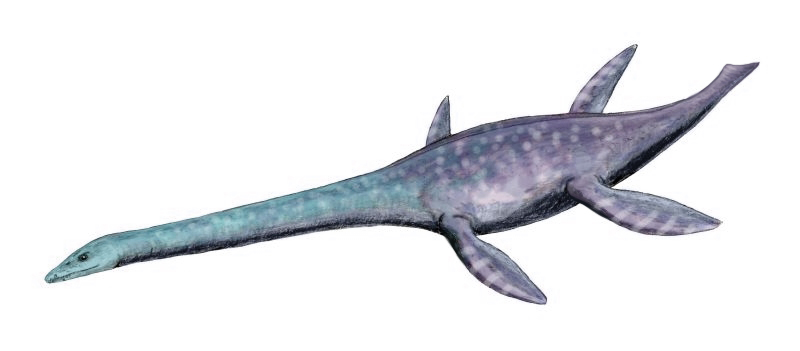
Plesiosaurs are best known for a body architecture that differs from both modern marine mammals and other extinct marine reptiles. Typical features include a broad, barrel‑shaped torso, a relatively short tail, and four powerful limb flippers that propelled them through water. Species vary markedly: some had very long, flexible necks with small heads, while others evolved large skulls and short, robust necks. Key characteristics often listed by paleontologists include:
- Four large swimming limbs, commonly called paddles, used in a rowing or underwater flight style of locomotion.
- Flattened bodies and limb modifications for efficient aquatic movement.
- Skull and tooth specializations reflecting diet, from fish and cephalopods to larger prey.
Locomotion and feeding
Different groups within the plesiosaurs show contrasting swimming modes. Long‑necked forms likely used stealth and quick lateral strikes to catch smaller, agile prey, while short‑necked, heavy‑headed forms were adapted to powerful bites and open‑water hunting. Their limb-driven propulsion contrasts with the tail-propelled swimming of many fish and some other marine reptiles, and biomechanics studies indicate a combination of lift‑based and rowing movements.
Fossil record and history of discovery
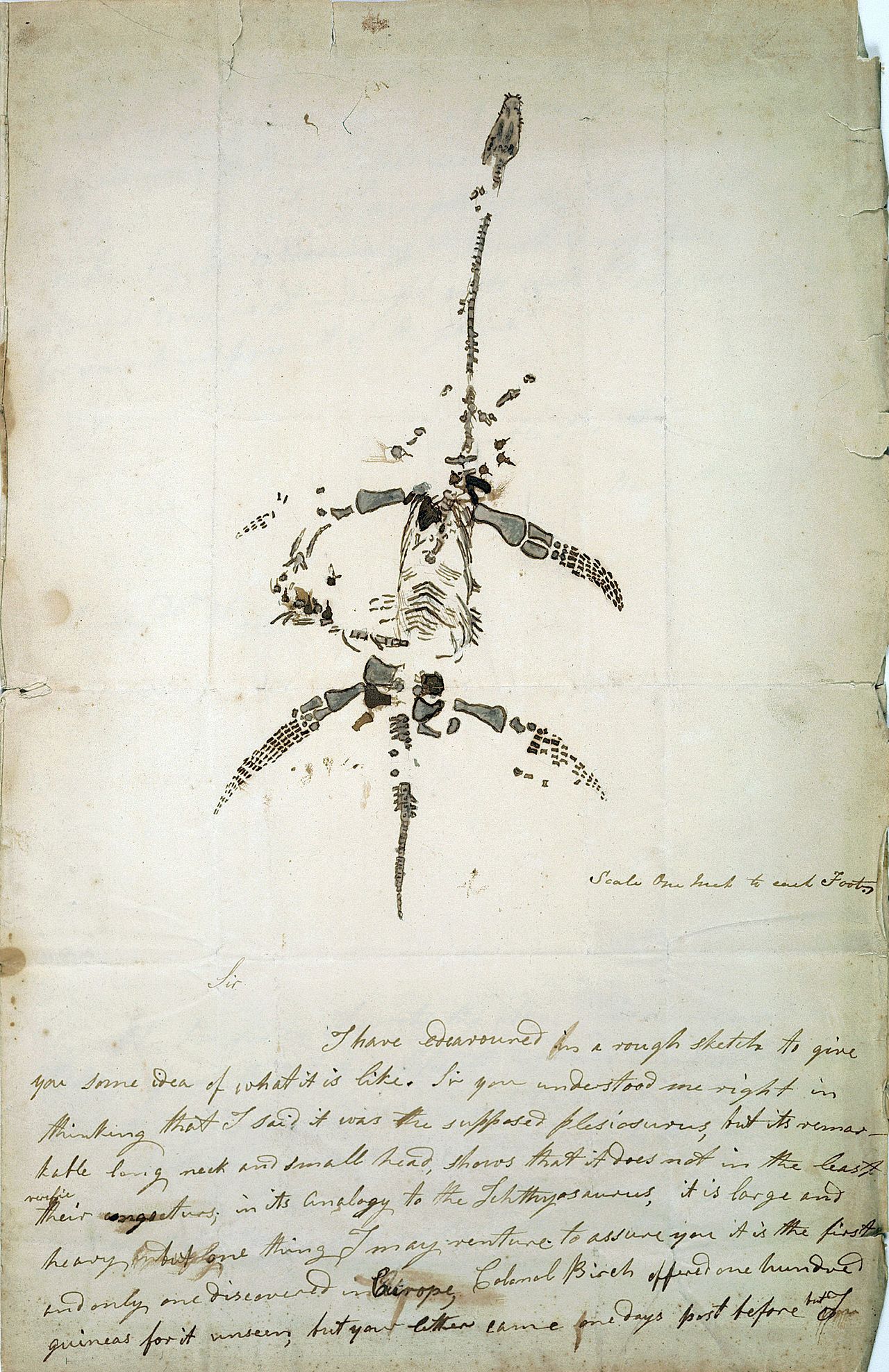
Significant plesiosaur fossils have been recovered across Europe, North America, South America, Asia and Australia, documenting a long fossil history. The first partial skeleton was described in the early 18th century, and later work connected specimens to an expanding picture of Mesozoic marine life. Notable events in their discovery include the work of early fossil collectors such as Mary Anning, who unearthed specimens along the Jurassic Coast of Dorset and found a nearly complete skeleton including a preserved skull. The genus name Plesiosaurus was established in the 19th century, and anecdotes from that era record exchanges between collectors and naturalists; for example, tales of early specimens reaching figures such as Robert Darwin and his contemporaries.
Evolution, diversity and extinction
Early plesiosaur remains appear by the Middle Triassic, and the group achieved great diversity through the Jurassic and Cretaceous. Researchers divide them into major clades roughly reflecting neck length and skull form; these differences illustrate ecological partitioning rather than a single, uniform lifestyle. Like many other large marine and terrestrial groups, plesiosaurs disappeared at the close of the Cretaceous during the end‑Cretaceous mass extinction, leaving a rich fossil heritage that continues to inform studies of vertebrate evolution.
Importance and notable facts
Plesiosaurs are central to discussions of Mesozoic marine ecosystems and the evolution of aquatic adaptations in reptiles. Their distinct anatomy has inspired popular imagination and scientific inquiry alike, and ongoing fossil discoveries continue to refine how paleontologists interpret their biology, behavior and relationships. For additional summaries and specimen records, consult specialist databases and museum collections that aggregate descriptions and images of described taxa.
Further reading and resources are available through curated scientific portals and museum pages; examples of overview treatments and specimen lists can be found at general paleontology references and specialist sites (taxonomic overviews, marine reptile portals, reptile evolution pages).
Questions and answers
Q: What were plesiosaurs?
A: Plesiosaurs were a type of large, carnivorous marine reptile.
Q: When did plesiosaurs flourish?
A: Plesiosaurs flourished from 245 million years ago to 65 million years ago.
Q: Who described the first partial skeleton of a plesiosaur and when?
A: William Stukeley described the first partial skeleton of a plesiosaur in 1719.
Q: Where was the first fairly complete plesiosaur found and by whom?
A: Mary Anning discovered the first fairly complete plesiosaur on the 'Jurassic Coast' of Dorset, England in the winter of 1820/21.
Q: What was missing from the first fairly complete plesiosaur discovered by Mary Anning?
A: The first fairly complete plesiosaur discovered by Mary Anning was missing its skull.
Q: When did plesiosaurs die out?
A: Plesiosaurs died out at the K/T extinction event, 65 million years ago.
Q: What features did plesiosaurs have?
A: Plesiosaurs had two large pairs of paddles, short tails, short or long necks, and broad bodies.
Related articles
Author
AlegsaOnline.com Plesiosaur: the long-necked and short-necked marine reptiles of the Mesozoic Leandro Alegsa
URL: https://en.alegsaonline.com/art/77458
Sources
- species.wikimedia.org : Plesiosauria
- news.bbc.co.uk : BBC NEWS | Science/Nature | Plesiosaur bottom-feeding shown
- oceansofkansas.com : on-line, updated from article in Kansas Acad. Sci. Trans. 103(1-2):58-69