
Nudibranchs: colorful shell‑less marine gastropods
Nudibranchs are shellless marine gastropods known for exposed gills, vivid coloration, varied diets and defenses. Over 3,000 described species occur worldwide and are often called sea slugs.
Overview
Nudibranchs are a diverse group of marine gastropods distinguished by their lack of an external shell and by exposed respiratory structures — a feature reflected in their name, which means "naked gills." These soft-bodied animals display a wide range of shapes, sizes and intense color patterns. Scientists have described more than 3,000 species, which occur worldwide from shallow reefs to deeper offshore habitats. In casual contexts nudibranchs are included among "sea slugs," an informal category of similar-looking molluscs; this is a convenient label but not a formal, monophyletic group (sea slugs).
Image gallery
10 Images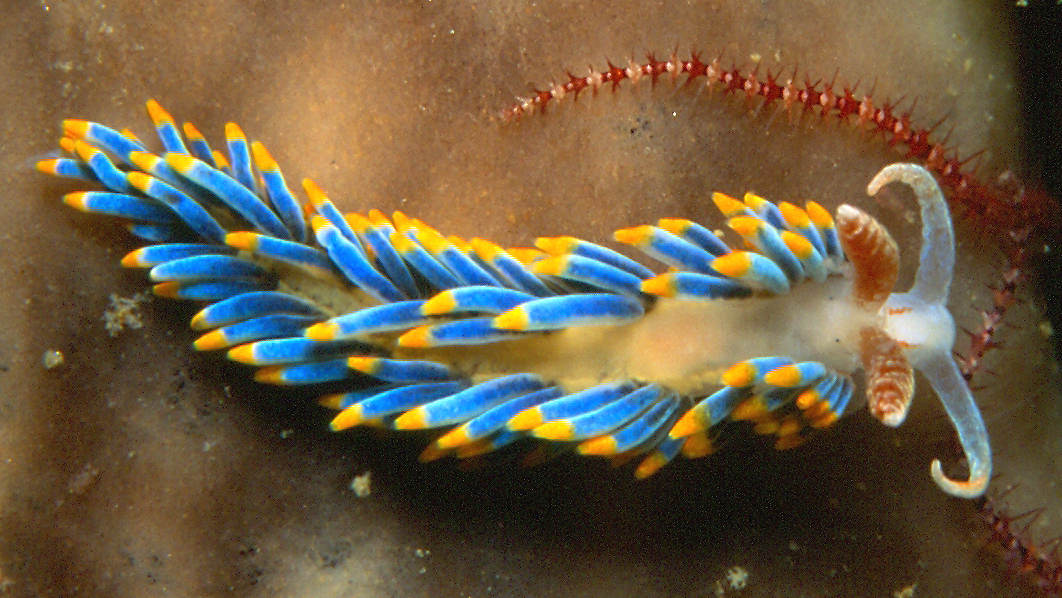





Characteristics and anatomy
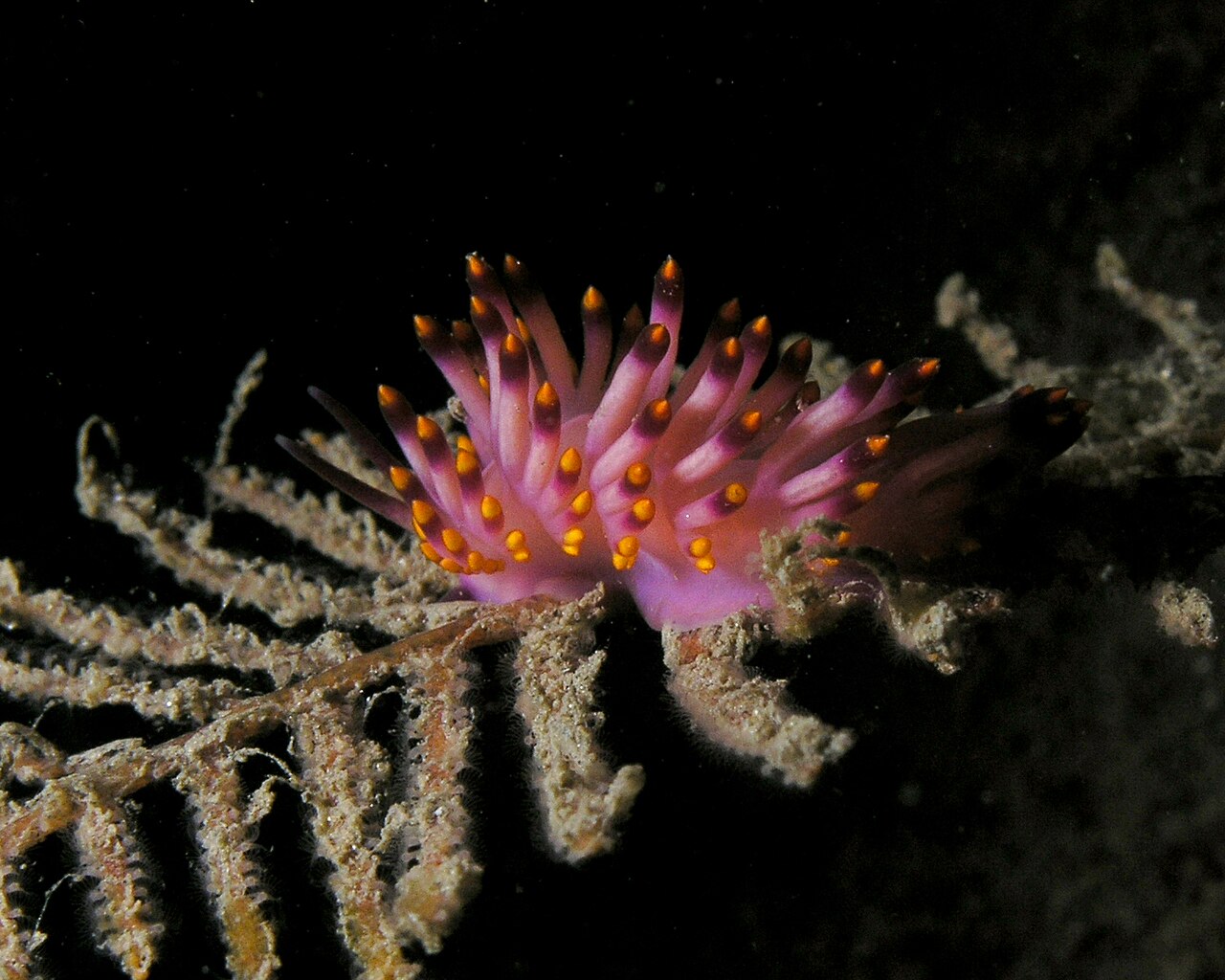
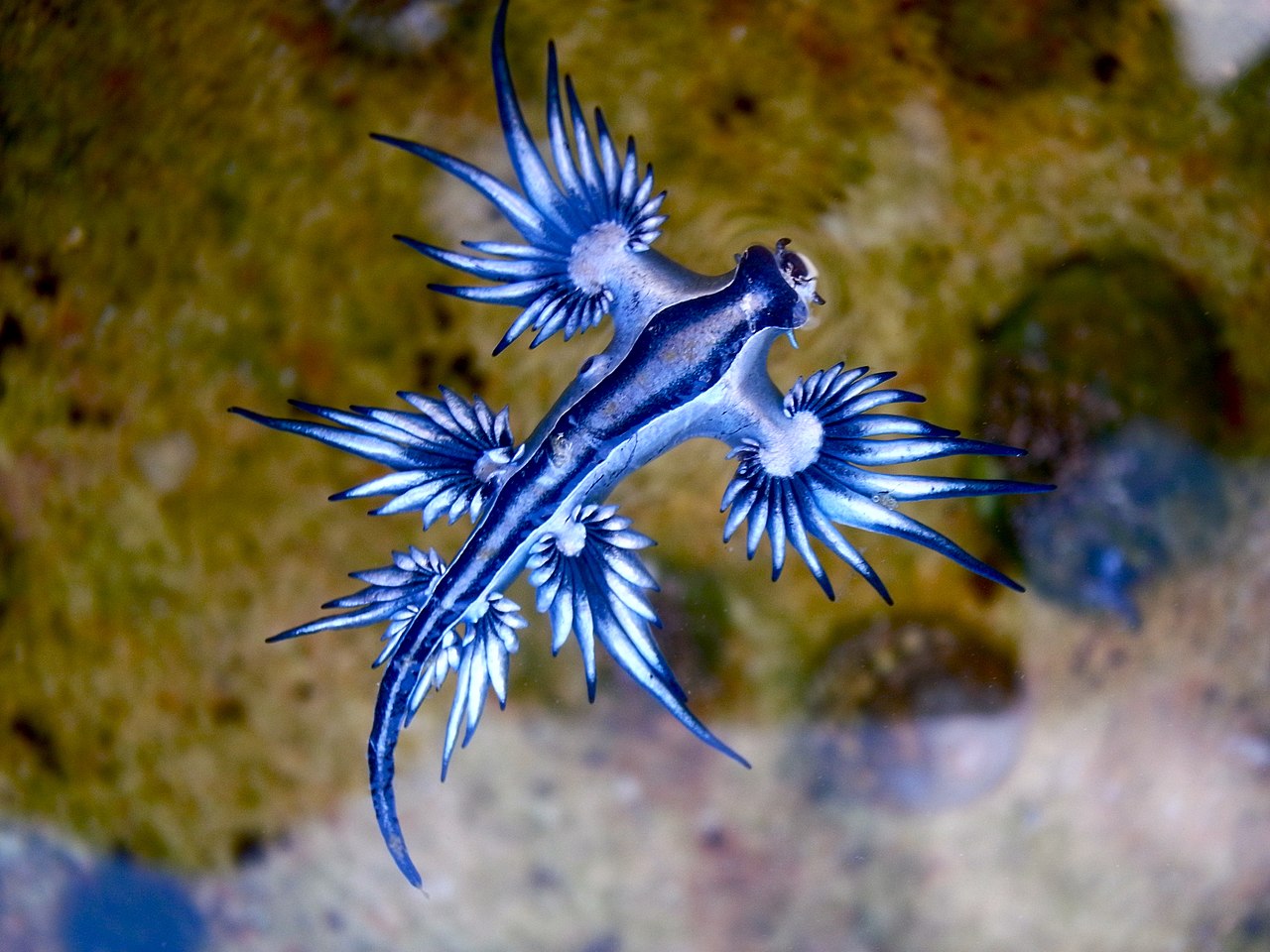
Nudibranch bodies typically have specialized external organs: rhinophores for sensing chemicals in the water, and dorsal structures that function in respiration and defense. Two commonly recognized body plans are seen in dorid nudibranchs — which have a plume of gills on the rear dorsum — and aeolid nudibranchs, which bear cerata: fingerlike appendages that increase respiratory surface and may store defensive substances. Many species are small and delicate, while others are more robust; coloration ranges from cryptic to boldly aposematic.
Ecology, diet and defenses
Most nudibranchs are predators or specialized feeders. Diets include sponges, bryozoans, hydroids, sea anemones and other soft-bodied invertebrates. Some species accumulate or transform toxins and stinging cells (nematocysts) from their prey and use them for their own protection. Bright colors often serve as warnings to predators, though some species rely on camouflage or mimicry to blend into their surroundings.
Life cycle and reproduction
Nudibranchs are hermaphroditic, possessing both male and female reproductive organs. Mating typically involves reciprocal exchange of sperm, and fertilized eggs are deposited in characteristic gelatinous ribbons or spirals. Many species produce planktonic veliger larvae that disperse with currents before settling and metamorphosing into the adult form; some species, however, exhibit direct development.
Human interest and scientific importance
These animals attract attention from divers, underwater photographers and amateur naturalists because of their striking appearances. Researchers study nudibranchs for insights into ecology, chemical defense and biodiversity. Several species have yielded novel bioactive compounds that are of interest for pharmacology and chemical ecology. Because they often feed selectively and respond quickly to environmental change, nudibranchs can also serve as useful indicators of reef health.
Taxonomy and notable distinctions
Nudibranchs belong to the order Nudibranchia within the larger group of heterobranch gastropods. Taxonomic work continues to revise relationships among species and families as molecular methods supplement traditional anatomy-based classification. While "sea slug" remains a helpful everyday term, it groups many unrelated lineages that have evolved similar shell-less forms by convergence rather than common descent.
Questions and answers
Q: What is a nudibranch?
A: Nudibranchs are a group of marine gastropod molluscs that are shell-less, uncoiled, and famous for their brilliant colours.
Q: What does the term nudibranch mean?
A: The term nudibranch means 'naked gills'.
Q: Are all sea slugs nudibranchs?
A: No, all sea slugs are not nudibranchs. Sea slugs are an informal term that includes other gastropod groups that look similar to nudibranchs.
Q: How many known species of nudibranchs are there?
A: There are more than 3000 known species of nudibranchs.
Q: What makes nudibranchs famous?
A: Nudibranchs are famous for their brilliant colours.
Q: Do nudibranchs have shells?
A: No, nudibranchs are shell-less gastropod molluscs.
Q: Is sea slugs a monophyletic group?
A: No, sea slugs are not a monophyletic group. It is an informal term that includes other gastropod groups which look similar to nudibranchs.
Related articles
Author
AlegsaOnline.com Nudibranchs: colorful shell‑less marine gastropods Leandro Alegsa
URL: https://en.alegsaonline.com/art/71394
Sources
- archive.rubicon-foundation.org : archive.rubicon-foundation.org/4744
- slugsite.us : Nudibranchs: Marine slugs with verve
- thoughtco.com : "12 Interesting Facts About Nudibranch Sea Slugs"