
Nurse shark (Ginglymostoma cirratum)
A slow-moving, bottom-dwelling shark of warm coastal waters. Nurse sharks feed primarily on invertebrates and small fishes, are mostly nocturnal, and are generally not aggressive toward humans.
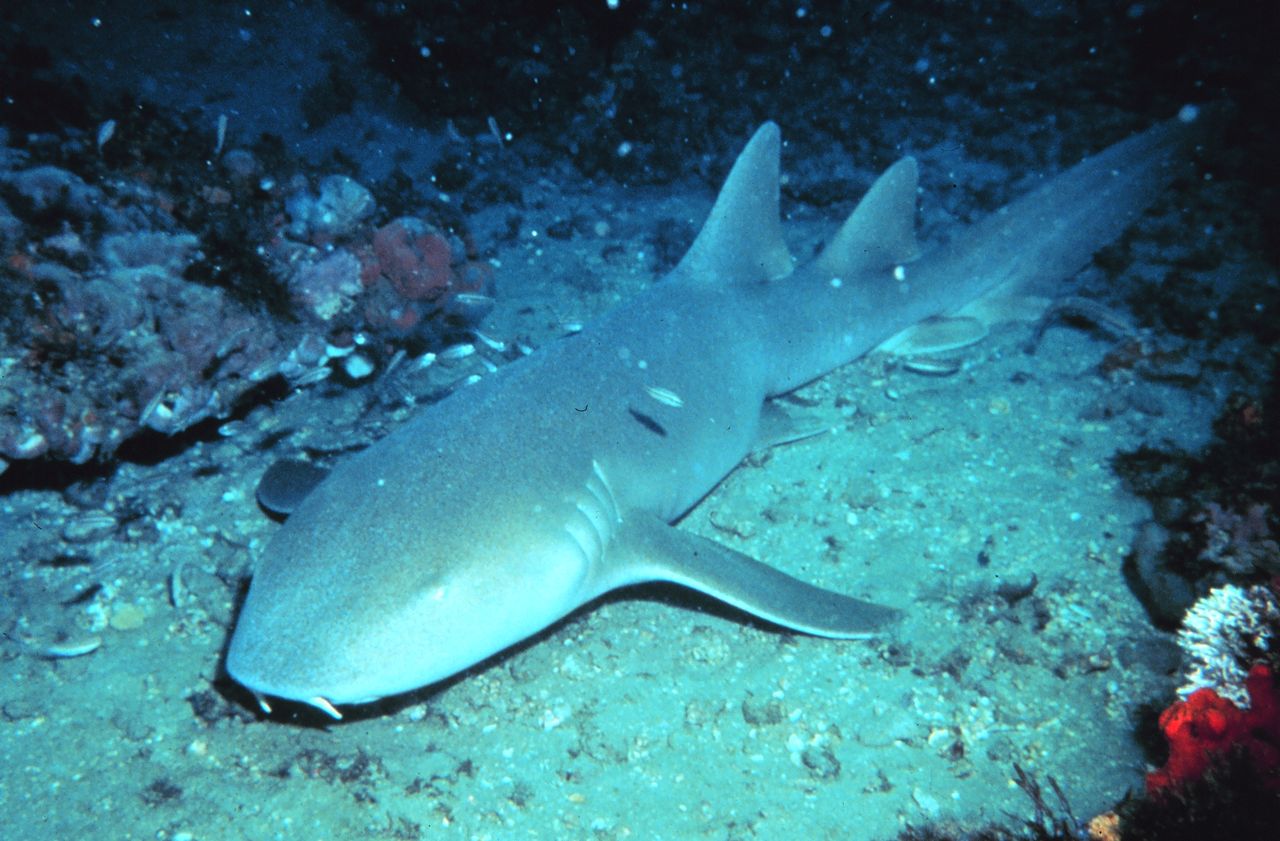
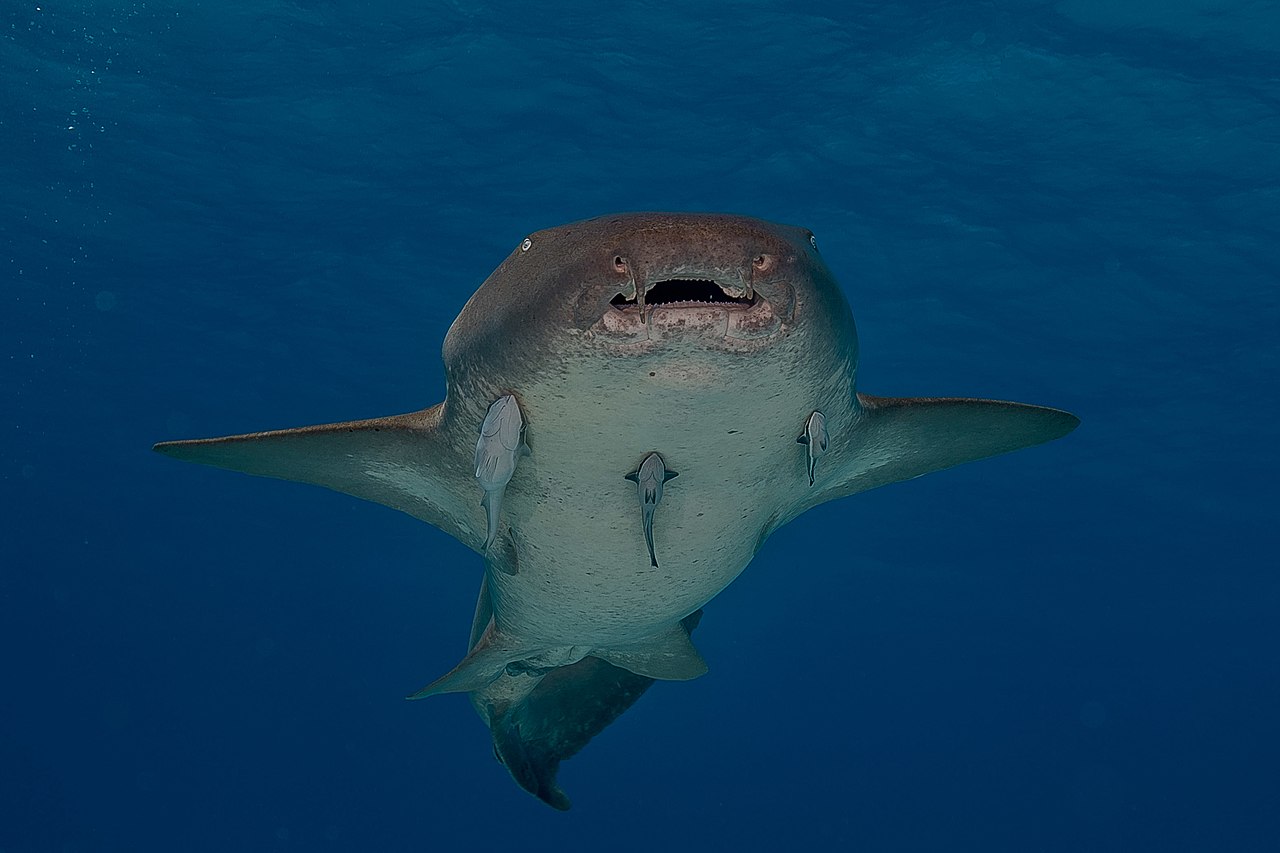
The nurse shark (Ginglymostoma cirratum) is a broad-bodied, bottom-dwelling shark found in warm coastal seas. It is currently the only widely recognized species placed in the genus Ginglymostoma, and is often encountered resting on reefs, sand or in caves during daylight. Adult sizes typically range from about 2.1 to 2.7 metres in length and commonly weigh between 75 and 120 kilograms, making it one of the larger shallow-water shark species.
Image gallery
10 Images




Physical characteristics
Nurse sharks have a flattened appearance, rounded snout, small mouth located well behind the tip of the snout, and distinctive fleshy barbels near the nostrils that help them detect prey in sediment. Their relatively small dorsal fins and long, muscular bodies support a slow, deliberate swimming style. Coloration tends to be uniform brownish or tan which helps them blend with the sea floor.
Distribution and habitat
They inhabit tropical and subtropical coastal waters of both the Atlantic Ocean and parts of the eastern Pacific. Sightings are common around coral and rocky reefs, seagrass beds and mangrove areas. Regionally variable habitat preferences and movement patterns have been studied in many localities; for more on their general range see eastern Pacific records and Atlantic observations.
Diet and behavior
Nurse sharks are primarily nocturnal feeders that use suction and powerful jaws to extract prey from crevices and sediment. They are often slow and seemingly lethargic by day, frequently resting in groups.
- Crustaceans (crabs, lobsters)
- Mollusks (octopus, clams)
- Fishes and small bony species
- Sea snakes and other small vertebrates on occasion
- Coral-associated organisms and sessile animals such as tunicates
Reproduction, human interactions and conservation
Nurse sharks are ovoviviparous: eggs develop inside the female and she gives birth to live young. They are generally considered non-aggressive toward people, described as harmless unless provoked or handled, but they can bite when cornered. Because they frequent shallow coastal areas they are exposed to fishing, habitat degradation and human disturbance; conservation measures and legal protections vary by country. For further taxonomic and regional information see general species accounts and taxonomic resources.
Questions and answers
Q: What is the nurse shark?
A: The nurse shark is a bottom-dwelling shark and the only known species in the genus Ginglymostoma.
Q: What is the size range of nurse sharks?
A: Nurse sharks range in length from 2.1–2.7 metres (6 ft 11 in – 8 ft 10 in) and weigh 75–120 kilograms (165–265 lb).
Q: What do nurse sharks eat?
A: Nurse sharks feed on crustaceans, mollusks, sea snakes, fish, coral, and tunicates.
Q: Where are nurse sharks commonly found?
A: Nurse sharks are common in the coastal tropical and subtropical waters of the eastern Pacific and the Atlantic Ocean.
Q: Are nurse sharks nocturnal or diurnal?
A: Nurse sharks are nocturnal.
Q: How would you describe the behavior of nurse sharks?
A: Nurse sharks are very sluggish and are harmless unless bothered.
Q: Is the nurse shark an aggressive species?
A: No, nurse sharks are harmless unless bothered.
Related articles
Author
AlegsaOnline.com Nurse shark (Ginglymostoma cirratum) Leandro Alegsa
URL: https://en.alegsaonline.com/art/71486
Sources
- flmnh.ufl.edu : "FLMNH Ichthyology Department:Nurse shark"
- bioexpedition.com : "Nurse Shark-Animal Facts and Information"
- marinebio.org : "Nurse Sharks, Ginglymostoma cirratum~MarineBio.org"