
Pistosaurus — a Middle Triassic marine sauropterygian linking nothosaurs and plesiosaurs
Pistosaurus is a genus of Middle Triassic marine sauropterygians with a mix of nothosaur and plesiosaur features, important for understanding the early evolution of plesiosaurs.
Overview
Pistosaurus is a genus of marine sauropterygian reptiles known from Middle Triassic deposits. It combines anatomical traits found in nothosaurs with features more typical of later plesiosaurs. Paleontologists regard Pistosaurus as part of the evolutionary radiation that documents the transition from earlier, semi-aquatic forms to the fully marine plesiosaurs.
Image gallery
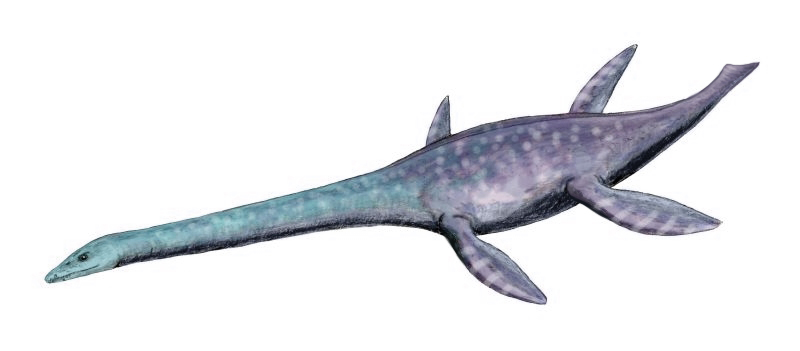
10 Images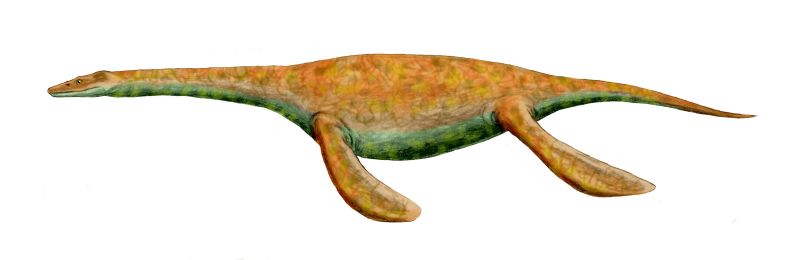



Key characteristics
Pistosaurus shows a mosaic of primitive and derived characters. Its skull and dentition are often cited as especially plesiosaur-like, while parts of the palate and postcranial skeleton retain more primitive, nothosaur-like conditions. Typical features include numerous conical teeth adapted for seizing fish, a relatively elongate skull, and limb elements in the process of becoming more paddle-like.
- Skull and teeth: elongated skull with many sharp, conical teeth suited for piscivory.
- Palate and jaw mechanics: some primitive palatal structures persist, indicating an intermediate feeding apparatus.
- Limbs and locomotion: limb bones show adaptations toward aquatic propulsion but are not as fully modified into rigid flippers as in later plesiosaurs.
- Vertebral column: vertebrae reflect a body plan capable of sustained swimming in open water.
History and classification
Fossils attributed to Pistosaurus were recovered from Middle Triassic marine sediments and have been studied as evidence of early sauropterygian diversification. Classification places Pistosaurus within Sauropterygia and close to the ancestry of plesiosaurs; some researchers assign it to a group often referred to as pistosauroids or place it near nothosaurs in broader schemes. While it shares several derived traits with plesiosaurs, it is generally seen as a close relative rather than a direct ancestor.
Paleobiology and ecology
Pistosaurus was a marine predator that probably fed mainly on fish and other small vertebrates. Its tooth morphology and jaw shape indicate a grasping and piercing feeding style. The combination of limb and axial features suggests that it was an efficient swimmer capable of active pursuit in coastal or open marine environments, bridging the ecological gap between earlier shore-associated sauropterygians and the later pelagic plesiosaurs.
Importance and notable distinctions
Pistosaurus occupies an important place in discussions of sauropterygian evolution because it displays a transitional anatomy: enough derived characters to foreshadow plesiosaurs, yet retaining several primitive traits. This mixture helps paleontologists reconstruct the sequence of anatomical changes that produced the distinctive plesiosaur body plan, especially regarding skull morphology, feeding adaptations, and limb transformation.
Further reading and resources
- General overview of sauropterygian reptiles
- Nothosaurs and related groups
- Plesiosaur origins and early evolution
- Triassic marine ecosystems
- Comparative anatomy of early sauropterygians
- Fossil sites and stratigraphy for Middle Triassic reptiles
- Methods in identifying transitional fossils
- Museum exhibits and specimen records
Readers interested in visual reconstructions or specimen photographs should consult museum collections and specialist reviews. Pistosaurus continues to be discussed in the literature as new finds and analyses refine our understanding of how the classic plesiosaur body plan emerged from earlier sauropterygian ancestors.
Related articles
Author
AlegsaOnline.com Pistosaurus — a Middle Triassic marine sauropterygian linking nothosaurs and plesiosaurs Leandro Alegsa
URL: https://en.alegsaonline.com/art/77109