
Northrop Grumman B-2 Spirit (Stealth Bomber)
The B-2 Spirit is an American stealth strategic bomber with a flying‑wing design, low‑observable technology, and mixed conventional and nuclear payload capability used by the USAF since the 1990s.
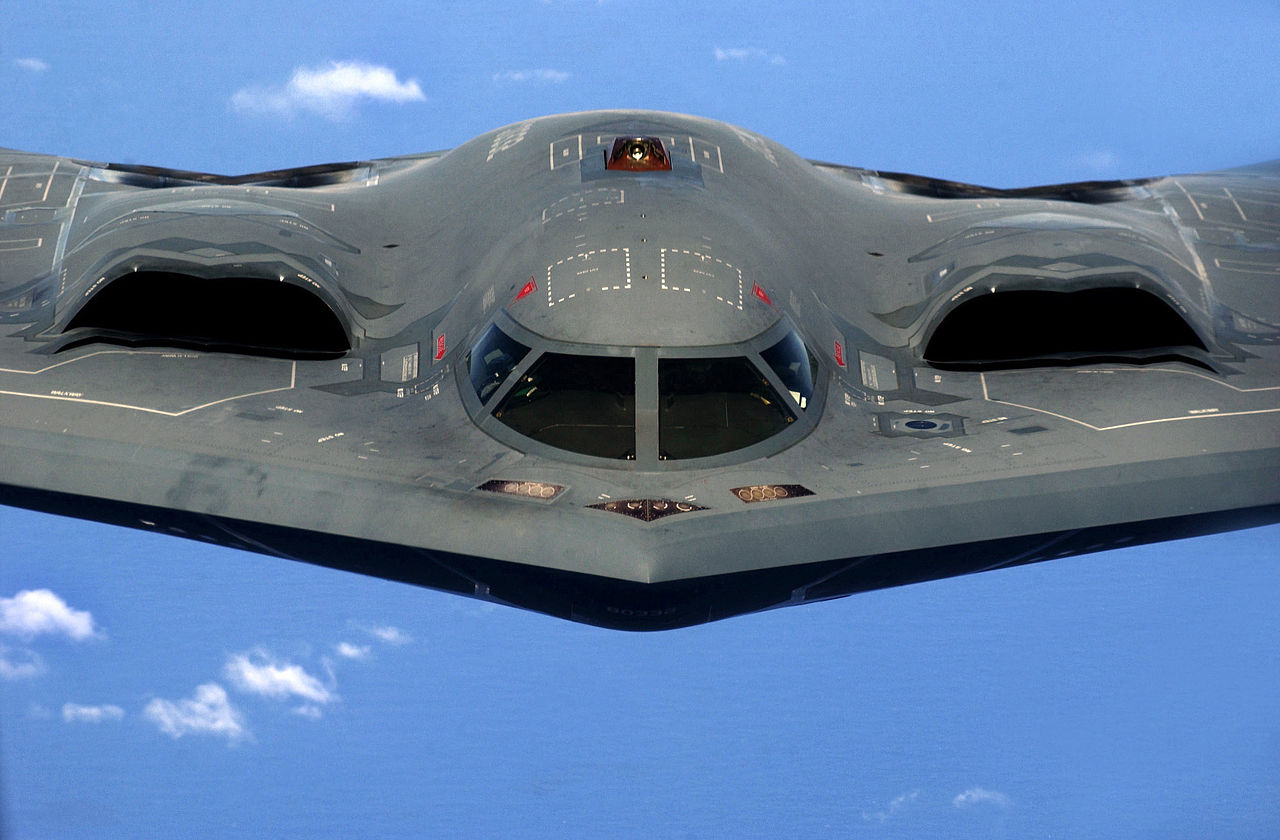
The Northrop Grumman B-2 Spirit is a long‑range, heavy strategic bomber developed for the United States Air Force. Often called the "Stealth Bomber," the B-2 uses advanced low‑observable and signature‑reduction measures to reduce detection by radar and other sensors. Its distinctive flying‑wing layout contributes to a small radar cross‑section and aerodynamic efficiency. The aircraft was intended to penetrate dense anti‑access defenses and deliver either conventional or nuclear munitions on high‑value targets. For further technical context see stealth technology and its role in defeating anti‑aircraft systems.
Image gallery
10 Images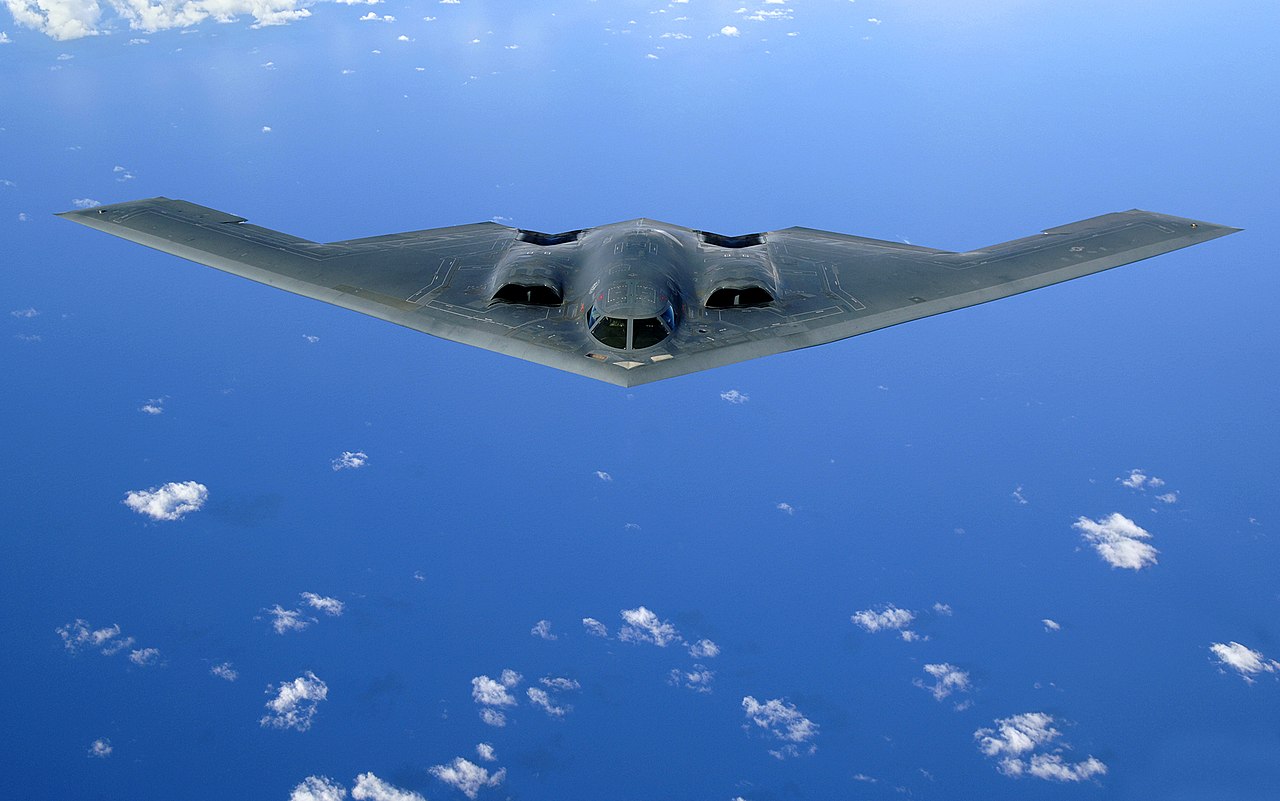


Design and key features
The B-2 is crewed by two aircrew and is notable for integrating shaping, materials, and systems engineering to minimize signatures across radar, infrared, acoustic and visual bands. Its internal weapon bays permit carriage of guided and unguided ordnance without compromising stealth. Typical loadouts have included large numbers of GPS‑guided bombs as well as air‑delivered nuclear weapons; for example it can carry up to eighty 500‑pound GPS‑guided JDAMs or several large thermonuclear bombs such as the B83 in its internal bays. Specific munitions types are summarized at weapons compatibility and JDAM guidance.
Performance and systems
- Airframe: blended flying‑wing with composite and radar‑absorbent materials.
- Crew: two‑person cockpit with terrain‑following and mission avionics.
- Payload: sizeable internal carriage for mixed conventional and nuclear stores.
- Range and endurance: designed for global strike with aerial refueling to extend mission reach.
- Manufacturing: prime contractor Northrop Grumman with major subcontractors such as Boeing.
The B-2 program combined novel materials, precision manufacturing and sophisticated software to achieve its low observable goals. Its per‑aircraft acquisition cost, reported in the late 1990s, reflected that technological complexity.
Development, procurement and controversy
Work on the B-2 began under the program name "Advanced Technology Bomber" (ATB) in the late 1970s and continued through the 1980s. The program survived multiple administrations but proved politically and financially contentious. Congressional scrutiny over cost and strategic need intensified after the end of the Cold War, which reduced perceived demand for a large fleet of nuclear‑capable stealth bombers. Initial procurement plans for well over a hundred airframes were cut back repeatedly, ultimately producing a much smaller fleet than first envisioned. Debates about cost, force structure and strategic roles are documented in contemporary congressional analyses and oversight records; see related material at program controversy and the broader post‑Cold War strategic context at Cold War end.
Operational history and uses
The Spirit entered service in the 1990s and has been employed in several combat and deterrence roles. Although designed primarily for nuclear penetration missions, its first combat use delivered conventional ordnance during the 1999 Kosovo campaign. Operational deployments have included strikes and long‑range precision engagements in conflicts such as Kosovo, Iraq and Afghanistan. The aircraft remains a component of the USAF’s long‑range strike and nuclear deterrent posture; for current service details see USAF fleet status.
Its combat employment timeline includes the 1999 bombing campaign over Serbia during the Kosovo conflict and later operations in the Balkans, Iraq and Afghanistan. The B-2 has performed precision conventional strikes as well as deterrent patrols. In 2008 one aircraft was lost in an accident shortly after takeoff; the crew survived. Readers can consult detailed operational histories at sources covering the air campaign records.
Today the B-2 is often discussed alongside newer and evolving long‑range strike concepts: it remains notable for combining stealth, payload, and global reach, but its high acquisition and sustainment costs continue to shape debates about force composition and modernization priorities.
Related articles
Author
AlegsaOnline.com Northrop Grumman B-2 Spirit (Stealth Bomber) Leandro Alegsa
URL: https://en.alegsaonline.com/art/71073
Sources
- nationalmuseum.af.mil : "Northrop B-2A Spirit fact sheet."
- airforce-magazine.com : "2009 USAF Almanac, Fact and Figures."
- fas.org : "B-2 Bomber: Cost and Operational Issues Letter Report, 14 August 1997, GAO/NSIAD-97-181."
- airforcetimes.com : "Moisture confused sensors in B-2 crash."