
Nuclear missile
A missile armed with a nuclear warhead used as a strategic or tactical delivery system; includes design, history, role in deterrence, and arms-control issues.
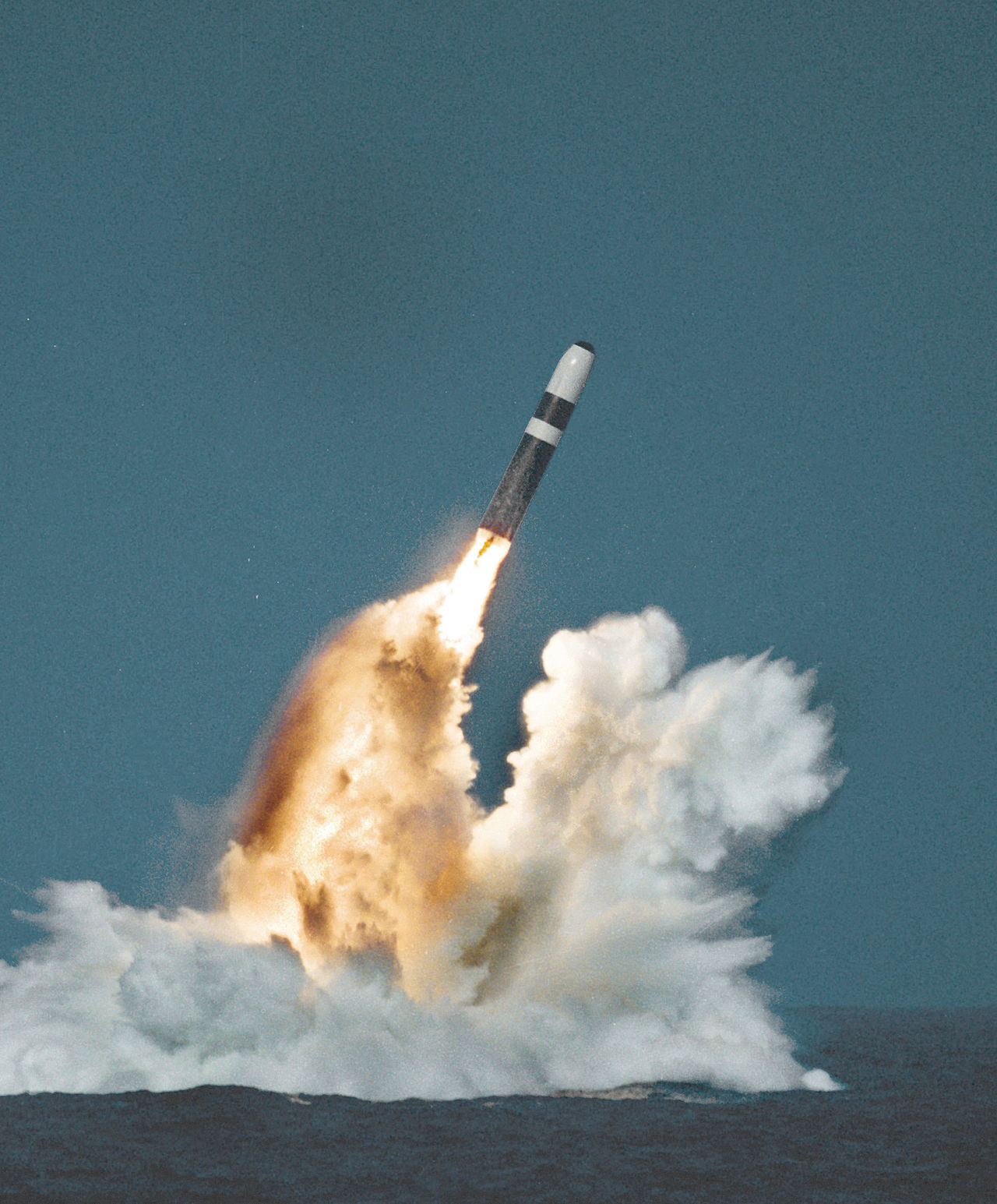
A nuclear missile is a guided rocket or cruise vehicle equipped to carry and deliver a nuclear warhead to a target. In simplest terms it combines the technology of missiles with an explosive device derived from nuclear fission or fusion, commonly called an atomic bomb. Nuclear missiles vary by range, guidance system and launch platform — from short-range tactical systems to intercontinental ballistic missiles (ICBMs) that can cross continents.
Image gallery
10 Images




Design and components
Typical elements include a propulsion system (solid or liquid fuel), guidance and control, stages for long-range flight, a re-entry vehicle for ballistic types, and the nuclear warhead. Accuracy, often expressed as circular error probable, and yield — the explosive energy of the warhead — are key characteristics. Some missiles are designed to deliver a single warhead; others can carry multiple independently targetable re-entry vehicles (MIRVs).
- Propulsion: boosters and upper stages for ballistic missiles or jet engines for cruise missiles.
- Guidance: inertial, satellite-aided, or terrain-following systems.
- Warhead: fission, fusion, or boosted designs with varying yields.
History and development
Nuclear missiles emerged from wartime rocket and nuclear research in the mid-20th century. Their role expanded during the Cold War when the United States and the Soviet Union built large arsenals. The competition emphasized range, accuracy and survivability, producing silo-based ICBMs, submarine-launched ballistic missiles (SLBMs) and air-launched systems.
Because a successful nuclear first strike could be catastrophic, doctrine evolved around deterrence and assured retaliation. The idea commonly called Mutual assured destruction relied on preserving a credible second-strike capability so that an attacker would face unacceptable retaliation. Over time, arms-control agreements and verification measures aimed to limit numbers and reduce the risk of accidental or miscalculated use; such measures are often referred to as treaties.
Today nuclear missiles remain central to the strategic posture of nuclear-armed states and are subject to technical, political and ethical debate. Concerns include proliferation to additional states, modernization programs that change stability dynamics, command-and-control safety, and the challenges of preventing theft or unauthorized use. Distinctions between strategic and tactical roles, and between ballistic and cruise technologies, shape policy and military planning as nations balance deterrence, defense and arms-control efforts.
Related articles
Author
AlegsaOnline.com Nuclear missile Leandro Alegsa
URL: https://en.alegsaonline.com/art/71364