
Atlantic Standard Time (AST)
Time zone four hours behind Coordinated Universal Time (UTC−04:00), used in eastern Canada, parts of the Caribbean and South America; shifts to ADT (UTC−03:00) where daylight saving applies.
Overview
Atlantic Standard Time (AST) is a civil time standard set at UTC−04:00 (four hours behind Coordinated Universal Time). Historically linked to the mean solar time of the 60th meridian west, AST is used as the standard clock time in several jurisdictions in eastern Canada, island territories in the North Atlantic and many Caribbean and South American locations. In areas that observe daylight saving, clocks move forward one hour to Atlantic Daylight Time (ADT), which corresponds to UTC−03:00.
Image gallery
2 Images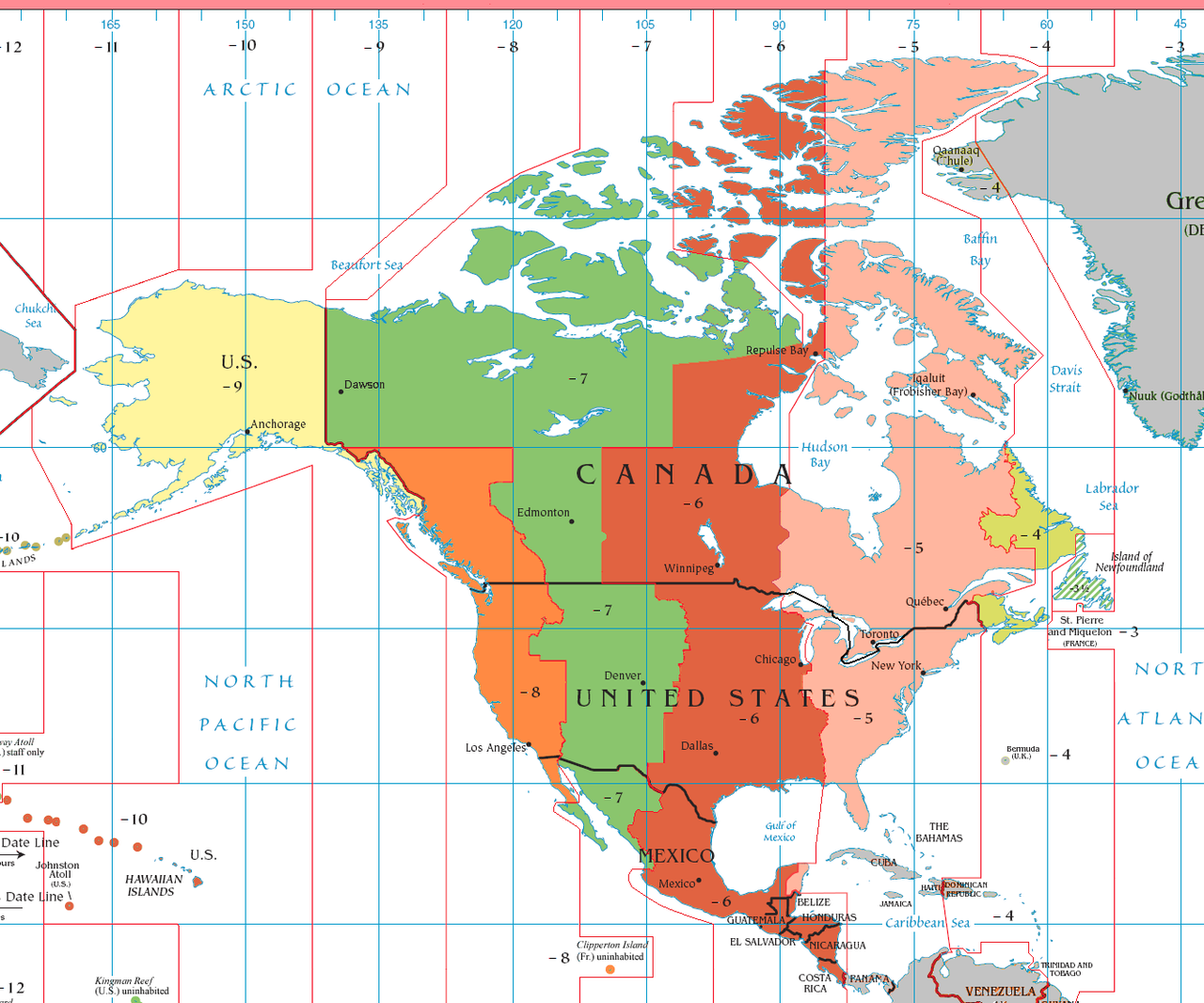

Extent and principal areas
In Canada, the provinces of New Brunswick, Nova Scotia and Prince Edward Island use AST as their standard time during the non‑daylight period. Bermuda also keeps AST as its standard time. Across the Caribbean, numerous islands and territories use AST year round or seasonally; notable examples include Puerto Rico and the U.S. Virgin Islands. In South America, several countries or regions adopt UTC−04:00 either permanently or seasonally.
Relationship with other time standards
Because AST is UTC−04:00, it is one hour ahead of Eastern Standard Time (EST, UTC−05:00) during the northern hemisphere winter. During summer months, when regions on Eastern Time observe Eastern Daylight Time (EDT, UTC−04:00), EDT and AST are equivalent in clock time. This overlap is important for scheduling across North America and for transportation and communications that cross time zones.
Daylight saving and historical changes
Some jurisdictions on AST observe daylight saving time, advancing clocks by one hour to ADT (UTC−03:00) in the summer. Others remain on AST year‑round. Time zone assignments have changed occasionally for political, economic or practical reasons: for example, Venezuela changed its official offset away from and later back to UTC−04:00 in the 21st century. Such adjustments affect international coordination, timetables and legal definitions of local time.
Uses, importance and practical notes
AST is used for civil timekeeping, transportation schedules, broadcasting and legal purposes in the areas that adopt it. For travelers and businesses, it is important to check whether a locality observes daylight saving because local clock time may shift seasonally between AST and ADT. The abbreviation "AST" can appear in timetables, computer settings and official documents; however, similar abbreviations occur elsewhere (so context matters) and many digital systems prefer explicit UTC offsets to avoid ambiguity.
Distinctions and additional facts
AST should not be confused with other time abbreviations that use the same letters in different regions. It denotes standard time at UTC−04:00, while the related Atlantic Daylight Time (ADT) denotes UTC−03:00. Because time zones follow political boundaries rather than strict meridians, local practice determines whether a place observes AST, ADT, or a different offset. For authoritative, up‑to‑date information consult national time authorities, transport operators and official government publications before planning time‑sensitive activities.
References and external links
- General time zone information
- Canada time zone overview
- New Brunswick time details
- Nova Scotia official time
- Prince Edward Island time
- Bermuda timekeeping
- North Atlantic territories
- Island territories reference
- Geography of the North Atlantic
- Daylight saving time overview
- Caribbean time practices
- Puerto Rico local time
- South American time zones
- Paraguay time information
- Chile time conventions
- Bolivia time standard
- Brazil regional offsets
- Venezuela historical changes
Tags
Related articles
Author
AlegsaOnline.com Atlantic Standard Time (AST) Leandro Alegsa
URL: https://en.alegsaonline.com/art/7000
Sources
- timeanddate.com : "Clocks to Go Forward Permanently in Venezuela"