
Milo (drink) — chocolate‑malt beverage originally from Australia
Milo is a chocolate‑malt powdered drink created in Australia in 1934 and now produced by Nestlé. Mixed with milk or water, it is sold worldwide in powders, sachets and ready‑to‑drink formats.
Overview: Milo is a chocolate‑malt powdered beverage first developed in Australia in the 1930s. The product is intended to be mixed with milk or hot water to make a beverage and is also sold in ready‑to‑drink formats and single‑serve sachets. It is manufactured by Nestlé and has become a familiar brand in many countries across Oceania, Asia, parts of Africa and South America.
Image gallery
8 Images
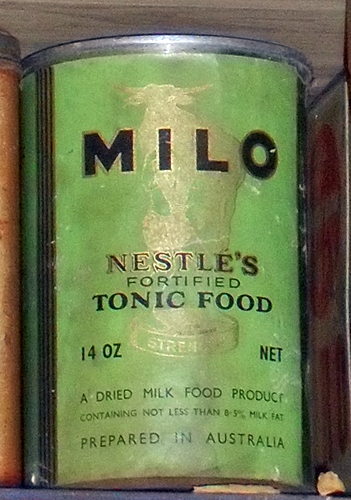


Composition and characteristics
Milo is formulated around chocolate and malt flavours, with a base of powdered cereal extracts and cocoa. Commercial formulations typically include sweeteners and, in many markets, added vitamins and minerals. The powder dissolves in warm or cold liquids and can be adapted for different tastes and recipes.
History and name
The drink was created by Australian food manufacturer Thomas Mayne and first offered to the public at the Sydney Royal Easter Show in Sydney, in New South Wales. Its brand name alludes to the legendary strength of the ancient Greek wrestler Milo of Croton, reflecting early marketing that highlighted energy and physical activity.
Preparation, variants and uses
- Basic preparation: powder mixed with hot water or with cold milk to produce a drinking chocolate or malted milk drink.
- Convenience forms: tins, sachets labelled as 3‑in‑1 mixes, and chilled ready‑to‑drink cartons for on‑the‑go consumption.
- Culinary uses: used in shakes, smoothies, baking, ice creams and local desserts; regional creations such as the layered or heaped "Milo" treats in Southeast Asia are popular.
Cultural impact and market presence
Over decades Milo has been associated with youth sports programs, school promotions and sponsorship of athletic events in many countries. Its marketing emphasised nourishment and activity, helping it become a pantry staple in households where malted chocolate drinks are popular.
Comparisons and public discussion
Milo occupies a category of chocolate‑malt drinks similar to other malted beverages and cocoa mixes, but it is distinguished by its specific recipe, branding and market footprint. Like comparable flavored powders, it has been the subject of public discussion about sugar content and nutrition, prompting reformulations and product variations in some regions.
Note: For product information, recipes and regional details consult manufacturer or local retailers; general references include pages on ingredients and distribution such as drink listings and regional histories in Australia.
Related articles
Author
AlegsaOnline.com Milo (drink) — chocolate‑malt beverage originally from Australia Leandro Alegsa
URL: https://en.alegsaonline.com/art/65067
Sources
- nestle.com.au : "History"