
Mint (candy): flavor, forms, production, history and notable brands
Overview of mint-flavored candies: characteristics, common forms, production notes, history and well-known brands such as Polos, Altoids and Mentos.
Mint in confectionery refers to a cool, aromatic taste commonly derived from peppermint or spearmint oils. The word mint is used both for the herb and for the characteristic flavor applied to an array of sweets. As a flavoring it is prized for a fresh, clean mouthfeel and a sharp cooling sensation caused mainly by menthol and related compounds.
Image gallery
9 Images


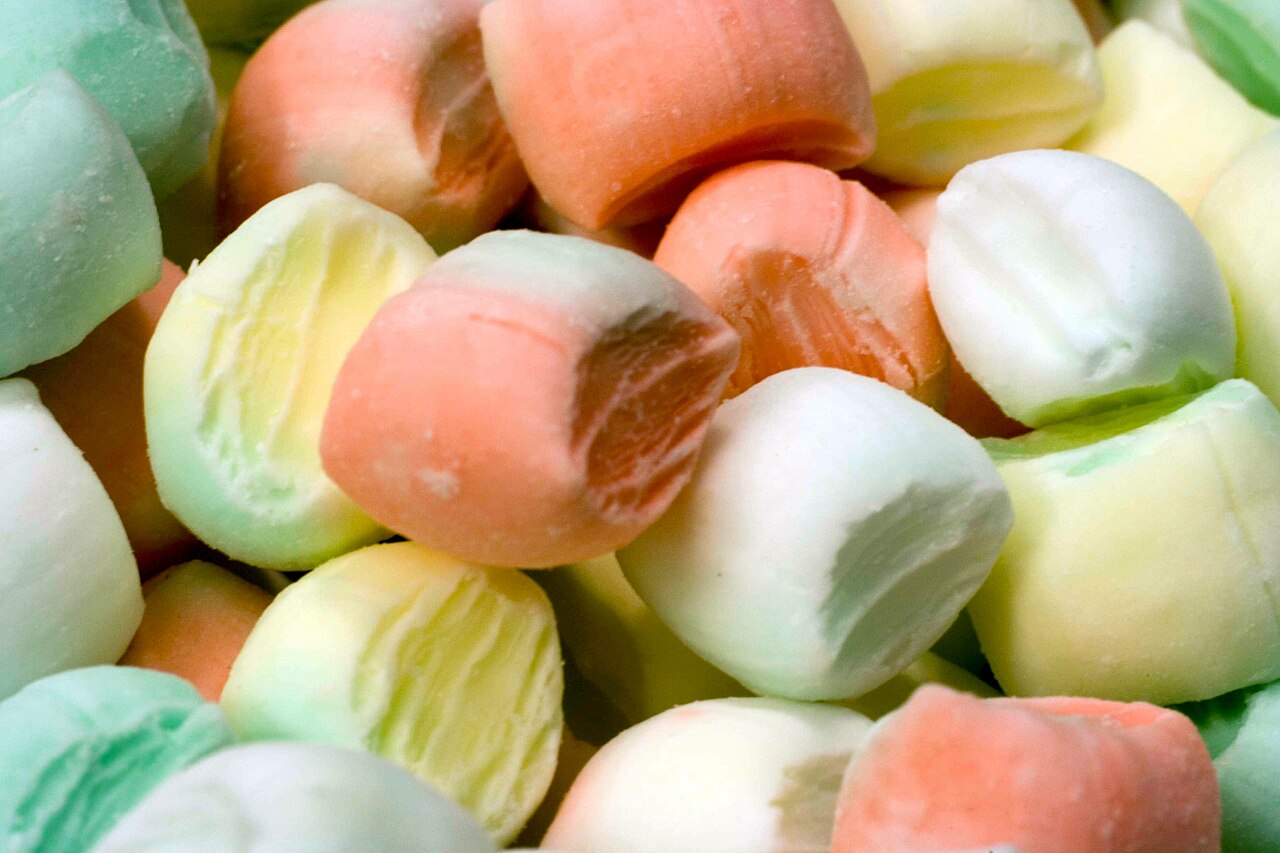


Characteristics
Mint candies typically rely on natural essential oils or synthetic menthol to produce the cooling effect that stimulates cold receptors in the mouth. Peppermint (Mentha x piperita) has a higher menthol content and a sharper bite, while spearmint (Mentha spicata) tastes sweeter and milder. Manufacturers balance oil concentration with sugar, sweeteners or dairy when mint is combined with chocolate or ice cream.
History and development
People have chewed mint leaves for breath and digestion for millennia; commercial mint confections appeared in Europe in the 18th and 19th centuries as sugar refining and candy-making techniques improved. Iconic packaged mints rose in popularity during the 20th century; examples include Polos (now associated with Nestlé) and vintage tins like Altoids, which helped define the breath-mint market.
Production and common forms
Mint candy is produced as hard boiled sweets, compressed lozenges, pressed breath mints, syrup-coated chocolates, gum pellets and chewables. Basic steps include blending flavor oil with sugar or sweetener, forming by moulding or compression, and sometimes adding a starch-powdered finish. Menthol crystals or oil distillates are used to standardize potency.
Uses and examples
Mint is used not only in candy but widely in chewing gum, toothpaste, and ice cream. Breath freshening is the chief function for many small mints, while larger lozenges may be marketed for throat comfort or digestive relief. Sugar-free varieties often contain xylitol, which can reduce cavity risk.
Notable brands and varieties
- Polos (mint ring candy)
- Altoids (strong peppermint lozenges) — Altoids
- Cadbury After Dinner Mints — Cadbury
- Mentos, Fisherman's Friends, Trebor, Mentos and Wrigley's spearmint gum
- Polos and other legacy brands often appear under large confectionery firms such as Nestlé
Manufacturers and consumers choose among natural vs. synthetic flavorings, stronger or milder profiles, and sweetened or sugar-free formats depending on desired use—breath freshening, dessert pairing, or medicinal support. For quick reference on mint in confectionery see product pages and ingredient labels from major makers and retailers: mint, flavoring, candy, chewing gum, ice cream, Nestlé, Altoids, Cadbury.
Related articles
Author
AlegsaOnline.com Mint (candy): flavor, forms, production, history and notable brands Leandro Alegsa
URL: https://en.alegsaonline.com/art/65309