
Ancient Greek wrestling
Wrestling in ancient Greece was a central athletic discipline of the gymnasium and the Olympic Games, focused on throws and holds of the upper body, practiced in the nude and celebrated in art and education.
Ancient Greek wrestling was a form of organized grappling and one of the most prominent combat sport activities in classical Greece. Matches tested balance, strength, technique and endurance rather than striking. Competitions were civic events as well as personal contests: victories conferred honor on the athlete, his trainer and his city-state. The discipline influenced later traditions and inspired modern styles that emphasize throws and upper‑body control.
Image gallery
8 Images




Rules and techniques
The basic objective was simple: force an opponent to touch the ground with his back or shoulders. A fall counted as a point, and three such falls typically decided a match. Holds were largely confined to the torso, chest and arms; deliberately seizing the legs was generally discouraged in many periods. There were no weight divisions or formal time limits in the classical era, so contests often favored larger, stronger men unless a smaller competitor could outmaneuver them. Typical moves emphasized leverage—throws, lifts, trips and upper‑body locks—applied from a standing posture rather than groundwork.
Training, venues and attire
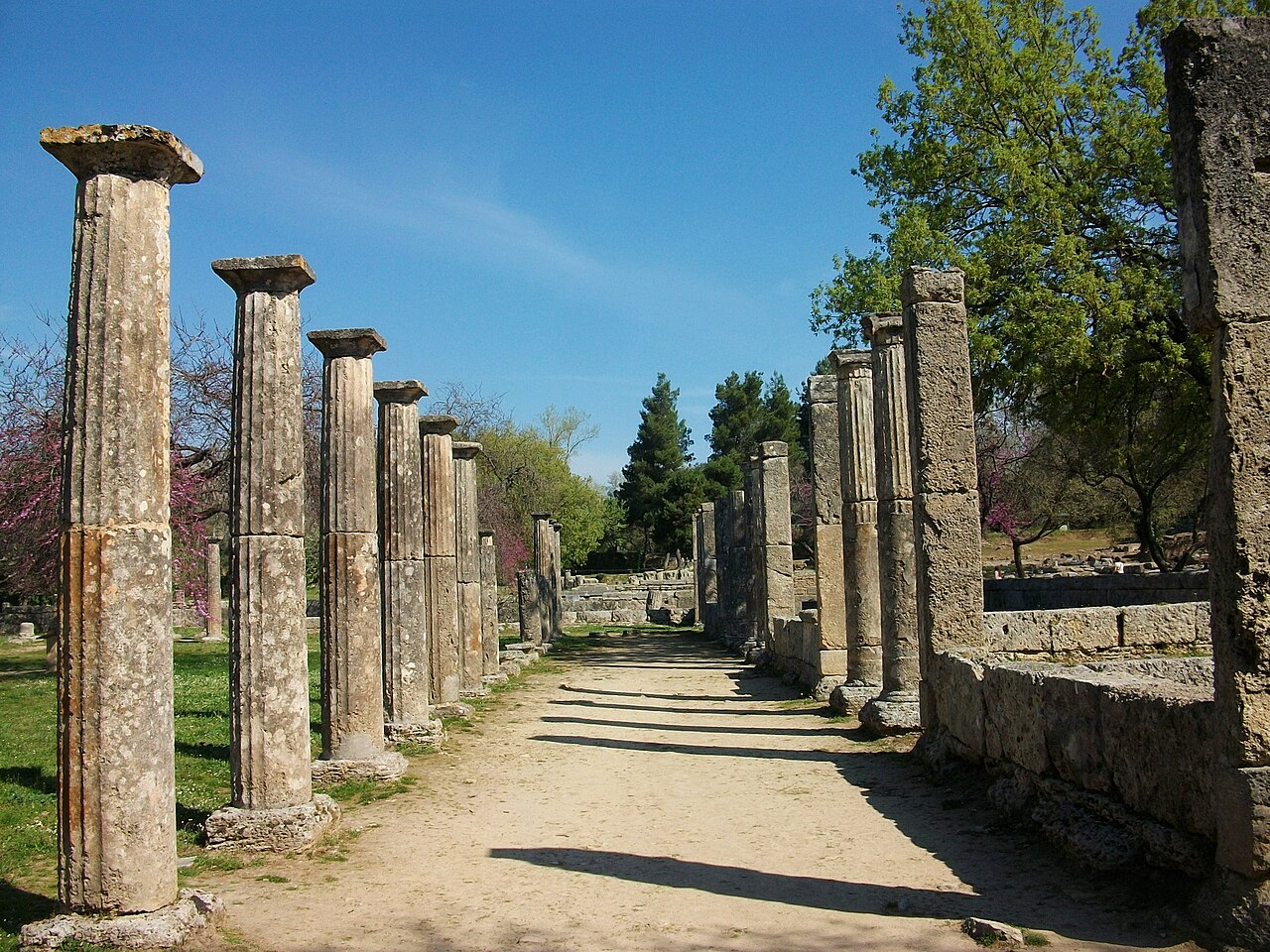
Wrestlers trained in a palaestra, the specialized exercise area attached to the gymnasium, where instruction and physical education were provided. The palaestra was a common feature in Greek cities and housed practice for young men learning athletic skills. Competitors performed nude, a practice that reflected aesthetic and cultural ideals about the human body and athletic virtue. Trainers, fellow athletes and officials supervised contests; athletes also prepared with oiling and dusting to modify grip and protect the skin.
Social role and the games
Wrestling formed a core part of the Greek program of physical education and public competition. It was the first non‑running event introduced to the Ancient Olympic Games, becoming a fixture of pan‑Hellenic festivals as well as local contests. Success in wrestling could elevate an individual's status and was often commemorated in poetry, sculpture and civic records. Famous practitioners—such as Milo of Croton—were celebrated both for athletic achievements and for legendary feats of strength.
Cultural legacy and representations
Wrestling scenes are frequent in Greek visual art and literature, reflecting its social importance. Artists depicted athletes in vase painting and sculpture, while painters captured dynamic grips and throws on pottery and murals (painting). Writers used wrestling as a metaphor for moral and political struggles and recorded memorable matches in historical and biographical texts (literature).
- Notable figures: Milo of Croton is remembered for multiple Olympic victories and for his fame as a model of strength (Milo of Croton).
- Distinctive features: nudity in competition, absence of weight classes, and emphasis on upper‑body technique set ancient practice apart from many modern forms.
- Modern echoes: the later European style called Greco‑Roman wrestling deliberately invoked classical ideals by restricting holds below the waist, linking ancient practice to modern sport (see modern wrestling for comparative forms).
Although rules and local customs varied over centuries, ancient Greek wrestling remained a central expression of physical culture: a codified contest that trained bodies, shaped civic identities and left a rich visual and textual record for later generations.
Questions and answers
Q: What was the objective of Greek wrestling?
A: The objective of Greek wrestling was to throw an opponent to the ground from a standing position.
Q: How many points were needed to win a match?
A: Three points were needed to win a match.
Q: What type of holds were allowed in Ancient Greek wrestling?
A: Holds were restricted to the upper body in Ancient Greek wrestling.
Q: Did Ancient Greeks have weight divisions or time limits for their matches?
A: No, there were no weight divisions or time limits for Ancient Greek wrestling matches.
Q: Where did wrestlers train and compete?
A: Wrestlers trained and competed in places called palaestrae. Some large cities had several palaestrae.
Q: Were wrestlers clothed during competitions?
A: No, wrestlers competed in the nude during competitions.
Q: Who are two famous ancient Greek wrestlers remembered today?
A: Two famous ancient Greek wrestlers remembered today are Leontiskos of Messene and Milo of Croton.
Related articles
Author
AlegsaOnline.com Ancient Greek wrestling Leandro Alegsa
URL: https://en.alegsaonline.com/art/3846