
Mariner 9 — NASA's first Mars orbiter
Mariner 9, launched in 1971, was the first spacecraft to orbit another planet. It mapped much of Mars, revealed Valles Marineris and large volcanoes, and studied atmospheric and surface conditions.
Overview
NASA launched Mariner 9 on May 30, 1971 as part of the Mariner program. The mission's vehicle was a dedicated spacecraft intended to go into orbit about the planet Mars. After a cruise of roughly 170 days, Mariner 9 arrived at Mars on November 13, 1971 and became the first human-made probe to enter orbit around another planet. Its primary objectives were to map large portions of the Martian surface and to investigate atmospheric and surface temperature variations.
Image gallery
10 Images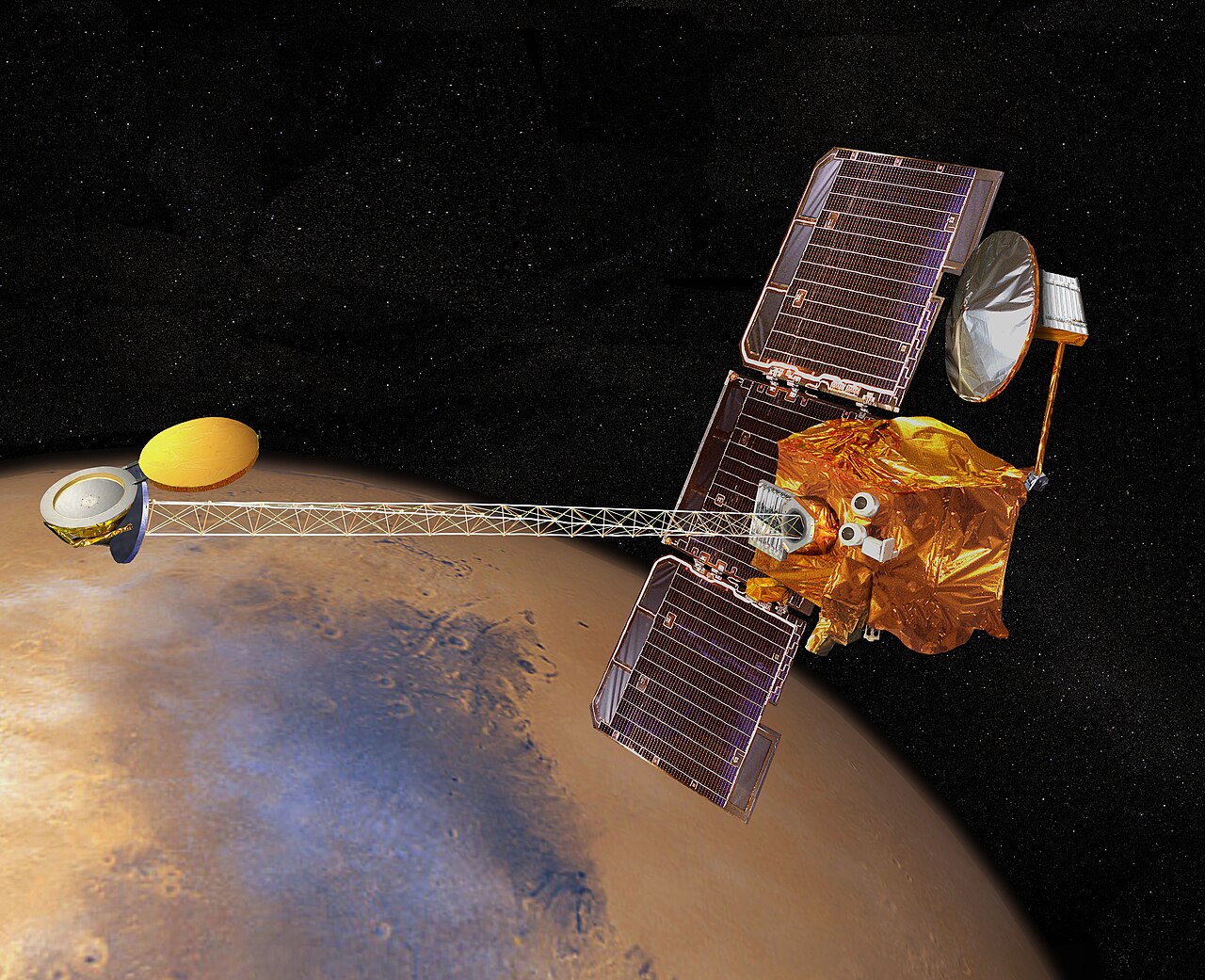




Mission goals and context
The core scientific aims were to obtain systematic images of the Martian surface, study seasonal and daily changes in the atmosphere, and measure thermal and compositional properties of the surface and clouds. Engineers planned Mariner 9 to photograph and analyze about 70% of Mars' surface at a range of resolutions that were unprecedented at the time. The mission also provided data to help plan later landers and orbiters by characterizing hazards and regional geology.
Instruments and spacecraft features
Mariner 9 carried a complement of remote-sensing and space-environment instruments designed for orbital operation. These included an imaging system for visible photography, infrared and ultraviolet sensors for temperature and compositional studies, and experiments to probe the charged-particle and dust environment and to conduct radio science. The probe was solar-powered and built on the basic Mariner bus design, adapted for extended operation in Mars orbit and for the higher data volumes produced by its cameras.
Arrival, global dust storm, and discoveries
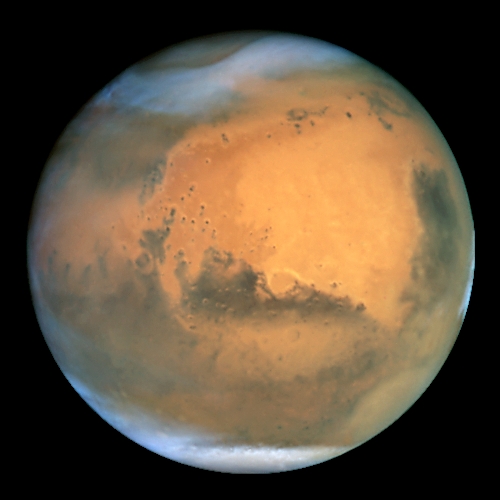
When Mariner 9 reached Mars it encountered an extensive planet-encircling dust storm that temporarily hid surface features. This unanticipated event delayed direct surface mapping but opened a new opportunity to study dust loading, atmospheric heating, and the dynamics of large-scale storms. As the dust settled over subsequent months, Mariner 9 returned detailed images that revealed vast canyons and enormous volcanic structures. Among the notable features documented was the canyon system later named Valles Marineris in honor of the mission; the probe also imaged giant volcanoes such as Olympus Mons and distributed lava plains that reshaped ideas about Martian geology.
Key results and legacy
- Extensive surface photography that provided regional context for future missions.
- Direct observations of a global dust storm and measurements of atmospheric temperature structure and dust effects.
- Identification and detailed imaging of major tectonic and volcanic provinces, including the Valles Marineris canyon system (Valles Marineris).
- Data that influenced landing site selection and science planning for subsequent Mars missions.
Launch and mission operations originated from Cape Canaveral; the vehicle was launched from the Eastern Test Range at Cape Canaveral Air Force Station (Cape Canaveral). The spacecraft's discoveries transformed scientific understanding of Mars from a largely featureless disk to a world with diverse landforms and active atmospheric processes.
Significance and later use
Mariner 9 established several firsts: it was the first spacecraft to orbit another planet and the first to provide truly global imaging of Mars. The mission delivered thousands of images and measurements that remain a foundational data set in planetary science. Its success demonstrated the value of orbiters for planetary reconnaissance and paved the way for decades of increasingly sophisticated Mars exploration. For further technical and historical details, see mission archives and summaries available from program repositories (Mariner program resources).
Related articles
Author
AlegsaOnline.com Mariner 9 — NASA's first Mars orbiter Leandro Alegsa
URL: https://en.alegsaonline.com/art/61949