
Valles Marineris
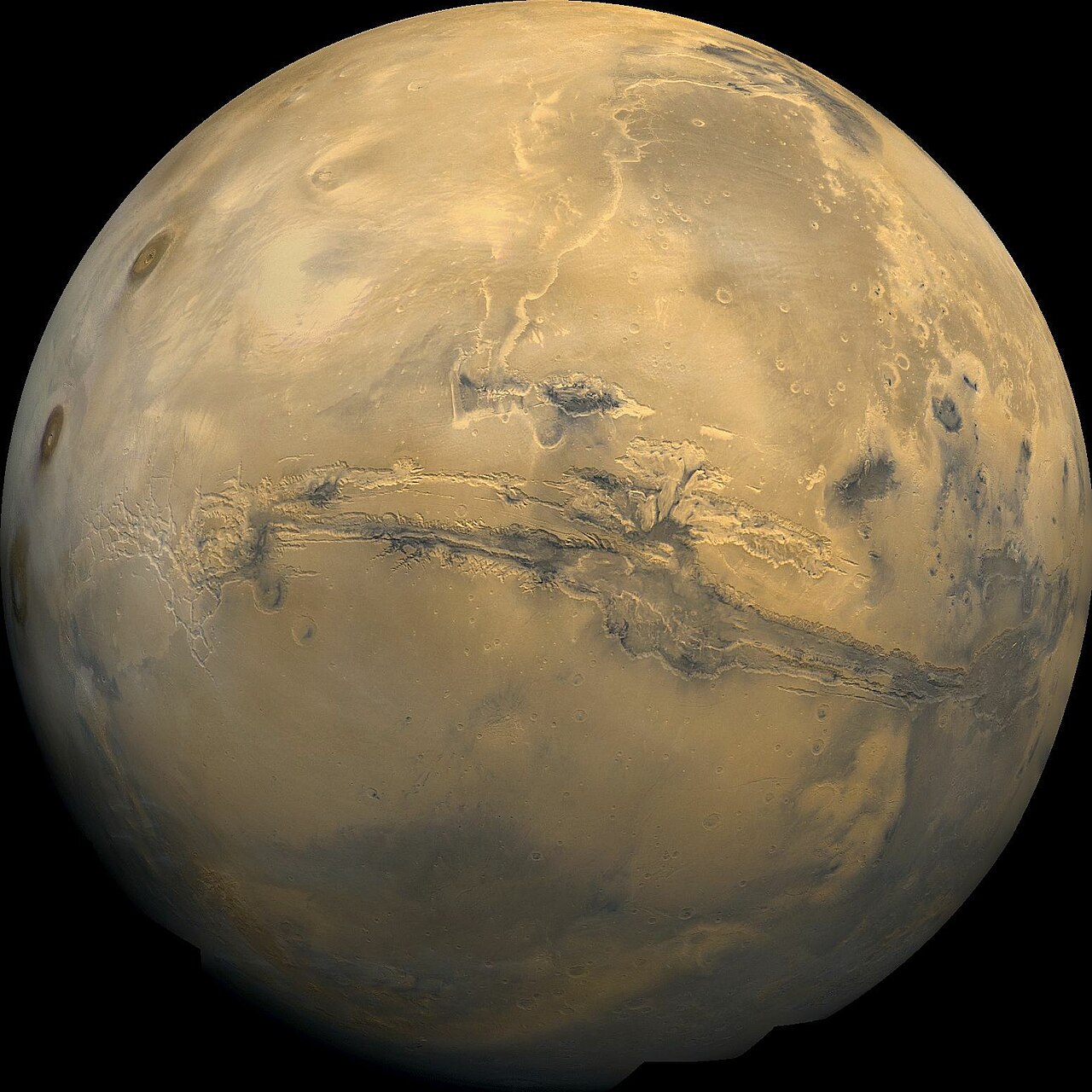
Valles Marineris is a vast canyon system on Mars, stretching several thousand kilometers. It is one of the Solar System's largest rifts, revealing tectonic, erosional and sedimentary processes.
Overview
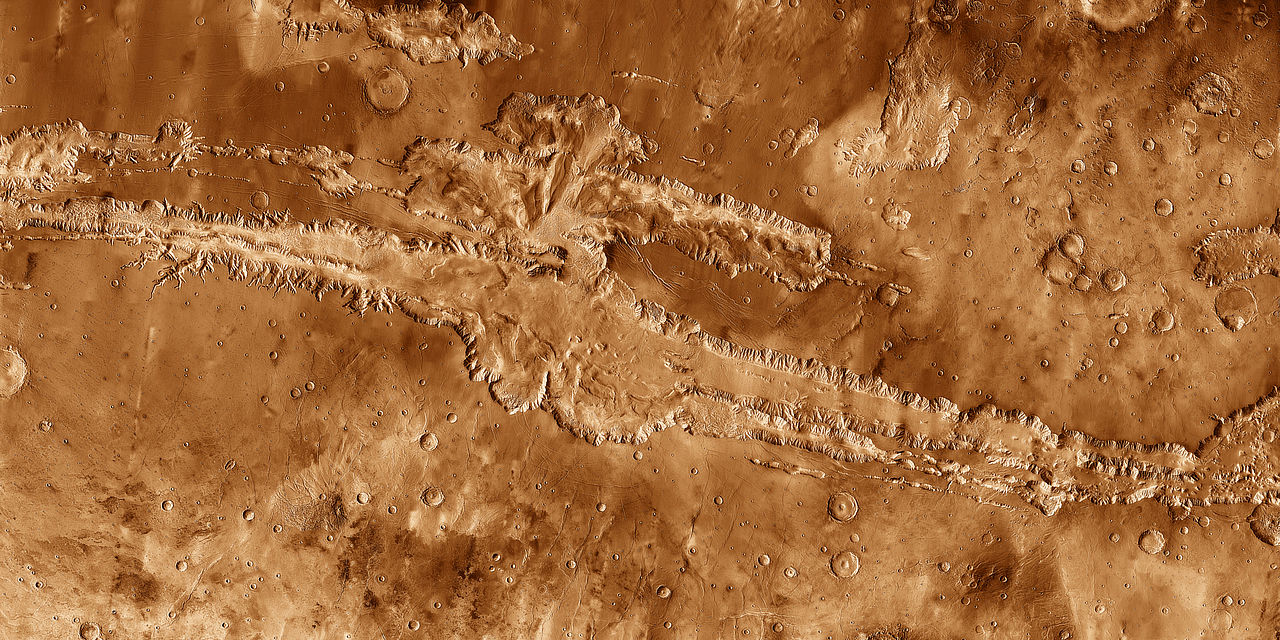
Valles Marineris is a vast canyon system located near the equator of Mars. Rather than a single gorge, it is a complex of valleys, chasms and troughs that extends for several thousand kilometres across the Martian surface. Its scale and variety of landforms make it a key feature for understanding Mars' geological past.
Image gallery
10 Images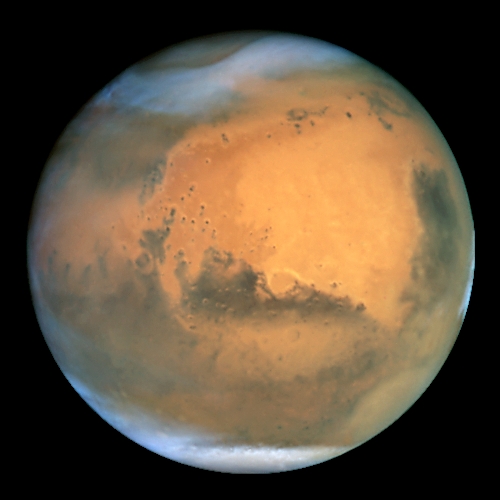


Characteristics
The system contains multiple named chasms and plateaus. Key characteristics include great length, deeply incised walls and layered deposits that record environmental change. Depths reach several kilometres in places and widths span tens to hundreds of kilometres, exposing stratified rocks and debris fans.
Geology and origin
Scientists interpret Valles Marineris as a tectonic rift formed early in Mars' history, later modified by erosion, landslides and possibly limited aqueous activity. Faulting and crustal stretching likely opened the primary troughs; subsequent collapse and sedimentation shaped the detailed morphology seen today.
Significance and study
The canyon is important for planetary geology and astrobiology because its exposed layers offer a long, accessible record of Martian surface processes. Orbiters and remote sensing instruments have mapped mineralogy and structure, guiding questions about past water, climate and crustal evolution.
Notable facts
- It is among the largest canyon systems known in the Solar System.
- Features include steep cliffs, landslide scars and interior layered deposits.
- Its formation involved both tectonic extension and later modification by surface processes.
Valles Marineris remains a focus for future exploration because its exposed sequences may preserve clues to the Red Planet's environmental history and the processes that shaped terrestrial planets.
Related articles
Author
AlegsaOnline.com Valles Marineris Leandro Alegsa
URL: https://en.alegsaonline.com/art/104057
Sources
- mars.jpl.nasa.gov : "Mars Exploration: Multimedia"