
Mars in fiction: themes, history, and notable works
Survey of how Mars has been imagined in literature and other media: origins of canal myths, major themes (invasion, dying world, colonization), and representative works and influences.
Overview
Mars has been one of the most enduring settings in speculative fiction. Its distinctive orange-red appearance and proximity to Earth made it an obvious candidate for authors imagining other worlds. Writers have used Mars to stage alien encounters, social allegories, human survival stories and explorations of colonization and terraforming. Over time the planet moved in fiction from a site of ancient intelligent civilizations to a focus on human exploration and the ethics of settling other worlds.
Image gallery
10 Images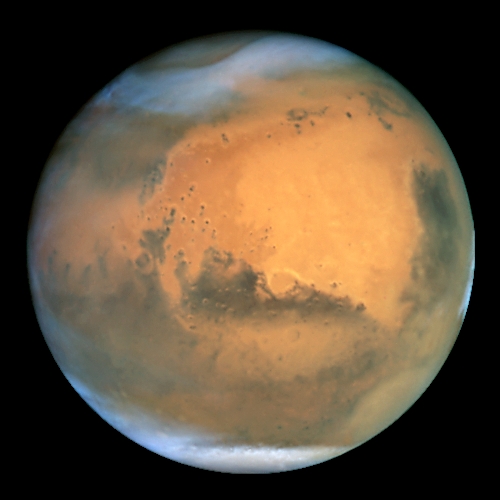



Historical roots and the canal controversy
The popular image of Martians and engineered waterways owes much to late 19th‑century astronomy. Observations by Giovanni Schiaparelli recorded features he called canali, a term that in Italian means "channels." Some English readers translated this as "canals," which suggested artificial construction and sparked wide speculation about intelligent life on Mars. That mistranslation, amplified by sensational press coverage, influenced generations of writers who imagined extensive Martian civilizations and engineered landscapes.
Themes, motifs and types of Martian fiction
Several recurring themes appear across works set on Mars. Common motifs include:
- Invasion narratives in which Martians or humans cross planets to attack or colonize (often used to explore fear of the other or imperial anxieties).
- Lost or dying civilizations, where authors depict ancient advanced cultures in decline, emphasizing tragedy or nostalgia.
- Frontier and colonization stories focused on human settlement, survival and the moral questions of terraforming or displacing indigenous life.
- Scientific realism and near‑future survival tales that prioritize engineering, geology and the psychological challenges of living on Mars.
Notable works and examples
Classic and modern writers have approached Mars in different ways. H. G. Wells used Mars as a source of menace and social critique; Edgar Rice Burroughs created romantic adventure on an imagined Barsoom; Ray Bradbury offered poetic, melancholic vignettes of human contact with a fading Martian culture; later writers such as Kim Stanley Robinson examined the practical, political and ecological dimensions of colonizing and transforming Mars. These books, among others, illustrate the range from pulp adventure to rigorous speculative futures.
Influence and legacy
Mars in fiction has shaped public imaginations about space travel, influenced scientific interest, and provided a laboratory for ideas about empire, environment and identity. The planet continues to appear across media—novels, films, comics and games—each medium choosing different angles: horror, romance, hard science or social satire. Even as real Mars missions reveal a barren, cold world, the literary Mars remains a flexible symbol for human hopes, fears and ethical dilemmas.
Readers seeking more on the cultural reasons behind Mars's appeal might look first to discussions of Mars's red color and early astronomical reports, including the famous canali episode and debate over canals. That episode shows how translation and interpretation can transform scientific observation into enduring myth.
Questions and answers
Q: Why have novels and short stories about Mars been popular for over a hundred years?
A: One reason for the popularity of novels and short stories about Mars is that the planet's dramatic red color is visible by some people. Also, Mars is close to Earth and looks somewhat like Earth.
Q: What is the backstory of the idea of intelligent beings on Mars?
A: Near the end of the 19th century, the astronomer Giovanni Schiaparelli reported seeing what he thought might be water channels on Mars. Because the Italian for channels is canali, English translations tended to render the word as "canals", implying artificial construction. This led to the idea of intelligent beings on Mars before it apparently dried up.
Q: What are the topics of the works of fiction dealing with Mars?
A: The works of fiction dealing with Mars deal with the planet itself, and any assumed Martian civilization is part of its planetary landscape.
Q: What made Giovanni Schiaparelli think that there may be water channels on Mars?
A: Giovanni Schiaparelli reported seeing what he thought might be water channels on Mars.
Q: What is the significance of the Martian planet being close to Earth?
A: Mars' proximity to Earth is one reason for the popularity of novels and short stories about Mars.
Q: What is the reason behind the ideas of creatures from Mars on Earth and elsewhere?
A: There are also stories about creatures from Mars on Earth and elsewhere.
Q: What is the implication of the translation of the word "canali" from Italian to English?
A: The translation of the word "canali" from Italian to English as "canals" implied artificial construction and led to the idea of intelligent beings on Mars before it apparently dried up.
Related articles
Author
AlegsaOnline.com Mars in fiction: themes, history, and notable works Leandro Alegsa
URL: https://en.alegsaonline.com/art/62239
Sources
- blog.oup.com : "The discovery of Mars in literature"
- ithl.org.il : ithl.org.il/author_info.asp?id=165
- gutenberg.org : gutenberg.org/files/18105/18105.txt