
Lüneburg: historic salt town in Lower Saxony
Lüneburg is a historic Hanseatic town in Lower Saxony, northern Germany, known for its medieval architecture, former salt industry and proximity to the Lüneburg Heath.
Overview
Lüneburg is a town in Lower Saxony in northern Germany, situated roughly southeast of Hamburg. It serves as the administrative centre of the District of Lüneburg and today has a population of around 100,000, combining university life with a well-preserved historic core.

Image gallery
10 Images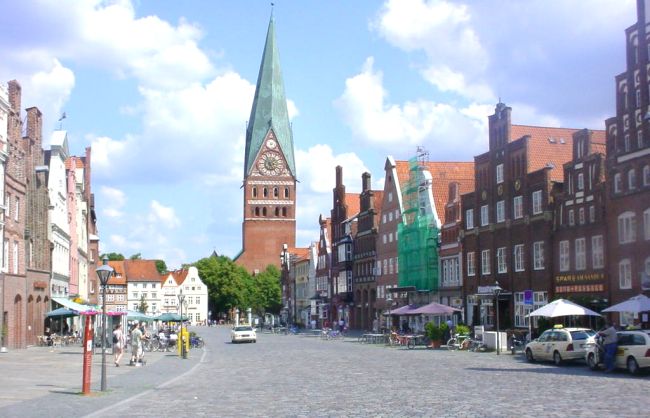




Geography and environment
The town lies on the Ilmenau, a small river that is a tributary of the Elbe. The surrounding landscape includes woodlands and the open expanses of the Lüneburg Heath, a dry lowland heath that developed in part because of centuries of woodland clearance and soil change related to local industries. Deforestation and heath formation are important features of the region's natural history.

History and development
Lüneburg rose to prominence in the Middle Ages thanks to extensive deposits and processing of salt. Salt from the area was transported along the Old Salt Route to the Baltic Sea and then shipped to markets throughout northern Europe. Salt works and mines operated in and around the town for many centuries before commercial mining ceased in the late 20th century. The historic wealth is reflected in Lüneburg’s timber-framed houses and guild halls.

Economy, culture and uses
The legacy of salt has shaped local museums, place names and cultural identity; today the economy is mixed, with education, tourism and small industry playing leading roles. The university attracts students and research, while festivals, guided walks and preserved industrial sites interpret the town’s salt heritage for visitors. Small craft businesses and hospitality services are concentrated in the old town.
Landmarks and notable facts
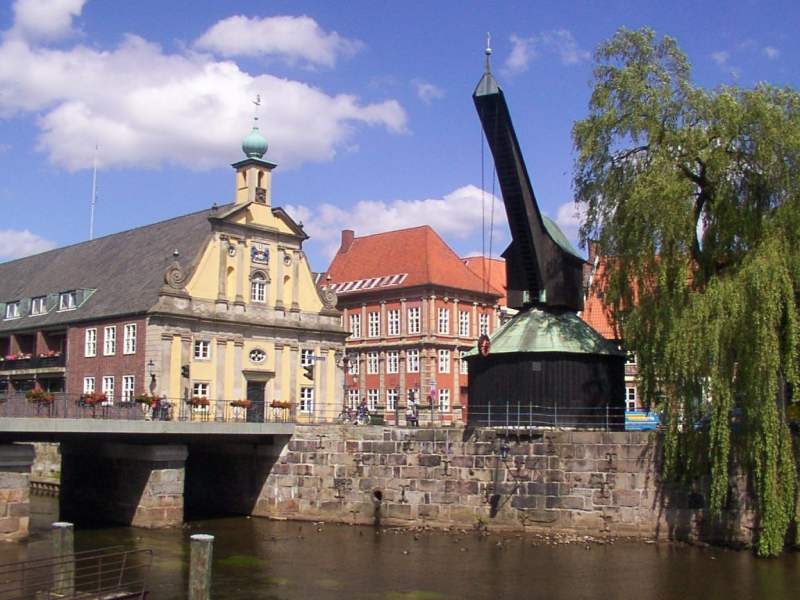
- Medieval harbour and historic crane on the Ilmenau, reminders of the town’s trade and river transport.
- Well-preserved market square, town hall and timber-framed streets that date from several centuries.
- Connections to 20th-century history: after World War II, the captured Nazi leader Heinrich Himmler died in Lüneburg; sources indicate he committed suicide after capture by the British Army by taking poison.
Connections and twin towns
Lüneburg maintains international links and has formal twinning arrangements, among them a partnership with Scunthorpe in England. These relationships foster cultural exchange, student visits and municipal cooperation.

Related articles
Author
AlegsaOnline.com Lüneburg: historic salt town in Lower Saxony Leandro Alegsa
URL: https://en.alegsaonline.com/art/59938
Sources
- destatis.de : "Alle politisch selbständigen Gemeinden mit ausgewählten Merkmalen am 31.12.2018 (4. Quartal)" · web.archive.org
- www1.nls.niedersachsen.de : Landesbetrieb für Statistik und Kommunikationstechnologie Niedersachsen, 102 Bevölkerung - Basis Zensus 2011, Stand 31. Dezember 2015 (Tabelle K1020014)