
Lemon (Citrus limon)
Small evergreen citrus tree and its bright yellow fruit, likely originating in Asia; valued worldwide for its juice, zest, culinary and cleaning uses, and nutritional vitamin C content.
Overview
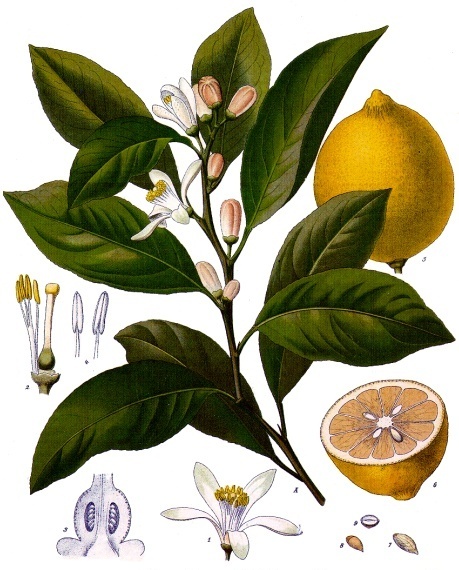
The lemon is the common name for Citrus limon, a small evergreen tree and its oval yellow fruit. The tree retains foliage year-round and is therefore described as evergreen in many climates, often remaining green even during winter months. Botanically a citrus, the lemon is closely related to other familiar fruits such as the orange and lime; its fruit is typically oval to elliptical in shape and bright yellow when ripe.
Image gallery
10 Images


Botanical characteristics
Lemon trees are generally small to medium-sized, commonly reaching heights up to about six metres. The plant bears glossy, aromatic leaves and fragrant white flowers; fruit develop from those flowers and contain a juicy interior divided into segments. Lemon fruit are valued for their acidic juice, aromatic peel or zest, and pulpy pulp. Lemon juice has a high acidity—roughly five percent citric acid—and a typical pH in the range of 2 to 3, which accounts for its sour taste and preservative properties.
Origins and history
The precise origin of the lemon is not definitively settled, but most botanical and historical evidence points to regions of South and East Asia. Wild and early cultivated forms likely arose in parts of Asia, with strong ties to areas of north-eastern India, northern Burma (Myanmar), and China. From these regions lemons spread along trade routes to the Middle East and the Mediterranean, and later to the Americas. Over centuries the fruit became integrated into many cuisines and cultural practices.
Cultivation and varieties
Lemons grow best in subtropical and warm temperate climates and are commonly cultivated by grafting selected varieties onto hardy rootstocks. Many named cultivars exist; some are commercially dominant while others are prized in gardens. Cultivation emphasizes traits such as fruit size, juice volume, rind thickness, and cold tolerance. In addition to fresh consumption, lemons are processed commercially for beverages and concentrates used in products like lemonade and soft drinks.
Uses and importance
Lemons are used widely in cooking, food preservation and household applications. Culinary uses include flavoring fish and meats, adding brightness to sauces and desserts, and providing acidity in dressings and marinades. Lemon zest and essential oils are aromatic components in baking, confectionery and perfumery. Beyond the kitchen, lemon juice serves in cleaning and stain removal because of its acidity and solvent properties, and the fruit has a long association with dietary vitamin C and prevention of scurvy in historical maritime contexts.
Distinctions and notable facts
While often compared to limes and other citrus fruits, lemons are distinguished by their particular acid profile and yellow rind. They are referred to by the species name Citrus limon and are a product of hybridization and selection among ancestral citrus species. The lemon’s versatility—from culinary applications to household uses—explains its global cultural and commercial significance. For further reading on specific aspects of lemon biology, cultivation, and uses, see entries on citrus biology and culinary applications via resources indicated by these links: citrus, fruit, orange, citric acid, fish, and general background at evergreen resources.
- Seasonality: Many trees fruit year-round in suitable climates.
- Shape: Fruit typically oval or elliptical.
- Juice: Widely used for flavor, preservation, and cleaning.
- Zest: Source of aromatic oils used in cooking and industry.
For practical information on growing lemons, culinary recipes, or industrial processing, consult horticultural guides and food science sources linked through institutional or specialized pages such as regional origin, native ranges, and applied topics at color and flavor resources. Additional introductory material is available via general fruit and citrus overviews (Asia, related species, drinks).
Related articles
Author
AlegsaOnline.com Lemon (Citrus limon) Leandro Alegsa
URL: https://en.alegsaonline.com/art/57106
Sources
- cliffordawright.com : History of Lemonade
- limmi.it : The origins