
Archelon — the giant sea turtle of the Late Cretaceous
Archelon was a car-sized marine turtle from the Upper Cretaceous Western Interior Seaway. Known from fossils in the central United States, it is the largest sea turtle yet discovered.
Overview
Archelon was an enormous marine turtle from the order Testudines that lived during the Upper Cretaceous. Its remains are most commonly associated with the shallow inland waters of the Western Interior Seaway and show that it reached sizes comparable to a small car. The genus is best known from North America and is often cited as the largest sea turtle known from the fossil record. For general reference on marine turtles see marine turtle notes; its continental context is documented in works on North America and the timing is placed in the Upper Cretaceous period. The habitat it occupied is commonly referred to as the Western Interior Seaway.
Image gallery
10 Images




Physical characteristics
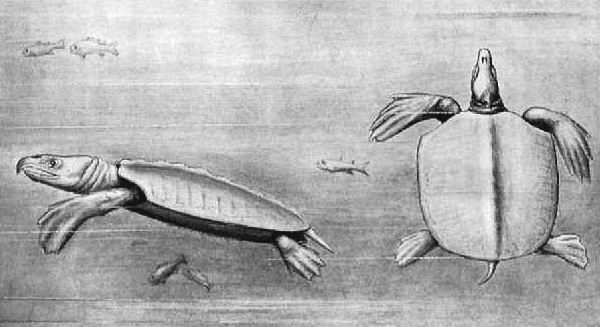
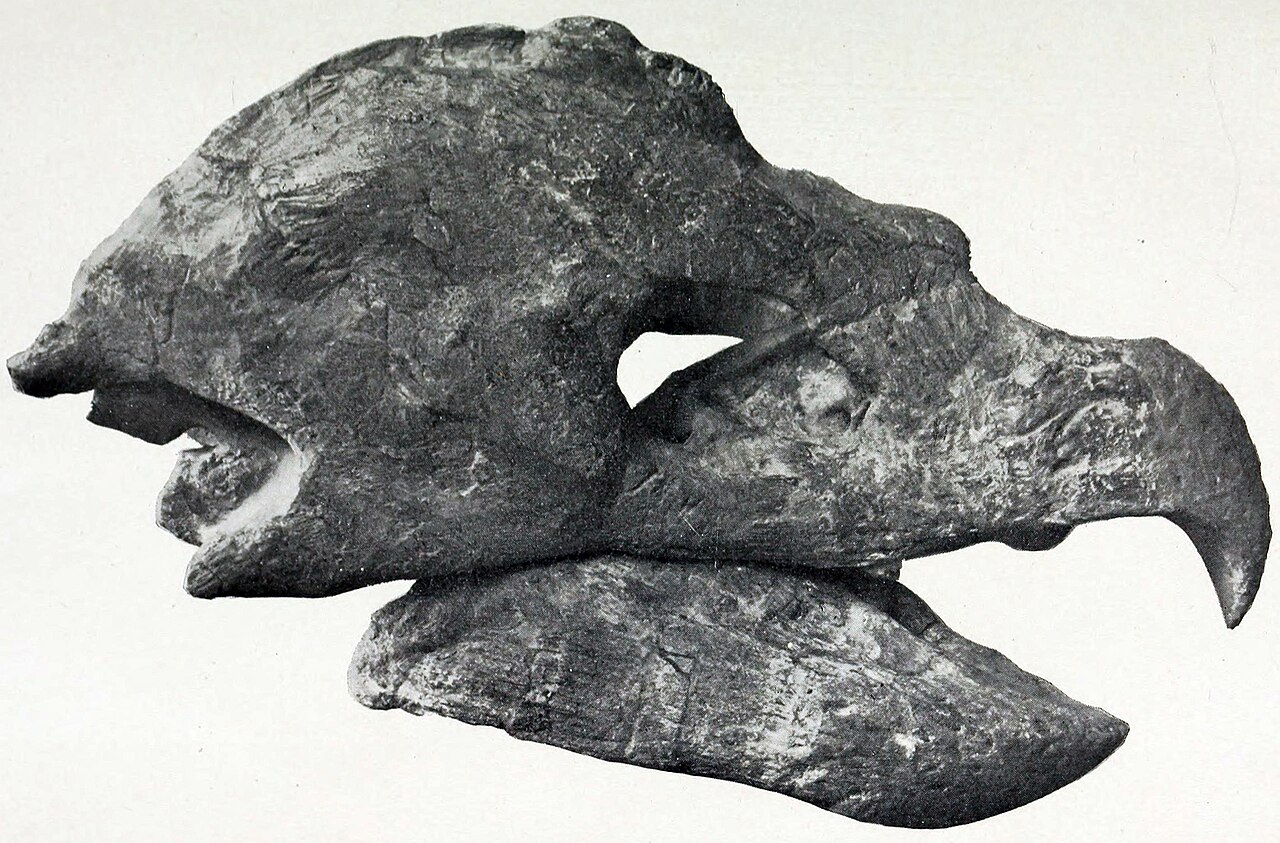
Adults of Archelon reached roughly 4.5–4.6 metres in length from snout to tail, making them exceptionally large among both extinct and living turtles. The body plan combined a wide, flattened carapace and broad, paddle-like forelimbs suited for open-water swimming. Unlike many modern hard-shelled sea turtles, Archelon had a carapace that appears to have been less ossified in places and may have been covered by thick, leathery skin during life. The skull was long and narrow with a beak-like mouth rather than crushing teeth, and the jaws were relatively weak — adaptations that suggest a diet of soft-bodied prey rather than hard-shelled animals. For reference to its feeding anatomy see beak.
Anatomy and classification
Archelon belongs to the extinct family Protostegidae, which includes other large Cretaceous sea turtles. Its skull shows the typical turtle condition of a solid roof (anapsid-like), lacking temporal openings, a trait shared across many turtles. The type species is often cited as Archelon ischyros. Key anatomical features include very long forelimbs with enlarged paddles, a reduced plastron compared with some terrestrial turtles, and a relatively short, pointed tail. Paleontological descriptions and comparisons are available under broader fossil summaries.
Fossil record and discovery
Most Archelon fossils have been recovered from chalk and marine deposits in the central United States, particularly the Smoky Hill Chalk Member and related horizons. Specimens have been found in states such as Kansas and South Dakota, and more generally in literature referring to the U.S. states where Cretaceous seaway deposits crop out (U.S. states). The genus was recognized from relatively complete specimens that preserved large portions of the carapace and skull, enabling detailed reconstructions of its size and lifestyle.
Ecology, diet and predators
Archelon inhabited warm, shallow seas and likely foraged in open water as well as near seafloor environments. Its jaw structure and toothless beak suggest a diet focused on soft prey such as cephalopods and jellyfish rather than hard-shelled molluscs; squid and similar animals are commonly proposed as part of its diet (squid). Adult Archelon had few natural enemies, but juveniles and even adults could have been at risk from large marine predators of the time, including mosasaurs and large sharks; mosasaurs are often mentioned as potential predators in the same faunal assemblages (mosasaurs).
Significance and notable facts
- Archelon is the largest known sea turtle genus documented by reasonably complete fossils.
- Its combination of a broad, flexible carapace and long paddles illustrates convergent adaptations to an open-marine lifestyle shared with modern sea turtles.
- Fossils provide important evidence about the fauna and ecosystems of the Western Interior Seaway and help reconstruct Cretaceous marine food webs.
For additional authoritative summaries and museum treatments consult introductory sources and fossil catalogs that treat Cretaceous marine reptiles and turtles; museum pages and paleontological databases often give specimen-level details and locality information (Western Interior Seaway, fossil). Historical and regional notes on discoveries and sites are available through state and regional geological resources (U.S. states, Kansas, South Dakota).
Readers wishing to explore comparative anatomy or the ecological role of Archelon can follow museum exhibits and scholarly summaries that place this genus alongside other Protostegidae and Cretaceous marine vertebrates (marine turtle, Upper Cretaceous, squid).
Related articles
Author
AlegsaOnline.com Archelon — the giant sea turtle of the Late Cretaceous Leandro Alegsa
URL: https://en.alegsaonline.com/art/5293
Sources
- bhigr.com : bhigr.com
- oceansofkansas.com : "Marine turtles from the Western Interior Sea"