
Archosaurs: evolution, key features, and Mesozoic dominance
Archosaurs are the reptile group that gave rise to crocodiles, pterosaurs, dinosaurs and modern birds; defined by shared skeletal traits, an early Triassic radiation, and a major role in Mesozoic ecosystems.
The archosaurs are a major group of diapsid reptiles that includes modern crocodiles and birds, and the extinct lineages of dinosaurs and pterosaurs. Paleontologists treat them as a single evolutionary clade: all members descend from a common ancestor that had a distinct suite of anatomical characters. The group also encompassed several smaller, now-extinct Triassic relatives and experimental forms that do not survive today.
Image gallery
10 Images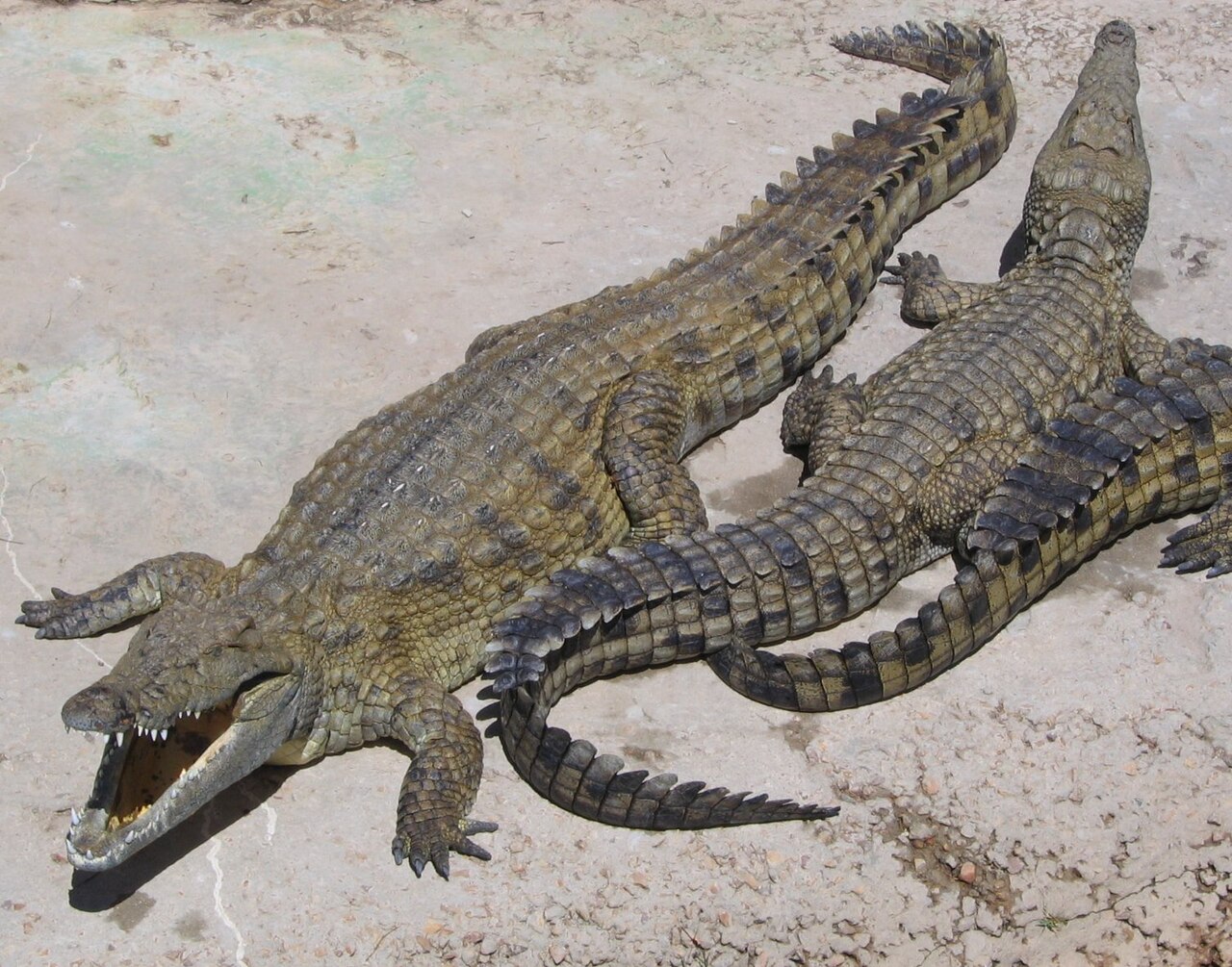



Defining traits
Archosaurs are recognized by a set of diagnostic skeletal features (diagnostic characters) that scientists often refer to as synapomorphies in cladistics. Key features include teeth set in sockets (thecodont dentition), openings in the skull in front of the eyes called antorbital fenestrae, and small openings in the lower jaw (mandibular fenestrae). Many archosaurs have an upright limb posture with the legs held beneath the body rather than sprawled, which influences locomotion and respiration (breathing). A prominent ridge on the femur for muscle attachment—often linked to efficient locomotion—is another typical trait (muscle ridge on the femur). Some of these characters were modified or lost in later lineages—for example, modern birds are secondarily toothless.
Origins and early diversification
Archosaur ancestry can be traced to tetrapods that survived the great end-Permian crisis. Survivors and their descendants diversified rapidly during the early and middle Triassic, filling ecological roles left vacant by the extinction. This Triassic radiation produced a wide array of terrestrial, semi-aquatic and flying forms, setting the stage for archosaurs to dominate terrestrial ecosystems for much of the Mesozoic. The group’s early success has been linked to a combination of anatomical innovations and ecological opportunity following the Permian–Triassic extinction event.
Diversity and ecological roles
Throughout the Mesozoic, archosaurs occupied diverse niches: some were apex predators, others were herbivores, and several evolved powered flight. The pterosaurs pioneered vertebrate flight, while one dinosaur lineage gave rise to the birds, the only living dinosaurs today. Crocodile-line archosaurs evolved semi-aquatic ambush predators that persist to the present day as modern crocodilians. This breadth of form and function helped archosaurs to become the dominant land vertebrates of their age.
Distinctions and living relatives
Archosaurs are monophyletic and are distinct from lepidosaurs such as squamates (lizards and snakes) and sphenodontians. Comparative anatomy and the fossil record support a clear split between these major reptile groups. Living archosaurs fall into two lineages: the crocodilian branch and the bird (avian) branch; both provide key insights into the deep evolutionary history of the clade.
Significance and notable facts
Studying archosaurs illuminates patterns of macroevolution, biomechanics, and the origins of major adaptations such as erect posture, specialized dentition, and flight. Fossil discoveries continue to refine how different archosaur lineages relate to one another and how traits like skull openings (skull features) and nasal placement (nostrils) evolved. The archosaur story is central to understanding Mesozoic life and the origin of birds as living dinosaurs.
- Related topics: basic cladistic terms and methods (cladistics), tooth implantation (synapomorphies), and Triassic ecosystems (Triassic).
- For broad summaries and further reading see resources linked under general reptile evolution (crocodiles, birds, dinosaurs, pterosaurs).
Questions and answers
Q: What is an Archosaur?
A: An Archosaur is a large group of reptiles that includes crocodiles, birds, dinosaurs, and pterosaurs (flying reptiles). There are also a number of smaller extinct groups from the Triassic period.
Q: Are Archosaurs monophyletic?
A: Yes, they are definitely a monophyletic clade and do not include reptiles such as the Squamata (lizards and snakes) and the Sphenodontia (Sphenodon).
Q: What are some diagnostic features of Archosaurs?
A: Some diagnostic features of Archosaurs include teeth set in sockets which makes them less likely to be torn loose during feeding; openings in the skull in front of the eyes but behind the nostrils; small openings in the jaw bones to reduce weight; legs held under the body rather than sprawled; and a special ridge for attaching muscles to the femur.
Q: Did Archosaurs survive the Permian-Triassic extinction event?
A: Yes, it appears that either archosaurs or their immediate ancestors survived this catastrophic event.
Q: How did this event affect archosaurs?
A: This event allowed archosaurs to benefit from it by rapidly evolving into different types of aquatic and land tetrapods which dominated most of Mesozoic era.
Related articles
Author
AlegsaOnline.com Archosaurs: evolution, key features, and Mesozoic dominance Leandro Alegsa
URL: https://en.alegsaonline.com/art/5326
Sources
- tandfonline.com : tandfonline.com/doi/full/10.1080/14772010903537732
- digitallibrary.amnh.org : digitallibrary.amnh.org/dspace/bitstream/2246/6112/1/B352.pdf