
Junkers Ju 52: German tri-motor transport and airliner
Three-engine German transport and airliner introduced in 1932. Rugged, corrugated-metal design used by Lufthansa and the Luftwaffe; built in Germany, France and Spain and widely employed in military and civilian roles.
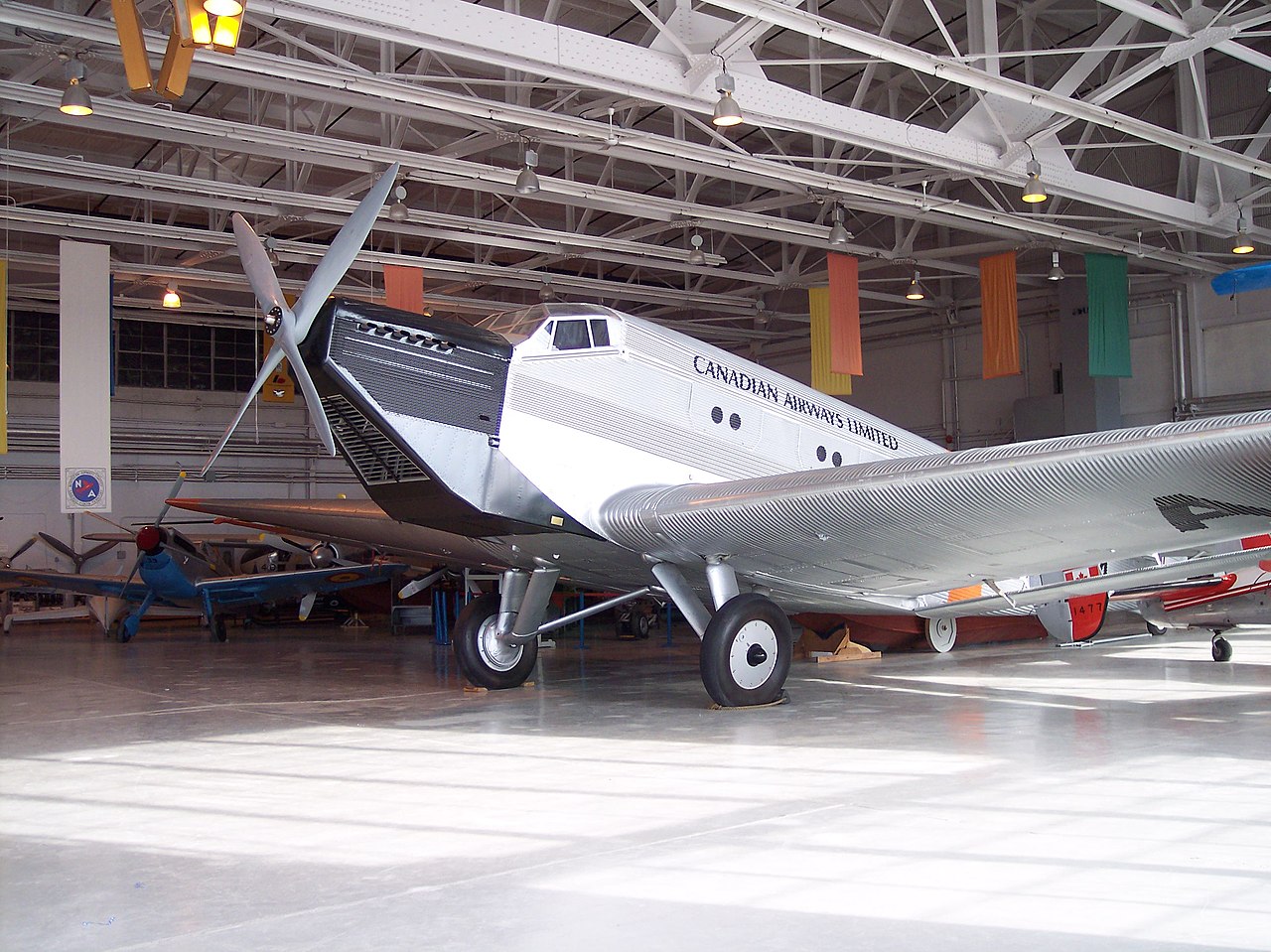
The Junkers Ju 52 began life as both a civilian and a military type of German aircraft developed in the early 1930s. Designed by the Junkers company, it became famous for its simple, rugged construction and distinctive corrugated metal skin. Entering service during the interwar years in what is often referred to as Nazi Germany, the Ju 52 was used as an airliner and as a general-purpose transport, prized for reliability on short and unimproved airfields.
Image gallery
10 Images




Design and characteristics
The standard Ju 52/3m was a three-engined layout: a center nose engine with one engine on each wing, making it a classic 3-engine configuration. Its airframe made extensive use of corrugated duralumin and other metal components that gave the aircraft its ridged appearance and added stiffness without excess weight. With seating for roughly 15 to 20 passengers, the Ju 52 could also be re-fitted to carry cargo, stretchers, or paratroopers. The prototype made its first flight in 1931 and the type entered airline and military service in 1932.
Operational history
Before and during World War II, the Ju 52 became a workhorse for both civilian carriers and the Luftwaffe. Airlines used it on short-haul routes where pressurization and high speed were unnecessary, while military operators exploited its ability to deliver troops, supplies and equipment into remote or frontline areas. Lufthansa was the principal peacetime operator and helped establish the type's reputation for dependable service.
Postwar production and variants
Production continued beyond Germany: French workshops produced a version known as the AAC-1 Toucan and Spanish factories built the type as the CASA 352, keeping the basic layout while adapting engines and equipment to local needs—an example of how the design outlived its original context. The aircraft also saw service with the Armée de l'Air during conflicts such as the Algerian War, where it served in troop transport and logistical roles.
Legacy and notable facts
- The Ju 52's straightforward, slow-flying characteristics made it ideal for parachute drops, supply missions and operating from short fields.
- Its all-metal, corrugated skin and three-engine redundancy gave it a reputation for robustness in adverse conditions.
- Postwar licensed or locally built examples appeared in France and Spain, extending the type's operational life.
- Worldwide production totaled on the order of several thousand airframes, making it one of the most-produced German designs of its era.
Today the Ju 52 is remembered both as a symbol of early air transport and as a versatile military workhorse. Several preserved examples remain in museums and on the civilian register, offered for heritage flights and display; their distinctive noise and corrugated metal surfaces still attract attention and underline the aircraft's enduring place in aviation history.
For further reading and archival material, see related entries on period operators, technical manuals and restoration projects: civilian uses, military roles, manufacturer history, airframe details, historical context, airline service, transport variants, Luftwaffe operations, wartime employment, French production, Spanish builds, postwar military use, engineering layout, construction materials, capacity figures, prototype flight, 1931 date, 1932 introduction, and Lufthansa operations.
Related articles
Author
AlegsaOnline.com Junkers Ju 52: German tri-motor transport and airliner Leandro Alegsa
URL: https://en.alegsaonline.com/art/51677