
Junkers Ju 87 (Stuka): German World War II Dive Bomber
The Junkers Ju 87, widely known as the Stuka, was a German two-seat dive bomber of WWII noted for its precision dive attacks, siren, and later anti‑tank adaptations; more than 6,500 were built.
The Junkers Ju 87 was a German single‑engine, two‑seat dive bomber first introduced in the 1930s and used extensively in the early years of World War II. Commonly called the "Stuka" (an abbreviation of Sturzkampfflugzeug), the type became synonymous with close air support and precision dive attacks. It is often identified in historical summaries as a light bomber and an icon of the Luftwaffe's early tactical methods during campaigns in Europe and North Africa in World War II.
Image gallery
10 Images


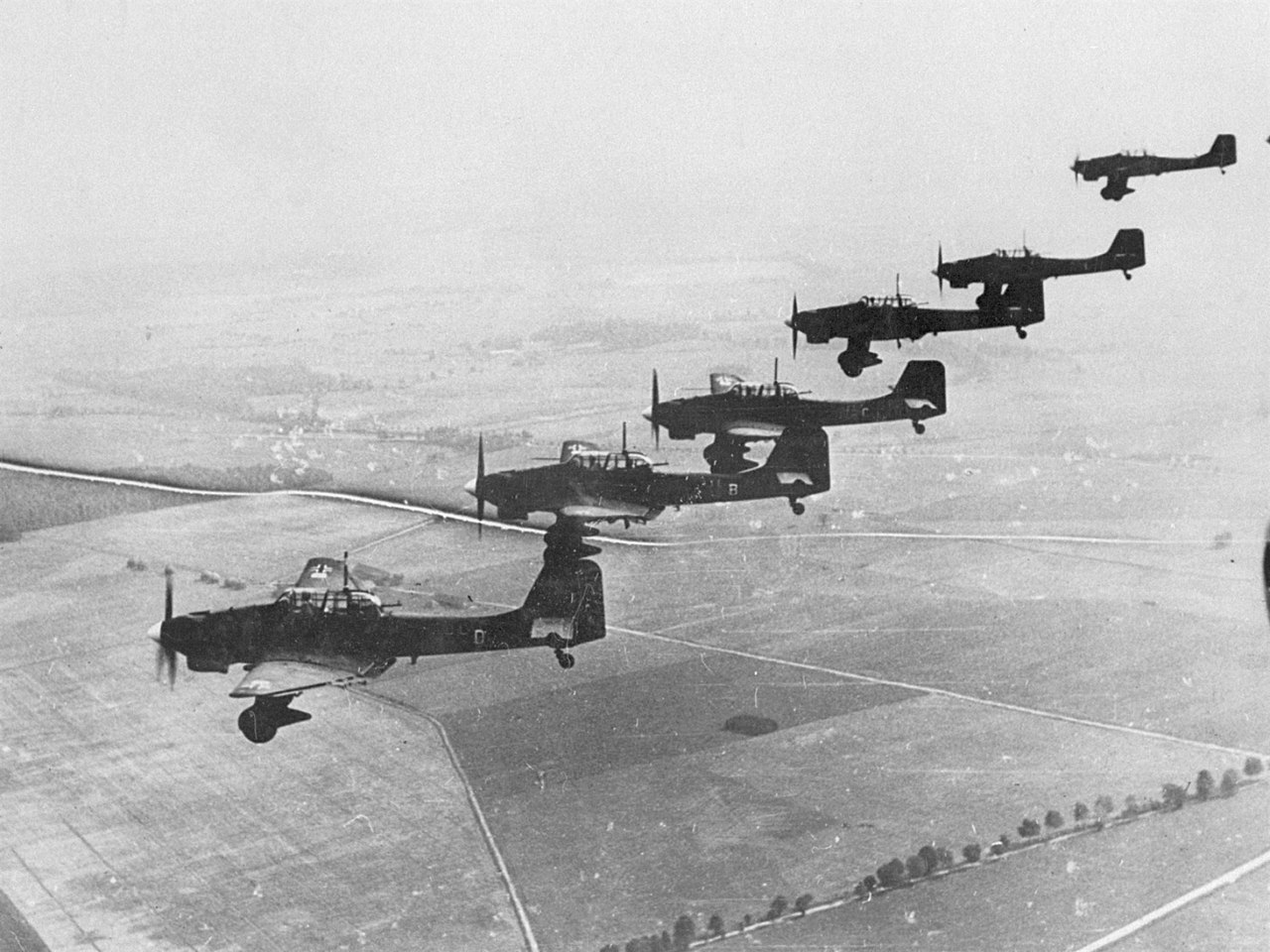

Design and main characteristics
The Ju 87 had a distinctive appearance: fixed, spatted landing gear and pronounced wing geometry that made it recognizable at a distance. It carried devices to control steep dives, including dive brakes and, on many machines, an automatic recovery system intended to pull the aircraft out of a dive if the pilot became incapacitated. The Stuka was designed specifically as a dive bomber, with structural strength and control surfaces optimized to survive repeated steep‑angle attacks. Its silhouette and noise were amplified in wartime by the attachment of the "Jericho‑Trumpet" siren on some models, a psychological weapon in addition to a mechanical add‑on.
Crew, armament and payload
The standard Ju 87 crew numbered two: the pilot up front and a rear cockpit occupant who served as radio operator and defensive gunner. Sources and period descriptions note this arrangement, with the rear crewman operating the rear machine gun and communications gear. Typical bomb loads included single larger bombs or combinations of smaller bombs; the aircraft could carry a heavy bomb such as a 500 kg weapon in many operational configurations. Some machines were adapted or fitted as attack aircraft to engage armored vehicles and other ground targets.
Operational history and variants
Employed with great effect in the Blitzkrieg campaigns, the Ju 87 provided precise, tactical strikes in close support of ground troops. It proved less survivable against well‑organized fighter opposition and heavy anti‑aircraft fire, so its use shifted over time from frontline bombing to specialized roles. Anti‑tank conversions fitted heavier forward‑firing weaponry to permit strafing and direct attacks on armored vehicles; these modifications reflect how the airframe was adapted for changing battlefield demands. During its production run, which began in the mid‑1930s, manufacturers produced more than 6,500 examples.
Legacy and notable facts
- The name "Stuka" derives from the German term linked to dive bombing and remains the popular label for the type (Sturzkampfflugzeug).
- Its combination of precision bombing equipment and psychological effects — including the distinctive siren — made it an important instrument of early German tactical doctrine (Ju 87, crew roles).
- Later variants and field modifications were developed to meet new threats and targets, including anti‑tank versions and changes in defensive armament (airframe adaptations, radio and observer equipment).
For detailed technical specifications, variant lists and campaign accounts, see specialized histories and archival sources on Luftwaffe aircraft development and operations (operational records, production summaries). The Ju 87 remains one of the best‑known examples of a purpose‑built dive bomber and of how aircraft design was shaped by tactical doctrine in the 1930s and 1940s.
Questions and answers
Q: What was the Junkers Ju 87?
A: The Junkers Ju 87 was a German light bomber of World War II.
Q: What was the function of the Ju 87 in World War II?
A: The Ju 87 was used as a dive bomber.
Q: How many crew members were on the Ju 87?
A: The Ju 87 had a crew of a pilot with a navigator/radio operator behind him, who also handled the rear machine gun.
Q: How much bombs could the Ju 87 drop?
A: The Ju 87 could drop 500 kg of bombs.
Q: Was the Ju 87 ever modified for a specific task?
A: Yes, some Ju-87 were modified as attack aircraft against tanks.
Q: How many Ju 87s were produced in total?
A: More than 6500 Ju 87s were made.
Q: What is the Ju 87 commonly known as?
A: The Ju 87 is universally known as Stuka, an abbreviation of Sturzkampfflugzeug, German for dive bomber.
Related articles
Author
AlegsaOnline.com Junkers Ju 87 (Stuka): German World War II Dive Bomber Leandro Alegsa
URL: https://en.alegsaonline.com/art/51678