
Junkers Ju 88 — German World War II Multirole Aircraft
A versatile German twin-engine military aircraft of WWII, the Junkers Ju 88 served as bomber, night fighter and reconnaissance platform; first flown in 1936 and used extensively by the Luftwaffe.
Overview
The Junkers Ju 88 was a versatile twin-engine machine developed as a military aircraft in Germany before and during World War II. Conceived to perform multiple tasks, it entered operational service on the eve of war and became one of the Luftwaffe's most widely produced types.
Image gallery
10 Images


Design and characteristics
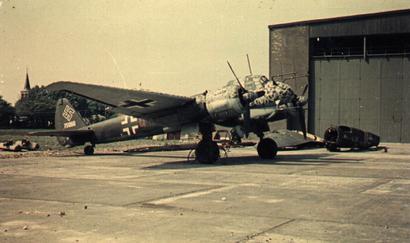
The Ju 88 combined a streamlined fuselage with a mid-mounted wing and twin powerplants to give a balance of speed, range and payload. Its adaptable internal arrangement allowed it to be outfitted for bombing, maritime patrol, precision attack or photographic work. Later adaptations included strengthened airframes and specialized radar and armament for nocturnal interception.
Development and production
Prototype flights began in its first flight year, 1936, and the type moved quickly from trials to front-line service by 1939. Production ran through much of the war, with total numbers rising into the tens of thousands. The Ju 88 was produced in many subtypes and by several factories to meet diverse operational needs.
Operational history
In combat the Ju 88 served across multiple theatres. It saw extensive use as a bomber in campaigns such as the Battle of France and the Battle of Britain. Conversion to a night-fighter equipped with radar made it a key component of Germany's night air defence. It also performed long-range reconnaissance and anti-shipping missions for the Luftwaffe.
Roles and notable uses
- Medium and tactical bomber
- Night-fighter and intruder operations using radar and upward-firing weapons (night-fighter)
- Photographic and maritime reconnaissance
- Pathfinder and anti-shipping strikes during major WWII campaigns
Variants and legacy
Multiple Ju 88 variants reflected the airframe's adaptability: bomber models, torpedo-carrying versions, radar-equipped night fighters and high-speed reconnaissance conversions. Though produced in large numbers, by war's end losses and advancing allied designs eclipsed its role. Surviving Ju 88 examples and restorations are exhibited in a few museums and remain subjects of historical study.
For technical details, photographic records and unit histories, see specialist sources and museum collections for further reading.
Related articles
Author
AlegsaOnline.com Junkers Ju 88 — German World War II Multirole Aircraft Leandro Alegsa
URL: https://en.alegsaonline.com/art/51679