
Jerboa: the long‑legged desert rodent
Small, bipedal rodents of arid Asia and North Africa known for long hind legs, jumping locomotion, nocturnal burrowing behavior, and key ecological roles as seed eaters and prey species.
The jerboa is a small, hopping rodent adapted to life in dry, open landscapes across parts of Asia and northern Africa. Rather than walking on four feet like a mouse, jerboas move by rapid bipedal jumps, propelled by greatly elongated hind legs and balanced by a long tail. These features, together with nocturnal habits and underground burrows, help jerboas conserve water, avoid daytime heat and elude predators.
Image gallery
3 Images

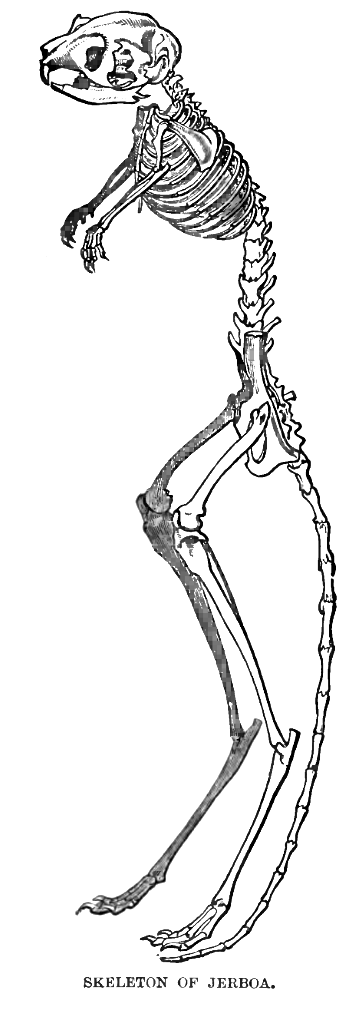
Physical characteristics
- Body plan: Compact body, short forelimbs, very long hind limbs and an elongated tail often ending in a tuft; ears vary from small to large depending on species.
- Feet and toes: Foot structure differs between species — some have three toes, others five — reflecting different ecological specializations for running, digging or moving on loose sand.
- Senses and speed: Many jerboas have acute hearing and keen night vision. When threatened they can make rapid escapes; some species are capable of speeds reported around 24 km/h.
- Size and appearance: Most are small rodents, superficially resembling mice but distinguished by their unique hind limbs and tails.
Jerboas inhabit deserts, semi-deserts and steppe regions. They are predominantly nocturnal, emerging at night to forage for seeds, green plant matter and insects. During the day they shelter in burrows — tunnels and chambers excavated to maintain stable temperatures and humidity — which also provide protection from predators and harsh weather.
Taxonomically, “jerboa” refers to a number of related species within the broader group of jumping rodents in the family Dipodidae and closely allied groups. There are several dozen species with a variety of ecological niches; their different forms illustrate convergent adaptations to arid environments, such as saltatory (leaping) locomotion and specialized limb morphology.
Ecologically, jerboas are important seed consumers and dispersers, and they form a key part of desert food webs as prey for owls, foxes, snakes and other predators. Their nocturnal activity patterns, burrowing behavior and diet help stabilize fragile dryland ecosystems. Some species face conservation pressures from habitat loss, grazing, and human development, so local population trends vary by region.
Notable facts and distinctions
- Locomotion: Jerboas use a bipedal hopping gait similar to small kangaroos; the tail often acts as a counterbalance during jumps and as a brace when standing.
- Adaptations: Behavioral and physiological traits reduce water loss and heat stress — for example, nighttime foraging and insulated burrows.
- Predators and defenses: Sharp hearing and erratic jumping help them detect and escape hunting owls, foxes and snakes in open terrain.
- Human context: While not commonly kept as pets, jerboas appear in regional folklore and are studied for insights into locomotion and desert survival strategies.
Further reading
- Overview and distribution maps
- Anatomy and limb adaptations
- Asian species accounts
- North African species summaries
- Comparisons with mice and other small rodents
- Tail morphology and functions
- Hind limb specialization
- Locomotion speed and measurements
- Behavioral studies of foraging
- Predators such as owls and foxes
- Sensory adaptations: hearing and vision
- Conservation status and threats
Related articles
Author
AlegsaOnline.com Jerboa: the long‑legged desert rodent Leandro Alegsa
URL: https://en.alegsaonline.com/art/49950