
Leg: structure, function and variation
A leg is a weight-bearing limb or support used for stance and movement in animals and objects. This article describes biological forms, evolutionary origins, adaptations, common uses and idiomatic senses.
The term leg commonly denotes a limb used for standing and locomotion. In biology it refers to one of the paired appendages that support body weight and enable movement across a surface or through a medium. In everyday language the word is also applied by extension to supporting elements of furniture and equipment. For a general sense of movement and support see locomotion and balance.
Image gallery
2 Images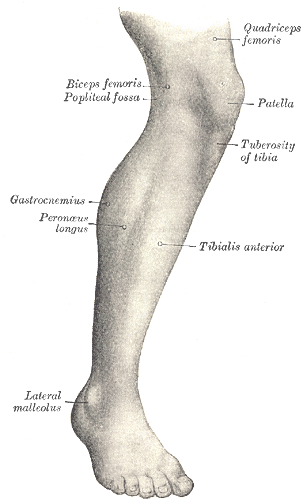

Forms and basic anatomy
Among vertebrates, a typical leg contains bones, joints, muscles, tendons and nerves. In mammals the limb is divided into segments such as thigh, lower leg and foot; birds have legs adapted for perching, walking or wading. Humans, like many birds, are bipeds and use two legs, whereas most terrestrial mammals are quadrupeds. Specialist designs—such as elongated running limbs or grasping feet—reflect lifestyle and habitat; see examples of avian forms at birds and human adaptations at human locomotion.
Legs in arthropods and other invertebrates
In arthropods (insects, crustaceans, myriapods) legs are jointed appendages attached to an exoskeleton. The number, shape and function of these limbs vary widely: some insects have three pairs, while centipedes and millipedes display many repeating leg-bearing segments. For broad overviews of these groups see material on centipedes and millipedes. In many invertebrates legs can be modified for swimming, digging, prey capture or sensory roles.
Evolutionary background
Vertebrate legs evolved from paired fins of ancient fishes; early tetrapods developed robust limb bones and joints to move on land. Arthropod legs have a separate evolutionary origin as serially repeated, jointed limbs, reflecting a fundamentally different body plan. Over evolutionary time, legs have been lost, reduced, or transformed in various lineages—whales and snakes are examples of groups that secondarily lost obvious external legs.
Functions, adaptations and human uses
Legs serve several functions beyond simple movement: they support weight, absorb shock, propel the body, assist in manipulating objects, or serve as weapons or displays in some species. Adaptations include cursorial (running) limbs, saltatory (jumping) limbs, raptorial (grasping) forelegs, and swimming paddles. In technology and everyday life, the term applies to supports on objects—tables and chairs have legs for stability—and to mechanical systems such as robotic legs and prosthetic limbs that restore mobility.
Examples, idioms and distinctions
- A biped uses two legs; a quadruped uses four.
- Many insects have three pairs of legs attached to the thorax.
- Furniture legs, such as those on tables and chairs, provide structural support rather than locomotion.
- The word appears in numerous idioms and expressions; for common phrases consult resources on idioms.
Understanding legs involves anatomy, ecology and mechanics. They are fundamental to how animals interact with their environment and have inspired engineering solutions for mobility and support in human culture.
Related articles
Author
AlegsaOnline.com Leg: structure, function and variation Leandro Alegsa
URL: https://en.alegsaonline.com/art/56964