
Jungle cat (Felis chaus)
A medium-sized wild felid of the genus Felis, the jungle cat inhabits wetlands and grasslands from Egypt to China; adaptable, largely solitary, and classified Least Concern.
Overview
The jungle cat (Felis chaus) is a widespread wild cat of the genus Felis, notable for its adaptation to wetland and grassland habitats. Its range extends across much of Asia and into northeast Africa, with established populations from Egypt in the west to China in the east and is commonly found throughout India. The species is generally solitary and secretive, and it plays a role as a mid-sized predator in a variety of lowland ecosystems.
Image gallery
10 Images



Physical characteristics
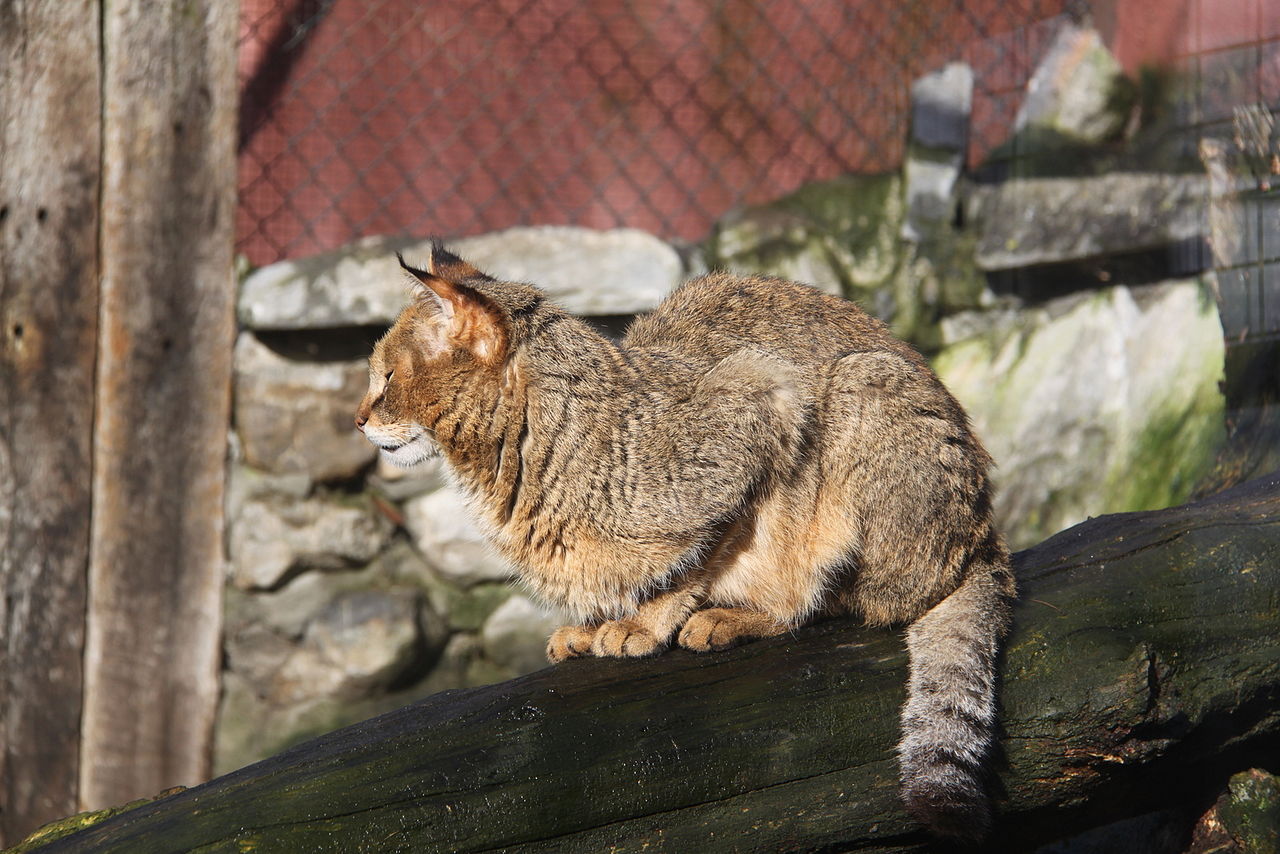
Among the living members of the genus Felis, the jungle cat is the largest. Adults vary considerably in size across their range; body length commonly spans the range reported in field studies, with a relatively short tail compared with some other small wild cats. Coat color varies from sandy to reddish-brown or grey, often providing camouflage in tall grasses and reedbeds. Juveniles may show faint spotting that fades with age. In cooler parts of its range the species tends to be larger, an observation consistent with Bergmann's rule, which relates body size to climate.
Habitat and distribution
Despite the common name, jungle cats are not restricted to dense tropical rainforests. They prefer areas with good ground cover near water, such as savannas, reedbeds and marshes along rivers and lakes. They are also found in seasonally dry woodlands and even on open steppe where sufficient vegetation exists. Overall the species shows a marked preference for wetland-associated environments where prey is abundant and concealment is available.
Behavior, diet and reproduction
Jungle cats are primarily crepuscular and nocturnal, although they can be active during the day in undisturbed areas. Their diet is opportunistic: small mammals, birds, reptiles, amphibians and fish are taken when available. They are competent swimmers and hunters in shallow water. Breeding season and litter size vary by region; females raise kittens in dens concealed within dense vegetation, rock crevices or abandoned burrows.
Conservation and relationships with people
The jungle cat is currently classified as Least Concern by conservation assessments, reflecting a broad range and general adaptability. Nonetheless, local populations face threats from habitat loss, drainage of wetlands, persecution, and road mortality. The species’ ability to occupy agricultural and mosaic landscapes has allowed it to persist in many areas, but conservation of wetland habitats remains important for long-term viability.
Notable facts and distinctions
- The jungle cat is the largest extant member of the "true" cat genus Felis, distinguished from larger wild felids by size and skull features.
- Unlike many small felids, it specializes in hunting in and near water and commonly takes amphibians and fish.
- Young animals may be patterned, but adults tend toward a uniform coloration that blends with reed and grass habitats.
For further general information and region-specific data, consult regional field guides or conservation summaries linked from reputable sources: Egypt, China, India, and ecology references on Bergmann's rule. Additional habitat references include pages on savannas, reedbeds, steppe and wetlands.
Questions and answers
Q: What is the scientific name of the jungle cat?
A: The scientific name of the jungle cat is Felis chaus.
Q: How long is a typical jungle cat?
A: A typical jungle cat ranges from 20 to 37 inches in body length (50 to 97 cm), with a 8 to 12 inch tail (20 to 31 cm).
Q: Where does the jungle cat live?
A: The jungle cat lives in savannas, tropical dry forests and reedbeds along rivers and lakes in the lowlands, but not rainforests. They are also adaptable animals and can be found even in dry steppe environments.
Q: Does size vary depending on location?
A: Yes, size varies depending on location due to Bergmann's rule - they are largest at the northern limits of their range and become smaller-bodied closer to the tropics.
Q: What type of environment do they prefer?
A: Jungle cats prefer wetland environments with tall grasses or reeds in which to hide.
Q: Are there any other species within its genus?
A: Yes, it is the largest remaining species of wild cats within its genus Felis.
Related articles
Author
AlegsaOnline.com Jungle cat (Felis chaus) Leandro Alegsa
URL: https://en.alegsaonline.com/art/51636
Sources
- commons.wikimedia.org : Felis chaus
- iucnredlist.org : "Felis chaus"
- doi.org : 10.2305/IUCN.UK.2016-2.RLTS.T8540A50651463.en