
Ink: History, Composition, Types, Uses and Properties
Overview of ink: its history from ancient carbon and iron‑gall formulas to modern dyes and pigments, common types, manufacturing, uses across writing and printing, performance issues and conservation.
Ink is a liquid medium used to apply colour or marks to surfaces for writing, drawing and printing. The term is commonly applied to any coloured fluid formulation designed to leave a stable visible trace; historically and technically it has been described as a liquid carrying a colourant plus ingredients that control flow, drying and adhesion. Inks appear in many forms and are tailored to particular tools and processes, whether hand-held pens, commercial printing presses or brushwork with brushes.
Image gallery
10 Images





Core components
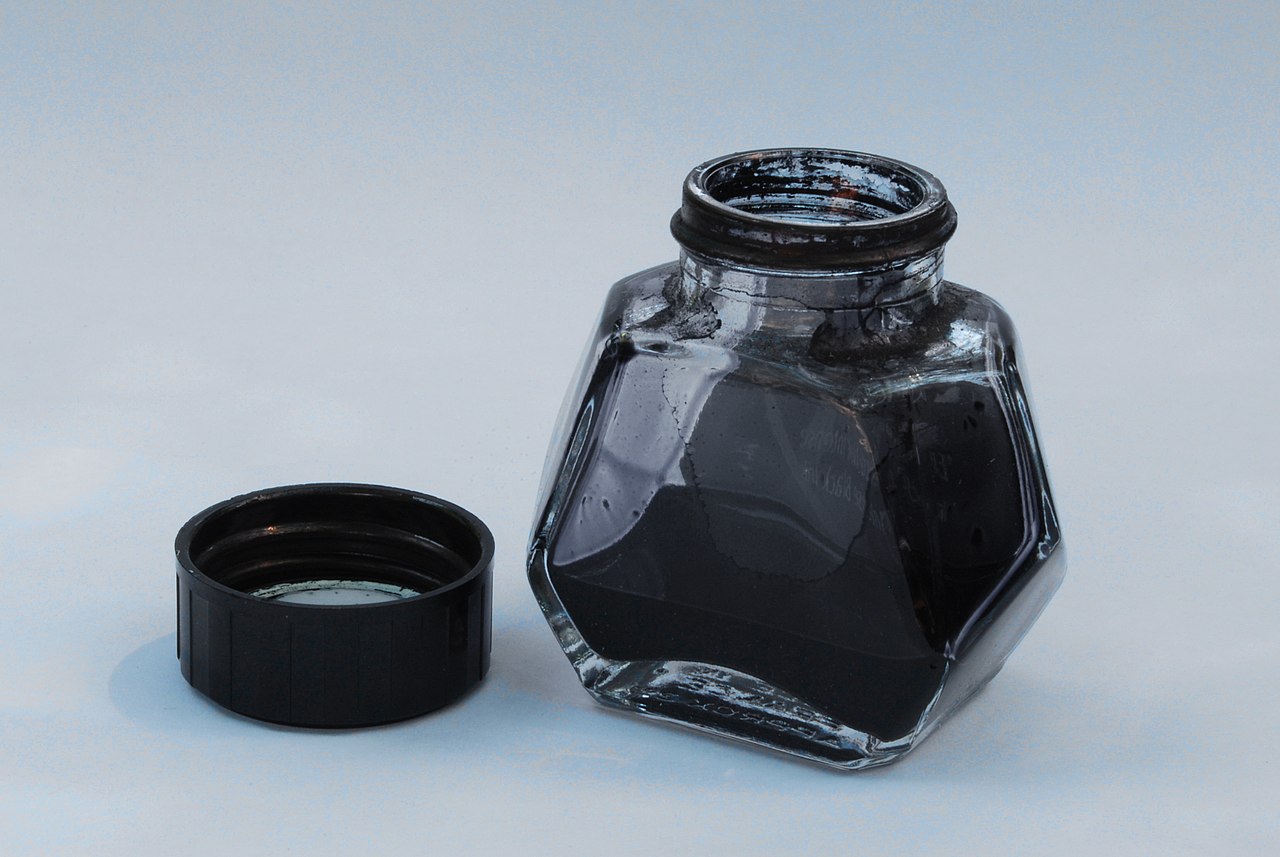
Most inks combine three basic components: a colourant, a vehicle or binder, and functional additives. Colourants are either particulate pigments, which remain suspended, or soluble dyes, which dissolve in the vehicle. The vehicle (water, oil or solvent) carries the colourant and determines wetting and initial drying behaviour. Additives may include humectants, surfactants, preservatives, drying agents and stabilisers to adjust viscosity, prevent mold, speed or slow drying, and improve adhesion.
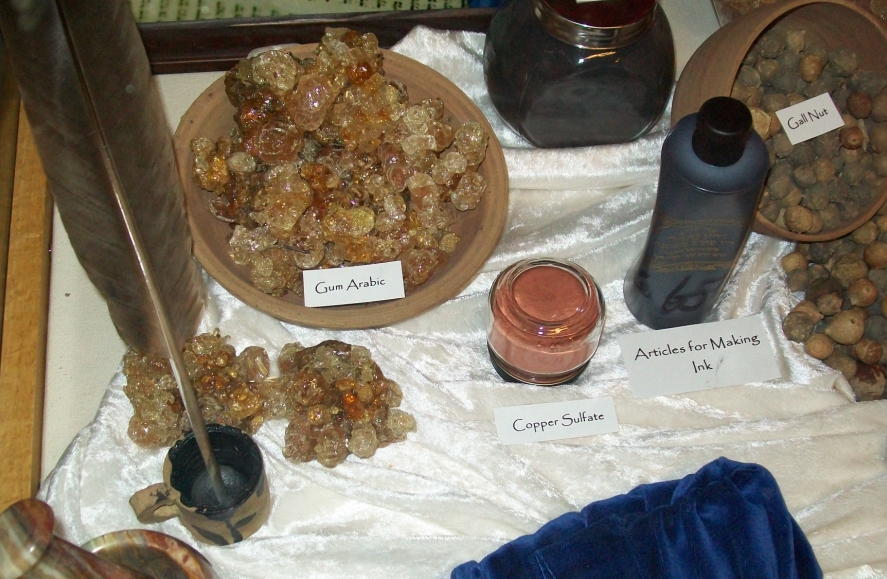
- Carbon (soot) inks: Early inks were carbon-based: lampblack or soot mixed with a binder. Such inks pair strong black colour with simplicity; traditional recipes mixed carbon with a natural binder like gum arabic.
- Iron-gall inks: Developed in antiquity and widely used through the Middle Ages and early modern era, these are made from iron salts and tannin-rich extracts. They produce durable dark marks but can be chemically aggressive to paper; this class of inks is often identified simply as iron-gall ink.
- Pigment vs dye: Pigment inks generally resist fading and water more effectively; dye-based inks are often brighter and more soluble, commonly used in many consumer printers where vibrant colour is required (dyes).
- Paste and gel inks: Some modern writing inks, such as gel inks, use thicker vehicles to produce smooth flow; ballpoint inks are typically oil- or solvent-based and are held in a narrow reservoir or tube inside the pen.
Historical development
Evidence for ink use stretches back several thousand years. Carbon-based inks were used in ancient civilizations, including records from Egypt and Mesopotamia, and various plant and mineral colourants were adopted in Asia and the Mediterranean. Mineral oxides such as red iron oxide provided coloured inks in some traditions, while iron-gall recipes became a dominant European formula. Notable historical figures who wrote with historical inks include musicians and artists such as Johann Sebastian Bach and Leonardo da Vinci, whose manuscripts often survive in ink that later conservation had to stabilise.
Uses and tools
Inks are used for handwritten texts, drawing, calligraphy, security printing, packaging, textile printing and industrial processes. Writing implements range from dip pens and fountain pens to ballpoints and markers. Modern digital and commercial printing use specially formulated inks for offset lithography, flexography, gravure and digital inkjet systems. The design of an ink depends on the substrate (paper, fabric, plastic, metal), the printing or marking process, required permanence and regulatory constraints (for example food-contact safety or low volatile organic compound content).
Manufacture and formulation
Industrial ink manufacture combines raw colourants with vehicles and additives under controlled mixing and dispersion conditions. Pigments must be ground to specific particle sizes and dispersed uniformly to avoid settling and ensure consistent colour. Dye solutions require stabilisers to prevent degradation. Specialist inks include UV-curable formulations that polymerise under ultraviolet light, conductive inks that incorporate metal or carbon particles for printed electronics, and solvent- or water-based inks optimised for different substrates.
Performance, durability and conservation
Key performance attributes are lightfastness (resistance to fading), water and solvent resistance, adhesion to the substrate, drying time and permanence. Water-based inks may smudge if handled before dry; this is one reason why some traditional writing required a steady surface or desk when using wet inks. By contrast, ballpoint systems—where ink is retained in a rolling mechanism inside a narrow tube—are less prone to spills and can be used in diverse circumstances, including at odd angles and while standing. Conservation of historical documents addresses issues such as fading, acid damage from certain inks (notably some iron-gall formulations) and biological degradation, often requiring specialised treatments and controlled storage conditions.
Environmental, health and regulatory issues
Modern ink development considers environmental impact and user safety. This has driven the adoption of low-VOC solvents, aqueous systems, and regulations limiting heavy metals and hazardous colourants. Printer manufacturers and ink producers also face standards for recyclability and emissions in industrial settings. Some specialised inks must meet food-contact, toy or medical-device regulations before use in those applications.
Practical advice and notable features
For everyday use, choose inks and papers matched to each other: archival or pigment-based inks with acid-free papers when longevity matters; dye-based inks for vivid prints when permanence is secondary. For writing instruments, a fountain pen uses liquid ink differently from a ballpoint: fountain pens require flowing, water-based inks and occasional maintenance, while a ballpoint pen generally requires less care because the ink is held in a sealed reservoir. Artists and conservators continue to value the visual and tactile qualities of traditional carbon and iron-based inks even as chemical technology produces new pigments and synthetic dyes.
Further reading and resources typically cover the chemistry of pigments and dyes, the mechanics of printing technologies, and best practices for caring for inked objects. Manufacturers' datasheets and conservation literature are useful starting points for technical specifications and historical context. Understanding the broad categories and practical limitations of inks helps users choose appropriate materials for writing, art and industrial applications.
Throughout its long history, from early soot-and-gum mixtures to engineered modern formulations, the primary function of ink has remained constant: to transfer a stable, visible mark from an implement to a surface. Whether produced in a simple bottle for writing or engineered for a high-speed industrial press, ink continues to be an essential material in communication, art and manufacturing.
Related topics include the mechanics of pens and print-making, the chemistry of pigments and binders, and the conservation of manuscripts; specialist literature and technical standards expand on these areas for those seeking detailed guidance.
Related articles
Author
AlegsaOnline.com Ink: History, Composition, Types, Uses and Properties Leandro Alegsa
URL: https://en.alegsaonline.com/art/47375