
Leonardo da Vinci: Italian Renaissance painter, scientist, and polymath
Comprehensive overview of Leonardo da Vinci (1452–1519): life, principal works, range of studies and inventions, methods, and lasting influence on art, science and engineering.
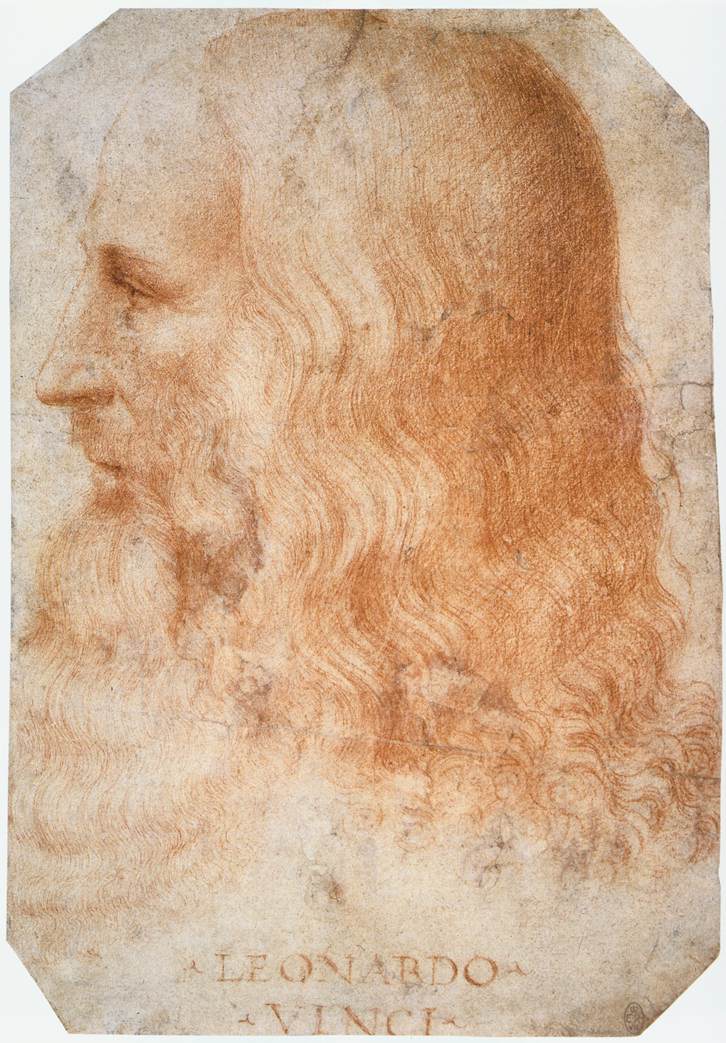
Leonardo da Vinci (15 April 1452 – 2 May 1519) was an Italian artist and widely admired Renaissance man whose curiosity and range of interests epitomize the era often called the Renaissance. Trained as a painter, he became famous for his paintings, but he also pursued rigorous study and practical work in many other fields. Throughout his life he combined careful observation of the natural world with technical drawing and experimentation.
Image gallery
10 Images


Fields of activity and methods
Leonardo’s interests were unusually broad. He kept dense notebooks in which drawing and text are combined, and he approached problems by close observation, measurement and iterative sketching. His documented occupations and studies include:
He studied nature closely and emphasized empirical study over received opinion. His notebooks show careful experiments in optics, fluid flow, the structure of plants, and the mechanics of bones and muscles.
Life, training and patrons
Leonardo was born in the town of Vinci, near Florence in what is now Italy. As a youth he apprenticed in the workshop of Andrea Verrocchio, where he learned painting and sculpture techniques and was exposed to diverse commissions. He spent much of his career working for wealthy patrons and courtly noblemen, who valued the prestige of commissioning art and engineering projects. In his later years he accepted hospitality and a residence from the king of France.
Major works and notable projects
Among Leonardo’s best-known works are the portrait commonly called the Mona Lisa and the mural The Last Supper. He also produced the famous anatomical diagram known as the Vitruvian Man. Beyond finished paintings, his hundreds of sketches and notes record numerous inventions, many of them conceptual rather than built in his lifetime.
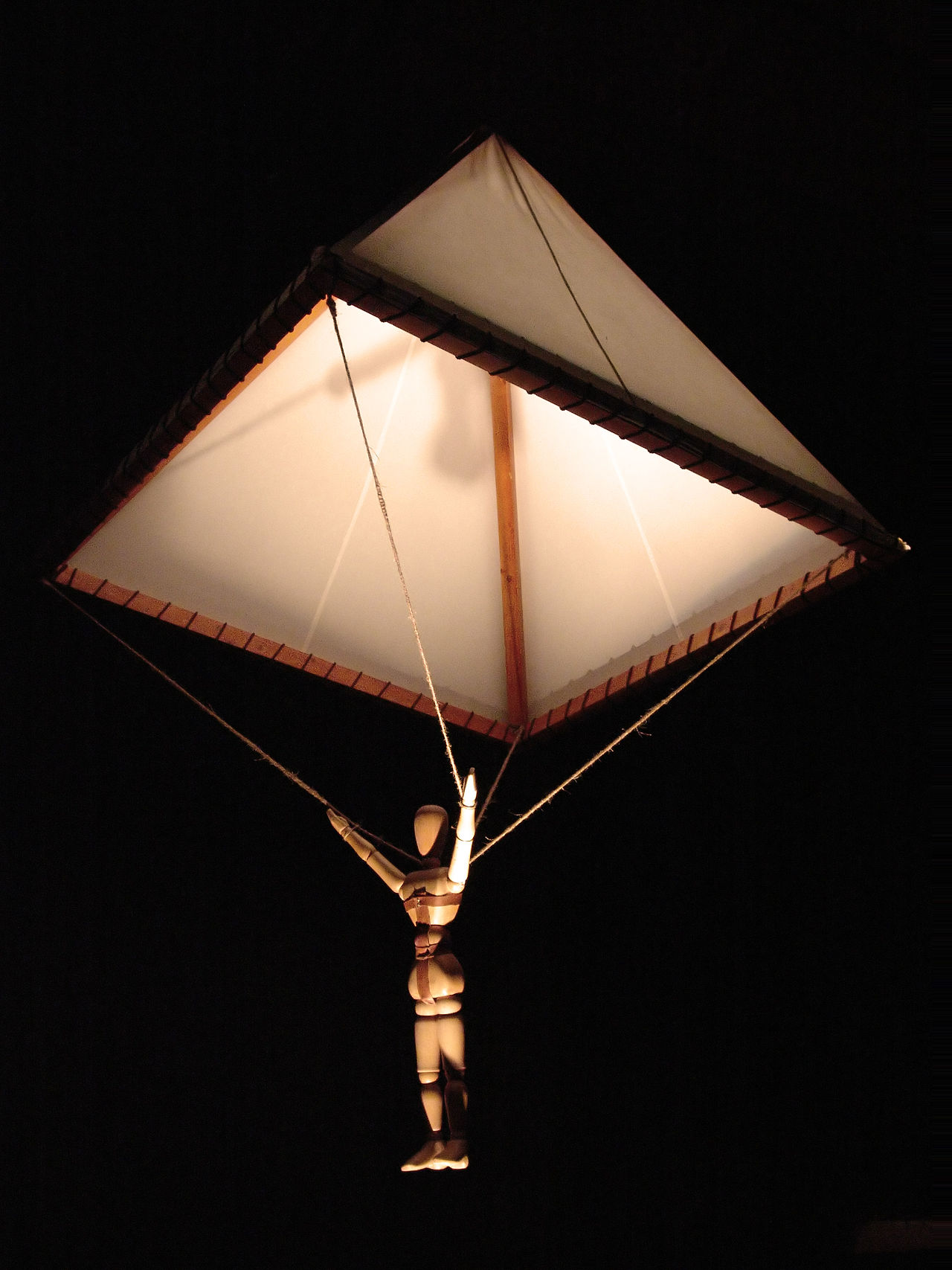
- Aeronautics sketches such as a proto-helicopter and early ideas for a parachute.
- Military designs, including a concept resembling an armoured tank and mechanisms for fortification.
- Mechanical devices: a drawing for a mechanical calculator, automata that prefigure a robot, and plans for harnessing natural forces.
- Speculative studies touching on biological change and long-term processes sometimes compared to ideas about evolution, and early thoughts about capturing sunlight that relate to solar power.
Legacy and interpretation
Leonardo's combination of artistic mastery and systematic investigation made him a model for later thinkers. Art historians such as Helen Gardner have observed that his intellect and range were exceptional and that his personality remains partly enigmatic. His work influenced painting techniques, anatomical illustration, engineering drawing and the general view that observation and art can advance scientific understanding.
Though many of his designs were not constructed in his lifetime, his notebooks continue to be studied for their insights into observation, design and interdisciplinary thinking. Museums and scholars preserve his paintings, drawings and pages of manuscripts as central documents of the Renaissance and of the long relationship between art and science.
Questions and answers
Q: Who was Leonardo da Vinci?
A: Leonardo da Vinci was an Italian man who lived in the time of the Renaissance. He is famous for his paintings, but he was also a scientist, mathematician, engineer, inventor, anatomist, sculptor, architect, botanist, musician and writer.
Q: Where was Leonardo born?
A: Leonardo was born at Vinci which is a small town near Florence, Italy.
Q: What did Helen Gardner say about him?
A: The art historian Helen Gardner said that no-one has ever been quite like him because he had the mind of a giant and yet what he was like as a person is still a mystery.
Q: What are two of his most well-known paintings?
A: Two of his pictures are among the best-known paintings in the world; the Mona Lisa and The Last Supper.
Q: What is Vitruvian Man?
A: Vitruvian Man is one of Leonardo's best known drawings. It depicts a man with outstretched arms inside both a circle and square.
Q: What inventions did he come up with?
A: Some of his ideas were a helicopter, tank, calculator, parachute robot telephone evolution and solar power.
Related articles
Author
AlegsaOnline.com Leonardo da Vinci: Italian Renaissance painter, scientist, and polymath Leandro Alegsa
URL: https://en.alegsaonline.com/art/124219
Sources
- gutenberg.org : the original 1883 edition