
Honeysuckle (Lonicera): description, distribution, uses and management
Honeysuckles (genus Lonicera) are shrubs and climbing vines noted for tubular flowers, fragrant nectar and berry fruits. Found across Asia, Europe and North America, they are ornamental, ecological and sometimes invasive.
Overview
Honeysuckle is the common name for species in the genus Lonicera, a group of woody plants in the Caprifoliaceae family. The group includes both upright shrubs and climbing vines, many valued in gardens for showy flowers and scent. Botanically they belong to the family Caprifoliaceae. About 180 species are recognised in broad treatments of the genus, and they occur naturally across continental regions such as North America, Asia and Europe.
Image gallery
10 Images


Characteristics
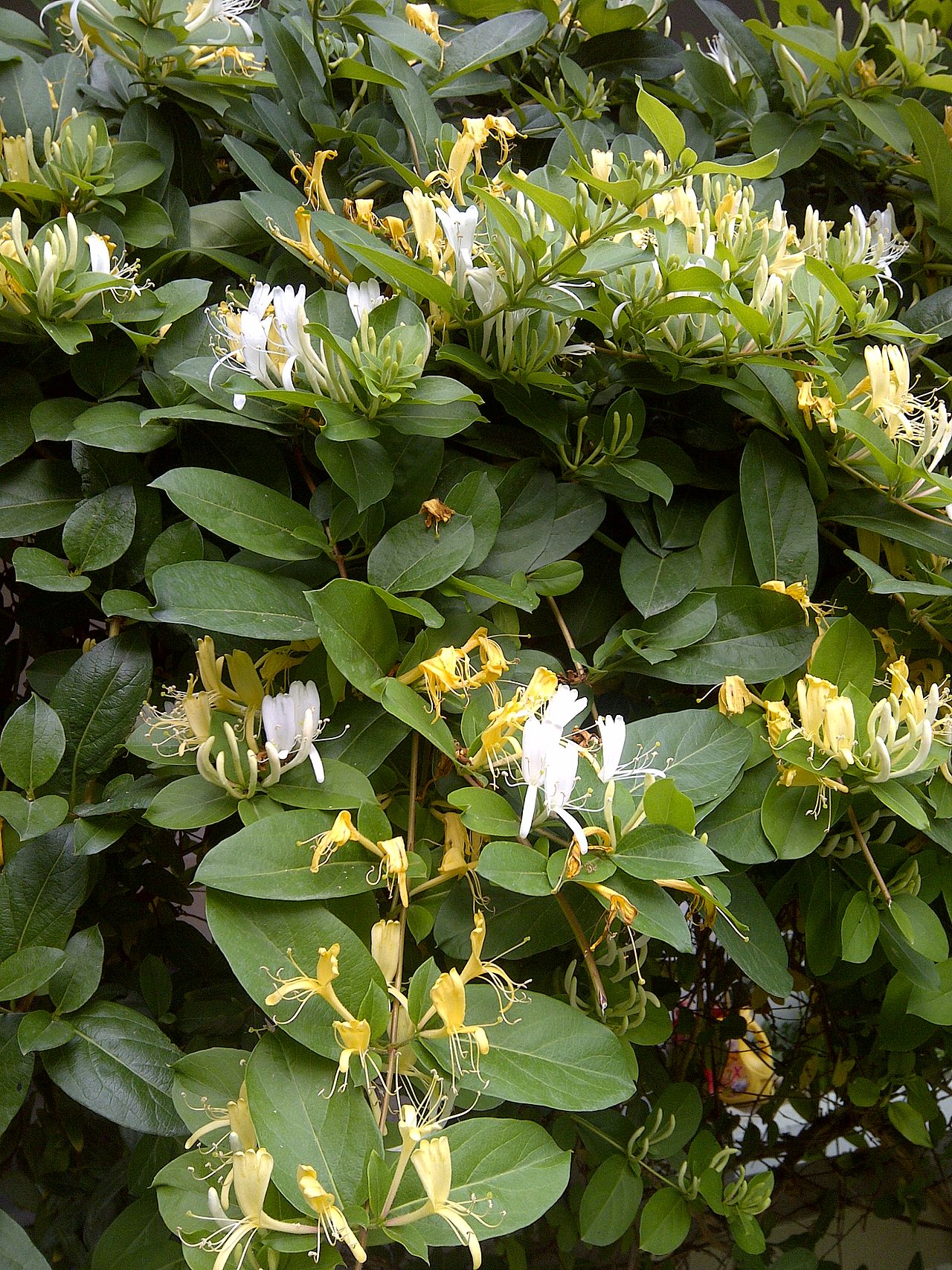
Most honeysuckles bear paired, opposite leaves and produce tubular or bell-like flowers that are often fragrant; the tube may be shaped for pollination by insects or birds. Flowers commonly supply a sweet nectar that people sometimes taste directly from the blossoms. Fruits are fleshy berries that vary in colour—from red through blue to black—and contain several seeds. The berries of many species are mildly poisonous to humans and pets, though a few produce edible berries.
Distribution and diversity
Species richness is concentrated in temperate Asia, with over one hundred species recorded in China, while Europe and North America each host roughly two dozen native species. Overall estimates cite about 180 different species worldwide. Different species occupy woodland edges, scrub, hedgerows and cultivated landscapes.
Uses, ecology and examples
- Garden use: many species and hybrids are grown as ornamentals for flowers, scent and rapid screening.
- Wildlife: blossoms provide nectar for pollinators such as bees and hummingbirds; fruits are eaten by birds and other wildlife, aiding seed dispersal.
- Food and caution: while nectar is frequently sampled from flowers, berries should be treated with caution—some species yield edible fruits, but most are best avoided by people.
- Traditional uses: certain Lonicera species have had roles in folk or traditional remedies in parts of Asia; such uses require careful, evidence-based evaluation.
Cultivation and management
Honeysuckles are generally adaptable: many prefer well-drained soil and a position with good light for flowering. Climbing forms benefit from trellises or support; shrubs can be pruned to shape. Some widely planted species—valued for hardiness—can escape cultivation and become weedy or invasive in parts of their introduced range, requiring management to limit spread.
Distinctions and notable facts
Not all honeysuckles have the same horticultural or ecological impact. Species such as Lonicera caerulea (commonly called honeyberry or haskap) produce edible berries and are grown intentionally for fruit, while other species are considered invasive in some regions. For gardeners and land managers, selecting native or non-invasive cultivars and monitoring volunteers helps balance ornamental value with ecological responsibility. For further reading and plant identification resources, consult regional guides and specialists.
shrubs vines family North America Asia Europe species China bell shaped flowers nectar fruit red blue black berry poisonous
Related articles
Author
AlegsaOnline.com Honeysuckle (Lonicera): description, distribution, uses and management Leandro Alegsa
URL: https://en.alegsaonline.com/art/44995