
Horseradish: description, chemistry, cultivation, and culinary uses
Horseradish (Armoracia rusticana) is a pungent perennial in the Brassicaceae family, grown for its large white root and used as a condiment, traditional remedy and culinary spice across many cuisines.
Overview
Horseradish (Armoracia rusticana) is a hardy perennial plant cultivated for its large, tapered white root. It belongs to the Brassicaceae family and is thought to have originated in parts of southeastern Europe and western Asia. Plants commonly reach about 1–1.5 metres in height and are propagated from root cuttings rather than seed. The root is the primary product: when intact it has little odor, but once cut or crushed it releases volatile compounds that produce a sharp, sinus-clearing heat.
Image gallery
9 Images


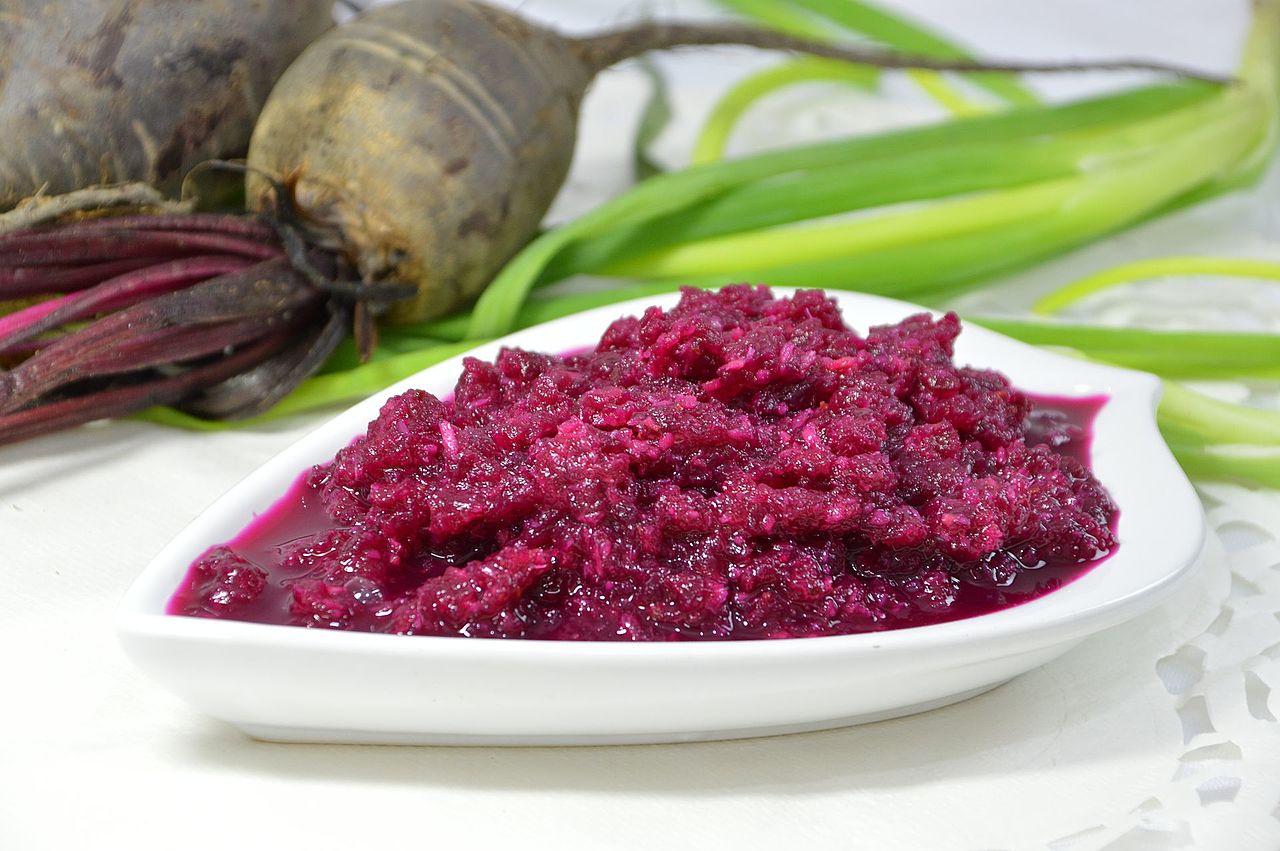


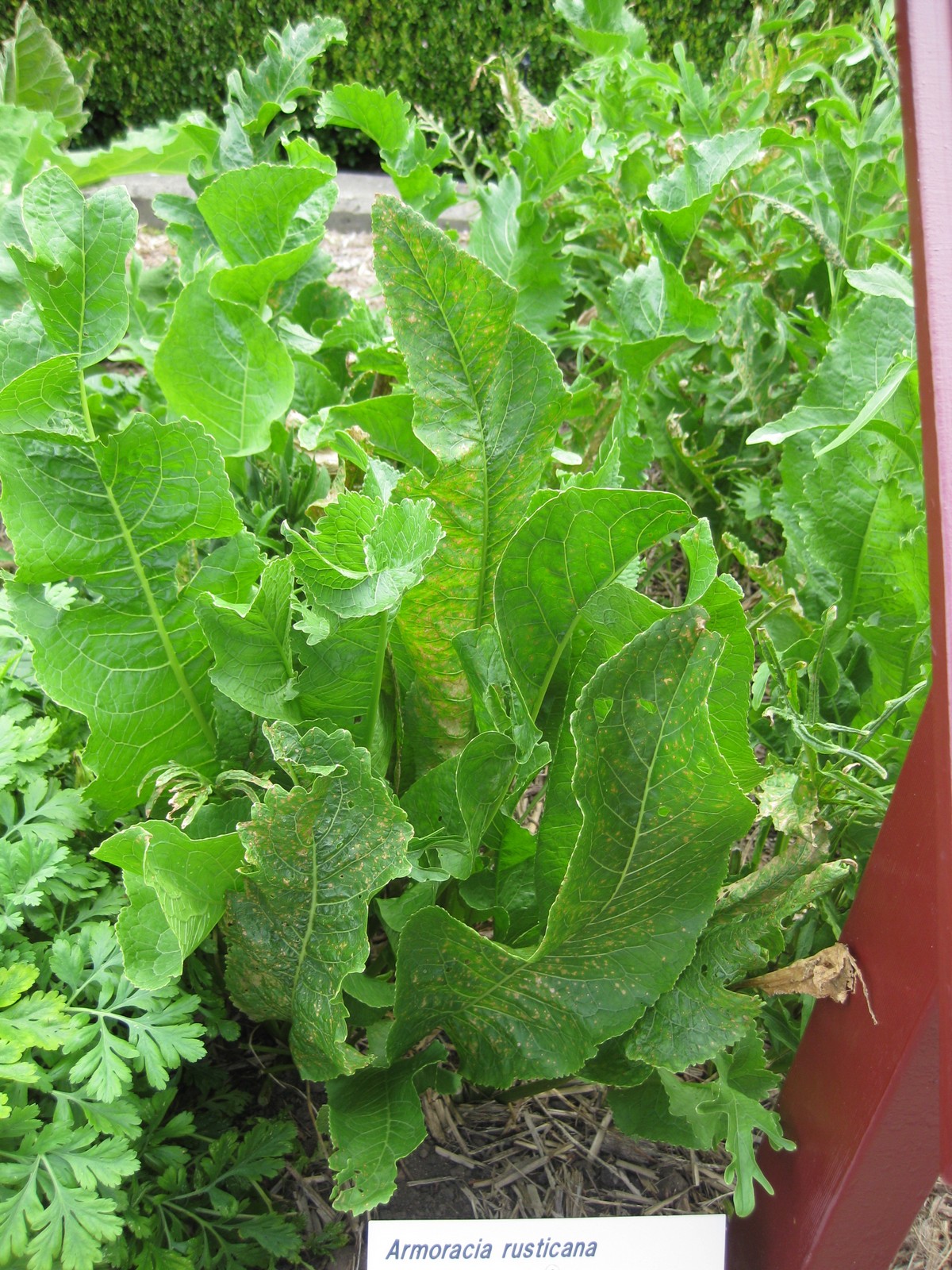
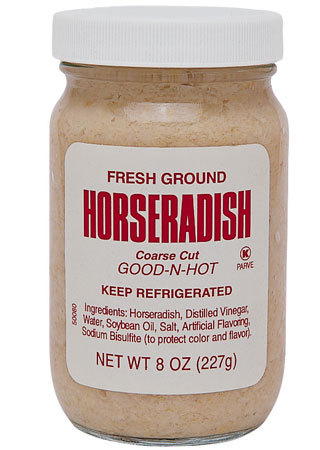
Characteristics and parts
The edible part of horseradish is the large, fleshy root; the above-ground leaves are coarse and green. The root stores glucosinolates such as sinigrin and related sulfur-containing compounds. The pungent sensation is not present in the unbroken root but appears when plant cells rupture and chemical reactions begin. Whole roots are typically sold and kept refrigerated until needed.
Chemistry and handling
Enzymes released from broken cells—most notably myrosinase—act on glucosinolates to produce isothiocyanates, including allyl isothiocyanate, a volatile oil responsible for horseradish’s characteristic sting. These compounds irritate the eyes and mucous membranes and can produce a strong sensation in the mucous membranes and sinuses. Exposure to air or heat quickly changes the flavor profile; many recipes recommend mixing freshly grated root with an acid such as vinegar to stabilize and preserve the desired pungency. If left to oxidize, the root can develop undesirable bitterness.
Uses and culinary examples
- Condiment: prepared horseradish is a common accompaniment to roast beef and cold meats and is a core ingredient in many sauces.
- Condensed sauces: creamy horseradish sauce and cocktail sauces often combine grated root with vinegar, cream or mayonnaise.
- Traditional and cultural uses: horseradish is widely used in Eastern European and Jewish cuisines, notably during certain religious observances and festive meals.
- Substitute for rarity: a cooked and pureed form is sometimes used where the true Japanese wasabi plant is unavailable, since the pungent chemistry is broadly similar.
History, cultivation and preparation
Horseradish has been grown and used for centuries in Europe. It is typically planted from root pieces, prefers temperate climates, and can become vigorous in garden beds; in some areas it spreads if roots are not fully harvested. Roots are most often dug in autumn or early spring. Preparing horseradish usually involves peeling and finely grating the root, then quickly acidifying the puree to preserve flavor. Cooking destroys many of the volatile compounds, so cooked horseradish is milder than raw grated root.
Distinctions, safety and notable facts
Horseradish should be distinguished from true wasabi (Wasabia japonica): they are different plants though both belong to the broader mustard family and produce related pungent compounds. Freshly grated horseradish can irritate eyes and airways and may cause skin sensitivity; gloves and good ventilation are advisable when preparing large quantities. For further botanical and culinary details see resources on the root, enzymatic reactions, and practical advice on preparation and storage.
Questions and answers
Q: What is horseradish?
A: Horseradish is a perennial plant of the Brassicaceae family, grown for its large, white, tapered root.
Q: Where is horseradish native to?
A: Horseradish is probably native to southeastern Europe and western Asia.
Q: How tall can horseradish grow?
A: Horseradish can grow up to 1.5 meters (5 feet) tall.
Q: Does the unbroken horseradish root have a smell?
A: No, the unbroken horseradish root has very little smell.
Q: What happens when horseradish is cut or grated?
A: When cut or grated, enzymes from the now-broken plant cells cause changes. The enzymes break down sinigrin to produce allyl isothiocyanate (mustard oil).
Q: Why does horseradish need to be mixed with vinegar?
A: Once exposed to air (by grating) or heat, horseradish needs to be mixed with vinegar. Otherwise, it becomes unpleasantly bitter-tasting.
Q: What effect does horseradish have on the sinuses and eyes?
A: Allyl isothiocyanate produced by horseradish irritates the mucous membranes of the sinuses and eyes.
Related articles
Author
AlegsaOnline.com Horseradish: description, chemistry, cultivation, and culinary uses Leandro Alegsa
URL: https://en.alegsaonline.com/art/45167
Sources
- motherearthnews.com : "Horseradish"
- etymonline.com : "Online Etymology Dictionary: horseradish"
- horseradishplants.com : "How to Grow Horseradish"
- extension.umn.edu : "Caterpillar Pests of Cole Crops in Home Gardens"
- opensourceshakespeare.org : "Henry IV, Part II, Scene 4"
- dx.doi.org : 10.1016/S0031-9422(00)94437-6
- dx.doi.org : 10.1271/bbb.59.102
- culture.polishsite.us : "Horseradish Soup Recipe Updated with Photographs – Polish Easter Food"
- cen.acs.org : "Wasabi:In condiments, horseradish stands in for the real thing"