
Gymnocalycium: the globular South American cacti
Gymnocalycium is a genus of small, globular cacti from South America, valued for their ribbed stems and showy flowers. Widely cultivated, some species are used as grafted colourful cacti.
Overview
Gymnocalycium is a genus of small, mostly globular cacti in the family taxonomy. Species in this group are leafless succulents with a compact habit and are often grown by collectors worldwide. They are a well-known component of the cactus family Cactaceae and include a moderate number of described species, commonly estimated between fifty and eighty.
Image gallery
10 Images




Appearance and structure
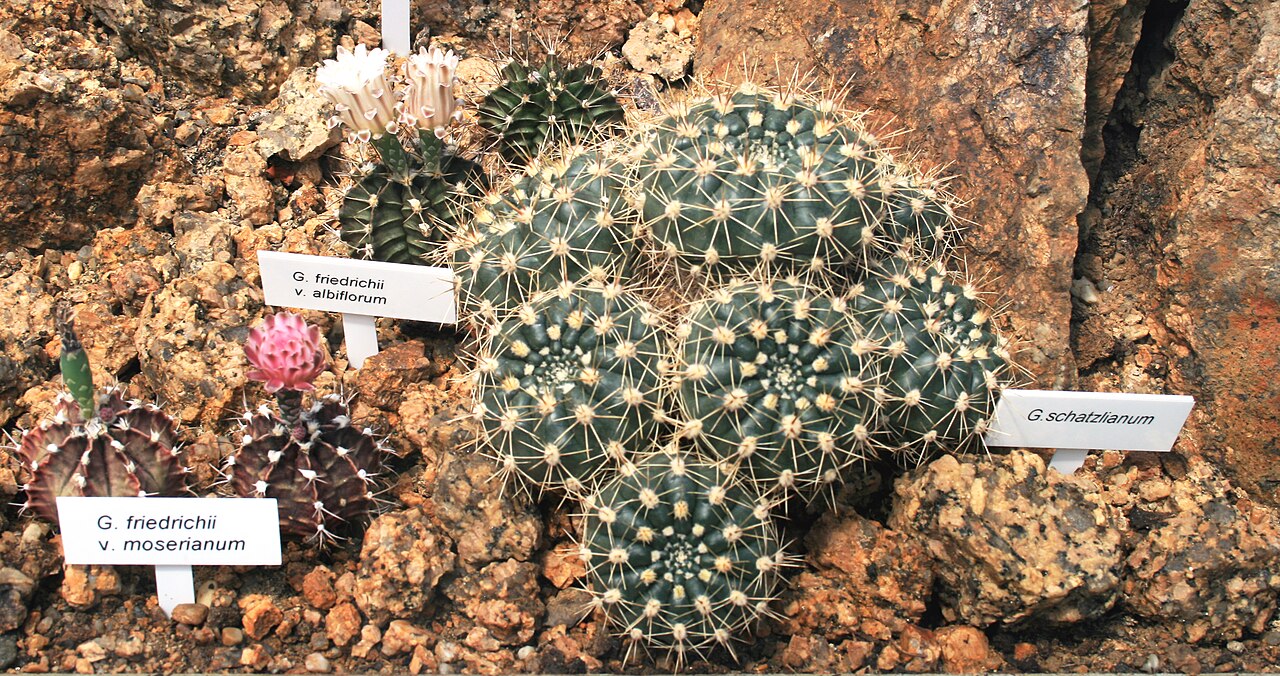
Plants in the genus typically form rounded to slightly flattened bodies. Individual stems are round in cross-section and vary in size: stem diameter commonly ranges from 7–30 cm while height may reach about 3–25 cm depending on species and growing conditions, so many remain quite compact. The epidermis ranges from grey-green to brown-green tones. Plants show pronounced ribs and distinct areoles that bear spines of varying length and thickness; spination differs considerably among species and cultivars.
Flowers, fruit and reproduction
Gymnocalycium are prized for their large, funnel-shaped flowers that often open during the day and can be white, pink, red, or yellow. The floral tube is typically naked of hair or spines—hence the genus name derived from Greek words meaning 'naked calyx'. Flowers give way to fleshy fruit that contain numerous seeds; many species set seed readily in cultivation and hybrids are common.
Native range and history
The natural distribution is in central and southern South America, including regions of South America and specifically countries such as Argentina, Bolivia, Brazil, Paraguay, and Uruguay. These cacti occupy a range of habitats from lowland scrub to rocky hillsides and savanna-like areas.
Cultivation and uses
Gymnocalycium species are popular houseplants and are frequently grown in containers, rock gardens, and collections. They are appreciated for their manageable size and attractive blooms. Typical cultivation guidance emphasizes bright light (but protection from the hottest midday sun), a fast-draining substrate, moderate watering in the growing season, and reduced water in winter. Many growers propagate them from seed or by grafting; the colourful mutant form of G. mihanovichii is widely seen as a grafted ‘‘moon cactus’’.
- Pot size: small pots suit their shallow root systems.
- Growth rhythm: active growth in warm months, dormancy in cool months.
- Watering: infrequent but thorough during growth; keep nearly dry in winter.
- Soil: gritty, well-draining cactus mixes are recommended.
Notable facts and conservation
Gymnocalycium includes several species that have become staples in the horticultural trade and many hybrids and named cultivars exist. Because some wild populations face habitat loss, conservation awareness and responsible sourcing are important. For further reading on classification, care and species lists, see resources on general cactus taxonomy and horticulture referenced by specialist growers and botanical gardens (Argentina, Bolivia, Brazil, Paraguay, Uruguay).
For practical guides, seed sources and community-grown cultivars consult cultivation pages and specialist forums covering color, forms, propagation techniques (morphology), and conservation status updates (taxonomy, growth). Enthusiasts frequently exchange information on pest management, grafting methods and hybrid registration through grower networks and published monographs (stems, measurements, cultivation).
Related articles
Author
AlegsaOnline.com Gymnocalycium: the globular South American cacti Leandro Alegsa
URL: https://en.alegsaonline.com/art/41601